
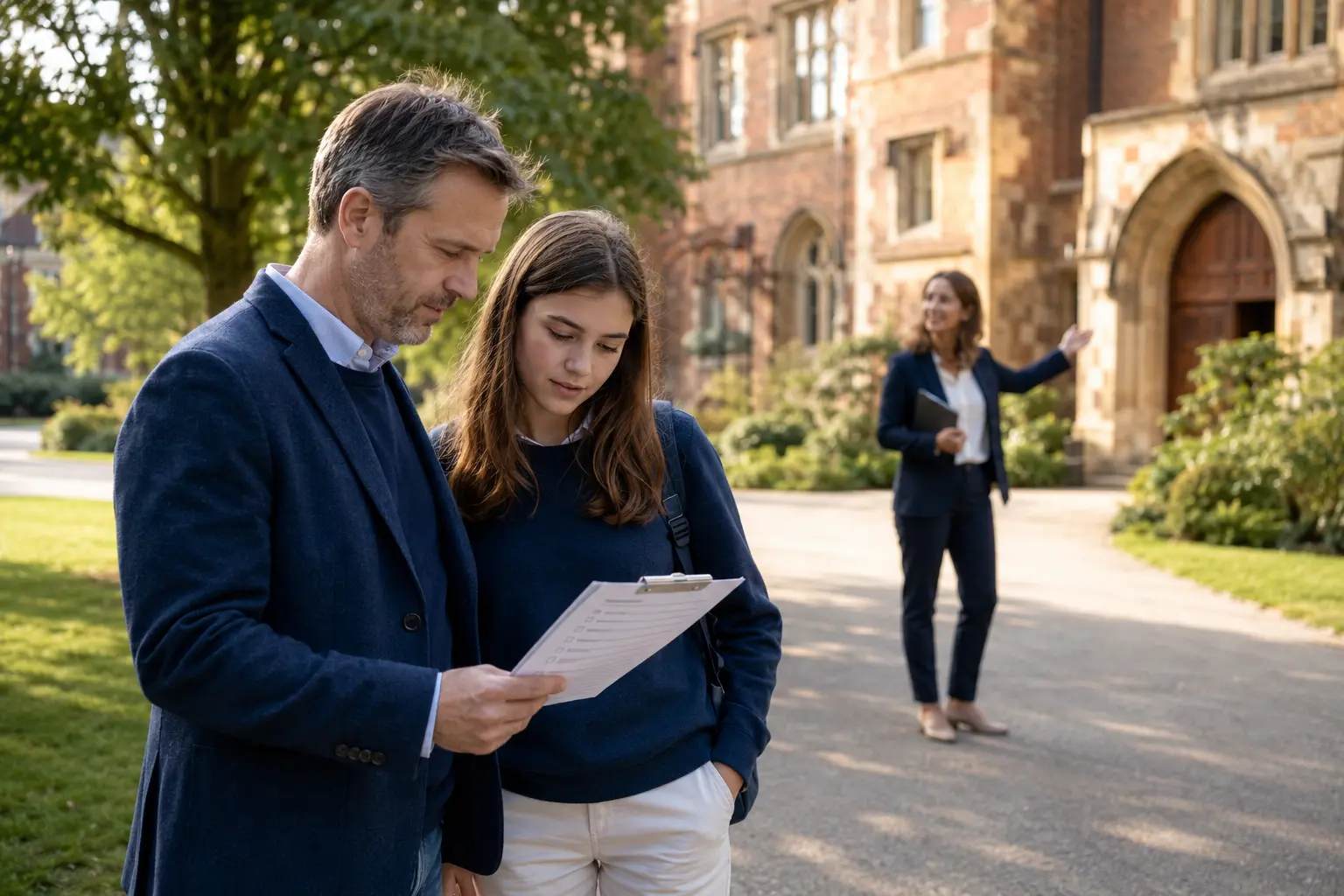
Prepare questions that uncover the reality of boarding life beyond the marketing brochure. Ask about weekend schedules, mobile phone policies, mental health support, bullying protocols, and exactly who supervises the dormitories at night. The best questions require specific examples rather than generic yes/no answers.
The Purpose of an Open Day
An open day or campus tour is a heavily curated marketing event designed to show the boarding school in its best possible light. The student tour guides are hand-picked, the dorms are meticulously cleaned, and the faculty are prepared for standard questions.
Your goal is to politely but firmly probe beneath this polished surface. The questions you ask should focus on the actual lived experience of a 14-year-old student living away from home for the first time. Focus heavily on pastoral care, weekend downtime, and disciplinary realities.
Questions About Pastoral Care and Wellbeing
Academic excellence means nothing if a child is miserable or unsupported. These questions help determine the school's true safety net.
- Who exactly is on duty in the boarding house at 2:00 AM if a student is sick or having a panic attack? Are they teaching staff or dedicated houseparents?
- How does the school handle homesickness during the difficult first three weeks of term? Can you give a specific example of the protocol?
- What is the exact ratio of full-time school counsellors to boarding students? Are these counsellors available after standard school hours?
- How is bullying, particularly cyberbullying, actively monitored and handled within the boarding houses?
- What is the strict policy on mobile phones and laptops in bedrooms after lights out? How is this enforced?
Questions About Weekends and Downtime
Many boarding schools look incredible on a Tuesday afternoon but feel like ghost towns on a Sunday morning if a large percentage of students go home for the weekend.
- What percentage of boarders actually stay on campus during a typical non-exeat (standard) weekend?
- Are weekend activities mandatory or optional? Who organizes them?
- If a student does not want to play competitive sports on a Saturday, what exact alternative activities are available to them?
- How often are students allowed to leave the campus to visit the local town, and what is the supervision policy for these trips?
Questions About Academics and Prep (Homework)
Boarding schools must balance rigorous academics with the need for downtime. Understand how evening study works.
- How is "prep" (homework) supervised in the evenings? Is it done in individual bedrooms or a communal study hall?
- If a student is struggling with a specific subject like Maths, what structural support is available in the evenings? Do academic tutors visit the boarding houses?
- How does the school communicate minor academic or behavioral issues to parents who live in a different country or time zone?
Questions to Ask the Student Tour Guide (Privately)
Student guides are usually honest if asked specific, relatable questions away from faculty ears.
- What is the absolute best and worst thing about the food here? What do you eat on a Sunday evening?
- If you have a problem with a teacher or another student, who is the first person you actually go to for help?
- What happens if you break a minor rule, like being late for roll call?
- What do most boarders actually do on a Sunday afternoon here?
Creating Your Decision Matrix
Do not rely on memory. Immediately after leaving the campus, sit in the car and write down your impressions while they are fresh. Score the school on safety, warmth of the houseparents, honesty of the student guides, and the quality of the facilities. If a school gives evasive or defensive answers to your wellbeing questions, it is a massive red flag that should override any academic ranking.
Frequently Asked Questions
Should the prospective student attend the open day?
Yes, absolutely. The child is the one who will be living there. Their intuitive feeling about the campus vibe and the friendliness of the current students is often the most accurate indicator of whether they will thrive.
Is it appropriate to ask about disciplinary statistics?
Yes. You are fully within your rights to ask how many students were suspended or expelled in the previous academic year and for what primary reasons (e.g., vaping, bullying, academic dishonesty). Transparency here is a sign of a healthy school culture.
What if we cannot visit in person because we live overseas?
Request a live 1-on-1 virtual tour where a student walks around with an iPad or phone. Crucially, ask for a private Zoom meeting with the specific Housemaster or Housemistress who will be responsible for your child's dorm, not just the admissions director.
Primary Sources
Sources were accessed for this guide on 20 August 2026.

Saahil
Saahil is an education researcher and content creator specializing in university rankings, admissions strategies, and student guides. He is dedicated to helping students make informed academic decisions.
Continue your research

University Cost Comparison Checklist: Find the Real Total
A step-by-step worksheet for comparing tuition, living expenses, aid, deposits and hidden study costs across universities and countries.
Read the guide →
How to Choose a UK University Course: Evidence Checklist
Compare UK university courses using modules, assessment, entry requirements, official outcomes and student-support evidence.
Read the guide →
Appleby College Canada: Boarding School, Admissions, Fees & Student Life Guide for International Students
Appleby College is an independent boarding school in Canada.
Read the guide →
Branksome Hall: Toronto’s IB Girls’ Boarding School
Branksome Hall is an independent day and boarding school for girls in Toronto, Ontario, and the city’s only all‑years International Baccalaureate (IB) World…
Read the guide →