
The University of Oxford and the University of Cambridge (collectively known as "Oxbridge") are the two oldest, wealthiest, and most famous universities in the United Kingdom. Deciding between them is a luxury few have, but because you can only apply to one per year through UCAS, you must make your choice carefully.
1. Course Differences
The most important factor in choosing between Oxford and Cambridge is the course structure. While both offer highly regarded tutorials/supervisions, the subjects themselves differ:
- Cambridge offers the Natural Sciences Tripos, allowing students to study a broad range of sciences in their first year before specializing. Oxford requires you to apply for a specific science (e.g., Biology, Chemistry, Physics) from day one.
- Oxford is famous for PPE (Philosophy, Politics and Economics), a course that has produced numerous UK Prime Ministers. Cambridge offers Human, Social, and Political Sciences (HSPS) instead.
- Cambridge is widely considered the slightly stronger choice for pure Mathematics and Engineering, while Oxford often takes the edge in Humanities and Classics.
2. The Towns: Oxford vs. Cambridge
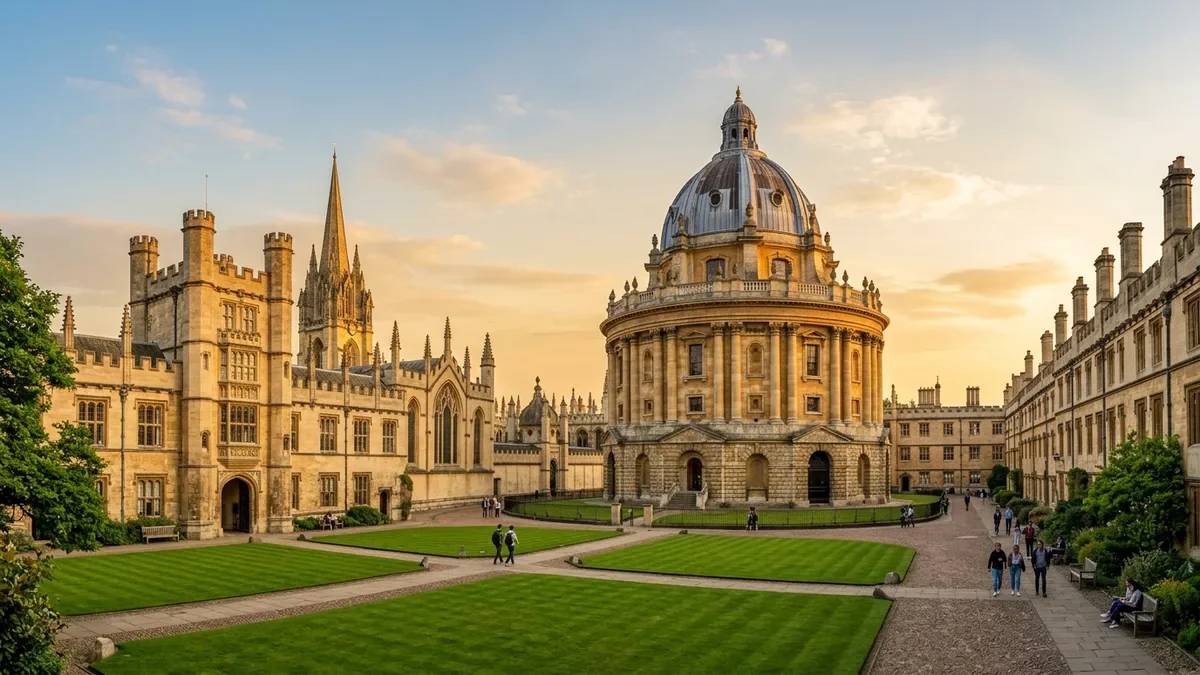
Oxford is a larger, busier city with more industry and traffic. It feels more urban, though the university buildings dominate the center. Cambridge is a smaller, quieter, and more picturesque market town, heavily defined by the River Cam and the "Backs" (the backs of the colleges facing the river).
| Feature | Oxford | Cambridge |
|---|---|---|
| Teaching Style | Tutorials (usually 1-on-2) | Supervisions (usually 1-on-2) |
| Admissions Tests | Mostly standard university-wide tests (e.g., TSA, MAT) | Often college-specific or pre-interview assessments |
| Vibe | Busy, historical, slightly larger city | Quiet, fenland town, highly concentrated campus feel |
3. The Collegiate System
Both universities use a collegiate system. You apply to and live in a specific College (e.g., Christ Church at Oxford or Trinity at Cambridge). Your college handles your accommodation, pastoral care, and small-group teaching, while the central University provides the lectures, labs, and ultimately, your degree.
Frequently Asked Questions (FAQs)
Can I apply to both Oxford and Cambridge in the same year?
No. UCAS regulations prohibit applying to both Oxford and Cambridge in the same admissions cycle for undergraduate degrees. You must choose one.
Which one is harder to get into?
Both have overall acceptance rates around 15-18%. However, Cambridge tends to interview a higher percentage of its applicants (around 70%) and uses the interview as a major filtering tool, while Oxford heavily filters applicants prior to the interview stage using admissions tests and GCSE grades, interviewing only about 20-30% of applicants.
Use a decision framework, not a winner label
Score each option against exact programme fit, full cost, learning environment, verified outcomes, location and support.
Open the full comparison frameworkContinue your research
University of Oxford Admissions 2026: Acceptance Rates, Fees & International Student Guide
Complete 2026 admissions guide for international students applying to the University of Oxford: UCAS deadlines (Oct 15), entrance tests, acceptance rates, tuition fees, and college selection.
Read the guide →Frequently Asked Questions: Oxbridge Admissions
Should I apply to Oxford or Cambridge for Science?
While both are world-leading, the University of Cambridge is historically and structurally more famous for the natural sciences and mathematics, boasting alumni like Newton, Darwin, and Hawking. Cambridge offers a unique "Natural Sciences" tripos that allows students to study a broad range of sciences before specializing. Oxford requires you to apply for a specific science (e.g., Chemistry or Physics) from day one.
How does the college system differ between the two?
The collegiate structures are fundamentally identical. Both universities are composed of dozens of independent colleges where students live, eat, and receive small-group teaching. Oxford calls its small-group teaching "tutorials" (usually 1-on-1 or 2-on-1), while Cambridge calls them "supervisions." The intensity and format of this pedagogical method are exactly the same.
Which city is better for student life?
Oxford is a slightly larger, busier, and more industrialized city with a slightly more urban feel. Cambridge is a smaller, quieter, and arguably more picturesque "market town" dominated entirely by the university and the River Cam. Both are deeply historic, heavily cycled, and incredibly expensive to live in.

How to Compare Universities Beyond Rankings: A 2026 Framework
Compare course fit, cost, outcomes, support and learning experience with official data instead of relying on one league-table position.
Read the guide →Frequently Asked Questions: Oxbridge Admissions
Should I apply to Oxford or Cambridge for Science?
While both are world-leading, the University of Cambridge is historically and structurally more famous for the natural sciences and mathematics, boasting alumni like Newton, Darwin, and Hawking. Cambridge offers a unique "Natural Sciences" tripos that allows students to study a broad range of sciences before specializing. Oxford requires you to apply for a specific science (e.g., Chemistry or Physics) from day one.
How does the college system differ between the two?
The collegiate structures are fundamentally identical. Both universities are composed of dozens of independent colleges where students live, eat, and receive small-group teaching. Oxford calls its small-group teaching "tutorials" (usually 1-on-1 or 2-on-1), while Cambridge calls them "supervisions." The intensity and format of this pedagogical method are exactly the same.
Which city is better for student life?
Oxford is a slightly larger, busier, and more industrialized city with a slightly more urban feel. Cambridge is a smaller, quieter, and arguably more picturesque "market town" dominated entirely by the university and the River Cam. Both are deeply historic, heavily cycled, and incredibly expensive to live in.

University Cost Comparison Checklist: Find the Real Total
A step-by-step worksheet for comparing tuition, living expenses, aid, deposits and hidden study costs across universities and countries.
Read the guide →Frequently Asked Questions: Oxbridge Admissions
Should I apply to Oxford or Cambridge for Science?
While both are world-leading, the University of Cambridge is historically and structurally more famous for the natural sciences and mathematics, boasting alumni like Newton, Darwin, and Hawking. Cambridge offers a unique "Natural Sciences" tripos that allows students to study a broad range of sciences before specializing. Oxford requires you to apply for a specific science (e.g., Chemistry or Physics) from day one.
How does the college system differ between the two?
The collegiate structures are fundamentally identical. Both universities are composed of dozens of independent colleges where students live, eat, and receive small-group teaching. Oxford calls its small-group teaching "tutorials" (usually 1-on-1 or 2-on-1), while Cambridge calls them "supervisions." The intensity and format of this pedagogical method are exactly the same.
Which city is better for student life?
Oxford is a slightly larger, busier, and more industrialized city with a slightly more urban feel. Cambridge is a smaller, quieter, and arguably more picturesque "market town" dominated entirely by the university and the River Cam. Both are deeply historic, heavily cycled, and incredibly expensive to live in.

How to Verify University Accreditation Before You Apply
A practical country-by-country checklist for checking whether a university and programme are officially recognized before paying an application fee.
Read the guide →Frequently Asked Questions: Oxbridge Admissions
Should I apply to Oxford or Cambridge for Science?
While both are world-leading, the University of Cambridge is historically and structurally more famous for the natural sciences and mathematics, boasting alumni like Newton, Darwin, and Hawking. Cambridge offers a unique "Natural Sciences" tripos that allows students to study a broad range of sciences before specializing. Oxford requires you to apply for a specific science (e.g., Chemistry or Physics) from day one.
How does the college system differ between the two?
The collegiate structures are fundamentally identical. Both universities are composed of dozens of independent colleges where students live, eat, and receive small-group teaching. Oxford calls its small-group teaching "tutorials" (usually 1-on-1 or 2-on-1), while Cambridge calls them "supervisions." The intensity and format of this pedagogical method are exactly the same.
Which city is better for student life?
Oxford is a slightly larger, busier, and more industrialized city with a slightly more urban feel. Cambridge is a smaller, quieter, and arguably more picturesque "market town" dominated entirely by the university and the River Cam. Both are deeply historic, heavily cycled, and incredibly expensive to live in.
Frequently Asked Questions: Oxbridge Admissions
Should I apply to Oxford or Cambridge for Science?
While both are world-leading, the University of Cambridge is historically and structurally more famous for the natural sciences and mathematics, boasting alumni like Newton, Darwin, and Hawking. Cambridge offers a unique "Natural Sciences" tripos that allows students to study a broad range of sciences before specializing. Oxford requires you to apply for a specific science (e.g., Chemistry or Physics) from day one.
How does the college system differ between the two?
The collegiate structures are fundamentally identical. Both universities are composed of dozens of independent colleges where students live, eat, and receive small-group teaching. Oxford calls its small-group teaching "tutorials" (usually 1-on-1 or 2-on-1), while Cambridge calls them "supervisions." The intensity and format of this pedagogical method are exactly the same.
Which city is better for student life?
Oxford is a slightly larger, busier, and more industrialized city with a slightly more urban feel. Cambridge is a smaller, quieter, and arguably more picturesque "market town" dominated entirely by the university and the River Cam. Both are deeply historic, heavily cycled, and incredibly expensive to live in.