
This page helps students and families research Harvard University. It is not a ranking, paid placement, review score or admission recommendation.
About Harvard University
Harvard University is the oldest institution of higher education in the United States, founded on October 28, 1636 by vote of the Great and General Court of the Massachusetts Bay Colony. Its historic Harvard Yard sits in Cambridge, Massachusetts, alongside extensive academic, research, and residential facilities in the nearby Boston neighborhoods of Longwood and Allston.
Harvard comprises Harvard College and twelve graduate and professional schools spanning arts and sciences, engineering, business, law, medicine, public health, education, government, and design. Undergraduate admission to Harvard College is highly selective, and the Griffin Financial Aid Office meets full demonstrated need for admitted students.
The Office of Admissions and Financial Aid is located at 86 Brattle Street in Cambridge. Prospective students and families can contact undergraduate admissions at college@fas.harvard.edu or 617-495-1551.
Key facts and contact details
These profile fields provide a practical research snapshot. Confirm time-sensitive items with the institution because programmes, contacts and entry policies can change.
- Address
- Massachusetts Hall, Cambridge, Massachusetts 02138
- Established
- 1636
- Grades / levels
- Undergraduate and graduate degrees
- Courses offered
- Undergraduate and graduate programs across Harvard College and twelve graduate and professional schools, including arts and sciences, engineering, business, law, medicine, public health, education, government, and design.
- Languages
- English
- Accreditation
- Accredited by the New England Commission of Higher Education (NECHE)
- Phone
- 617-495-1000
- Admissions email
- college@fas.harvard.edu
- Admissions phone
- 617-495-1551
Academic and student-fit questions
Use this university · private · universities · united states profile as a starting point. Look closely at the exact course, grade pathway or curriculum, where it is taught, how it is taught, what student support exists, and how outcomes are measured.
- Does the exact programme or grade pathway match the student’s academic goal?
- Which campus, delivery mode, class format and assessment system apply?
- What academic, language, accessibility and wellbeing support is available?
- Which outcomes are published, and are they relevant to the specific programme?
- What student experience, housing or boarding expectations should be checked directly?
Admissions, cost and eligibility checks
Before you pay an application fee or deposit, get the current requirements for the exact intake you are applying to. Compare the full cost, not just tuition: compulsory charges, housing, meals, insurance, transport, equipment, and any international-student or boarding costs that apply.
- Official recognition or accreditation for the institution and programme
- Current course availability, entry requirements and application deadline
- Full tuition, compulsory fees, deposits and refund conditions
- Campus, study mode, accommodation and student-support arrangements
- Visa or professional-licensing implications from the relevant authority
Houses, the Yard and a Library Built in Memory
Below the headline numbers sit two structures that shape daily life at Harvard more than any ranking does. First-year students live in dormitories in Harvard Yard and take their meals in Annenberg Hall. From the second year, undergraduates are assigned to one of twelve residential Houses, each home to roughly 350 to 500 students with its own dining hall, and Harvard says about 93 per cent of upperclass undergraduates live in one of the twelve Houses. The House system was the plan of President A. Lawrence Lowell, funded by Edward Harkness's 1928 gift of more than $10 million for the first seven Houses; Dunster and Lowell Houses opened in 1930, modelled on the colleges of Oxford and Cambridge.
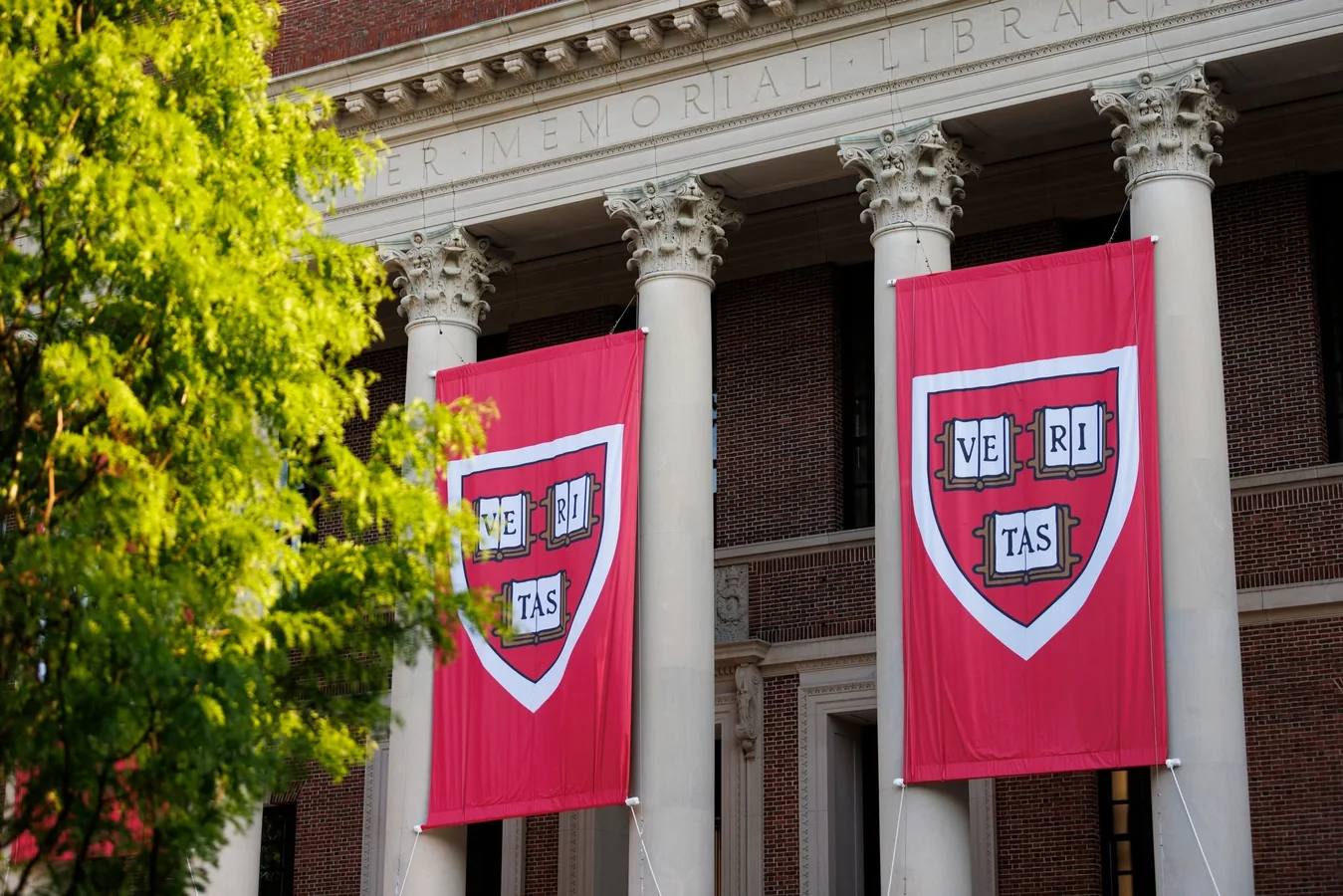
The second structure is Widener Library, at the heart of Harvard Yard. It opened on Commencement Day, 24 June 1915, as Eleanor Elkins Widener's gift in memory of her son Harry Elkins Widener, a Harvard graduate of 1907 and passionate book collector who died on the Titanic in 1912. The building holds some 57 miles of shelving, and Harry Widener's own collection is still on display inside it — a reminder that Harvard's scale is matched by very specific, personal histories.
Explore further
Researching Harvard University? These resources on this site connect this profile to the bigger decisions around it:
- Top 100 Universities in the World: 2026 QS Rankings & Admissions Guide — where institutions like this one sit in the global picture.
- University Cost Calculator — turn tuition and living figures into a full annual budget before you compare institutions.
- Related institution profiles: Princeton University, Stanford University, Yale University.
- Browse all institution profiles — the full directory this profile belongs to.
How this profile was prepared
This page was reviewed and rebuilt without changing its URL. Where the sources allowed, the institution’s identity and campus context were restored, and profile facts were separated from editorial guidance. Confirm material decisions with official institution, regulator and government sources.
There are no fabricated star ratings or testimonials on this page. If a detail is outdated, send the page URL and a current primary source through our correction channel.
Read the accreditation checklist
Saahil
Saahil is an education researcher and content creator specializing in university rankings, admissions strategies, and student guides. He is dedicated to helping students make informed academic decisions.