
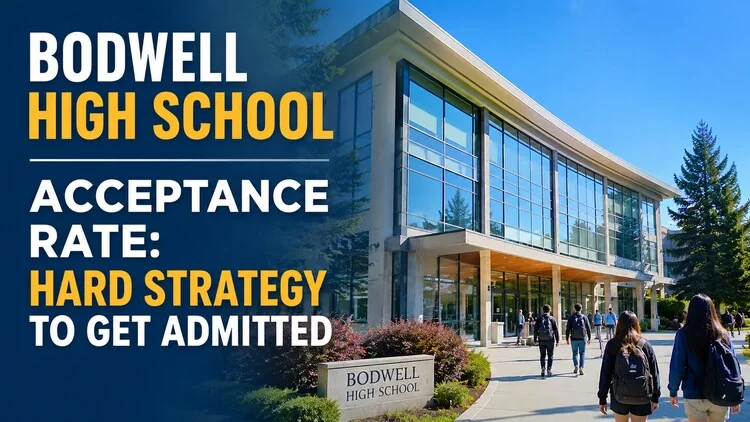
Bodwell High School Admissions Guide
If you are eyeing a top-tier international runway to elite universities, Bodwell High School in North Vancouver is likely at the top of your list. Offering the globally recognized BC Dogwood Diploma right on a beautiful waterfront campus, it is a premier destination for ambitious youth.
But here is the problem: because it is one of Western Canada's most well-known international boarding schools, thousands of families from over 40 countries apply every single cycle.
How do you stand out when competing against a massive global pool of applicants? What are the hidden filters that the admissions committee uses to clear out weak applications? In this strategic guide, we will dive deep into the real admissions metrics for 2026, look past the basic application checklist, and give you an actionable roadmap to maximize your chances of acceptance.
The 2026 Selection Matrix: Acceptance Rates & Quotas
Bodwell High School does not publish a single blanket acceptance rate, and there is a very strategic reason for that. Unlike domestic public schools, Bodwell closely manages nationality diversity quotas. The admissions board actively limits the percentage of students from any single country to ensure the campus stays truly multicultural and global.
This means your real chance of acceptance depends heavily on your application timing, your region, and whether you are applying as a local day student or an international boarder.
Estimated Admissions Selectivity Breakdown
|
Applicant Category |
Estimated Acceptance Rate |
Core Intake Windows |
Primary Selection Filter |
|
Domestic Day Students (BC/Canada) |
50% – 55% |
September & January |
Local school transcripts & reference check |
|
International Boarding (Low-Quota Regions) |
40% – 45% |
Sept, Jan, & May |
Character interview & academic drive |
|
International Boarding (High-Volume Regions) |
~25% – 30% |
Sept & Jan (Fills fast) |
Strict portfolio review & spaces available |
Reality Check: If you are applying from a high-volume country where hundreds of students apply simultaneously, the process becomes twice as competitive. Waiting until the last minute means you are fighting for the final 5% of open seats in your nationality pool.
What Bodwell Admissions Officers Look For (The True Criteria)
Many parents make the mistake of thinking that simply being able to afford the premium tuition guarantees a seat. It does not. The admissions team looks for specific markers that prove a student will thrive in a high-intensity boarding environment.
1. The Maturity and Independence Index
Living away from home in a new country at 14 or 15 years old is tough. During the mandatory screening process, officers look for signs of personal accountability. Can the student manage their own time? Do they handle routines well? A brilliant student who shows signs of extreme homesickness, emotional dependency, or behavioral issues will be passed over immediately.
2. Global Mindset and Adaptability
With over 40 nationalities represented on campus, culture clashes can happen. The admissions team actively filters out insular students. They want to see applicants who are excited about sharing a room with someone from a completely different culture, background, and language profile.
The Hidden Academic Filter: Trimester System & Course Rigor
Because Bodwell runs on a fast-paced trimester system (three full terms per year: Fall, Winter, and Summer), the academic velocity is much higher than standard linear schools. Instead of stretching courses across 10 months, students compress their learning into intense, focused terms.
The admissions team wants to see consistent "B" grades (75%+) or better on your past three years of report cards. They look closely at your performance trends—if your grades dropped significantly in the final term of your previous school, it signals to the committee that you might struggle under Bodwell's accelerated trimester model.
Step-by-Step Profile Building Strategy
To bypass the standard filters and get a firm letter of acceptance, follow this precise three-step application strategy:
Step 1: Optimize the Transcripts & AEP Positioning
If your child is a non-native English speaker, don't worry about absolute perfection. Bodwell has an exceptional Academic English Preparation (AEP) track. Instead of trying to hide English limitations, highlight a strong trajectory in core quantitative subjects like mathematics and sciences on the past two years of official transcripts. This proves intellectual capability, which makes language learning a minor hurdle.
Step 2: Secure Strategic Recommendation Letters
Do not just get a generic recommendation letter that says your child is a "good student." Ask a core subject teacher or school counselor to write about specific instances where the student showed leadership, resilience, or exceptional teamwork. A letter that highlights emotional maturity carries immense weight with the residential admissions team.
Step 3: Write a Distinct Personal Statement
The student essay should not read like a boring list of awards. Focus the statement on:
-
Why studying in a multicultural environment like Vancouver matters to the student's long-term goals.
-
A specific challenge the student has faced (academic or personal) and how they solved it independently.
-
How they plan to actively participate in campus life (e.g., joining the soccer team, coding clubs, or community service).
Cracking the Live Interview: Real Questions & Winning Responses
The mandatory online video interview is often the absolute deciding factor in the admissions process. Teach your son or daughter to speak clearly, look directly into the camera, and answer questions honestly without looking at their parents for cues.
Here are real questions Bodwell admissions officers use to screen candidates, along with the strategic angle needed to answer them successfully:
-
The Question: "What do you do when you disagree with a roommate or classmate?"
-
The Strategy: They are testing conflict resolution. The ideal answer should focus on open communication, active listening, and involving a youth advisor only if a mutual compromise cannot be reached.
-
The Question: "How do you plan to manage your time between intense academics and mandatory extracurricular activities?"
-
The Strategy: Show that you understand structure. Mention your plan to utilize the mandatory evening study halls efficiently so that weekends are free for outdoor excursions and community work.
Financial Realities: Fees vs. Selective Scholarships
A winning strategy also means mapping out your financial commitment early. Because Bodwell provides comprehensive legal custodianship services, health insurance, and full residential support for international visas, the financial layout is highly itemized.
2026–2027 Strategic Cost Breakdown
|
Expense Category |
Annual Day Student Cost |
Annual International Boarder Cost |
Strategy Notes |
|
Application Fee |
$200 CAD |
$350 CAD |
Non-refundable entry fee |
|
Tuition & Core Fees |
$23,500 CAD |
$34,200 CAD |
Covers complete BC Dogwood curriculum |
|
Boarding & Full Meals |
— |
$26,500 CAD |
Includes 24/7 youth advisor supervision |
|
Mandatory Uniforms & Medical |
$1,500 CAD |
$2,800 CAD |
Required for international compliance |
|
Activity Fees & Deposits |
$1,000 CAD |
$2,500 CAD |
Covers weekend Whistler/outdoor trips |
|
Total Layout |
$26,200 CAD |
$67,550 CAD |
Target benchmark for financial planning |
Securing Merit Scholarships
Traditional need-based financial aid is rarely available for incoming international students. However, you can offset costs later. Bodwell offers competitive merit-based scholarships for returning students who maintain top marks, win student council elections, or excel in varsity athletics. Position your student to lead early on campus, and the financial return will follow.
University Pathways: Where Do Bodwell Graduates Go?
The comprehensive reason parents invest in Bodwell is the university placement record. The school's dedicated university guidance team works individually with students to align their BC Dogwood Diploma and Advanced Placement (AP) credits with top global universities.
Graduates routinely transition into top-tier institutional systems:
-
Canada: University of Toronto, University of British Columbia (UBC), McGill University, and McMaster University.
-
Global: Elite choices across the United States and the United Kingdom, built on the strong international academic reputation of the BC curriculum.
Key Takeaways for Applicants
-
Beat the Quotas: Apply at least 8 to 10 months ahead of your target term to ensure regional diversity quotas don't lock you out.
-
Highlight Independence: The interview carries massive weight; focus your preparation on demonstrating personal accountability and adaptability.
-
Leverage the Trimester System: Use the accelerated summer terms to fast-track graduation or clear prerequisite paths smoothly.
-
Clear Financial Planning: Ensure your budget aligns with the ~$67,550 CAD annual international benchmark to avoid visa processing delays.
FAQs
1. Does Bodwell High School require the SSAT for admissions?
No, Bodwell does not require the SSAT or formal standardized testing for entry. Selectivity is based on your previous two to three years of academic transcripts, teacher recommendations, a personal statement, and a mandatory online interview.
2. How do regional quotas affect my child's chances?
To keep the campus diverse, Bodwell limits the number of students from any single country. If you apply from a high-volume country during a late application window, you might be waitlisted even if your grades are perfect. Early application is vital.
3. What happens if a student's English isn't strong enough?
Students with developing language skills are placed into the Academic English Preparation (AEP) program. This allows them to build up their academic English while earning high school credits simultaneously, ensuring they don't lose time.
4. Can day students transition into the boarding program later?
Yes, day students can apply to transition into the boarding house for senior years if space permits, though boarding spots are highly prioritized for international applicants during the initial intake cycles.

Saahil
Saahil is an education researcher and content creator specializing in university rankings, admissions strategies, and student guides. He is dedicated to helping students make informed academic decisions.
Continue your research
How to Get Into Baulkham Hills High School: 2026 Admissions, Rankings, and Preparation Strategy
Baulkham Hills High School (BHHS) is not just a school; it is a hub for academic titans in New South Wales.
Read the guide →
University of Oxford Admissions 2026: Acceptance Rates, Fees & International Student Guide
Complete 2026 admissions guide for international students applying to the University of Oxford: UCAS deadlines (Oct 15), entrance tests, acceptance rates, tuition fees, and college selection.
Read the guide →
California Institute of Technology Acceptance Rate (2026): How Hard Is It to Get Into Caltech?
If you're searching for the California Institute of Technology acceptance rate, you're probably wondering just how competitive this elite university really is.
Read the guide →
Algoma University for International Students: Admissions, Fees, Courses & Visa Guide
Choosing the right university in Canada is a crucial decision for international students.
Read the guide →