
McGill University (in Montreal) and the University of Toronto (U of T) are Canada's top two internationally ranked research universities. Both attract top-tier students from around the globe, but they offer vastly different student experiences, geographic advantages, and campus cultures.
1. City and Location
U of T is located in the heart of downtown Toronto, Canada's largest city and financial capital. The city is sprawling, multicultural, and deeply integrated into the global economy.
McGill is situated in downtown Montreal, Quebec. Montreal is famously bilingual (French and English), culturally vibrant, and known for its European flair, affordability, and incredibly active student life.
2. Academic Structure and Prestige
U of T is a massive institution with a federated college system (similar to Oxford or Cambridge) at its St. George campus. It boasts the largest research network and library system in Canada. It consistently ranks as the #1 university in Canada in global league tables.
McGill is slightly smaller (though still large) and is often referred to as the "Harvard of the North." It is highly prestigious, particularly in medicine, law, and international relations. McGill holds the record for the highest percentage of international students among Canada's top research universities.
| Factor | University of Toronto | McGill University |
|---|---|---|
| Location | Toronto, Ontario | Montreal, Quebec |
| Global Ranking (approx.) | Top 25 globally | Top 35 globally |
| Cost of Living | Very High (Toronto real estate) | Moderate to Low (Highly affordable student city) |
| Language | Strictly English | English university in a French-speaking province |
3. Cost and Affordability
One of the biggest deciding factors is cost. Tuition for international students at U of T has become exceptionally high, often exceeding $60,000 CAD per year. McGill's international tuition is also high but generally slightly lower than U of T's. More importantly, the cost of living (rent, food, nightlife) in Montreal is significantly cheaper than in Toronto.
4. Which Should You Choose?
Choose U of T if you want unparalleled research resources, access to Bay Street (finance) and Toronto's tech hub, and prefer a massive, modern metropolis.
Choose McGill if you want a more affordable, culturally rich, bilingual city experience, a highly international student body, and a strong "college town" vibe within a major city.
Frequently Asked Questions (FAQs)
Do I need to speak French to attend McGill?
No. McGill is an English-language university, and all classes (except language courses) are taught in English. However, knowing some conversational French is highly beneficial for navigating the city of Montreal and securing off-campus employment.
Use a decision framework, not a winner label
Score each option against exact programme fit, full cost, learning environment, verified outcomes, location and support.
Open the full comparison frameworkContinue your research
Branksome Hall: Toronto’s IB Girls’ Boarding School
Branksome Hall is an independent day and boarding school for girls in Toronto, Ontario, and the city’s only all‑years International Baccalaureate (IB) World…
Read the guide →Frequently Asked Questions: McGill vs UofT
Which university has better global recognition?
Both the University of Toronto (UofT) and McGill University enjoy elite global reputations. UofT typically ranks slightly higher in global commercial rankings (often in the top 20 worldwide) due to its massive research output and larger faculty. McGill (often top 40) is highly prestigious, particularly in the United States, where it is frequently dubbed the "Harvard of Canada" due to its rigorous academics and historic prestige.
How does student life differ between Montreal and Toronto?
This is often the deciding factor for students. Montreal (McGill) is widely considered one of the best student cities in the world—it is highly affordable, culturally rich, bilingual, and has a vibrant nightlife. Toronto (UofT) is Canada's financial capital, offering unparalleled corporate networking and internship opportunities, but it comes with an extraordinarily high cost of living and a more intense, commuter-heavy campus vibe.
Is it harder to get high grades at UofT or McGill?
Both universities are infamous in Canada for their rigorous grading curves and academic intensity, a phenomenon often referred to as "grade deflation." First-year life sciences and engineering at both institutions act as intense "weeder" programs. However, UofT's massive class sizes in the first two years often make students feel they must fight harder to stand out to professors.
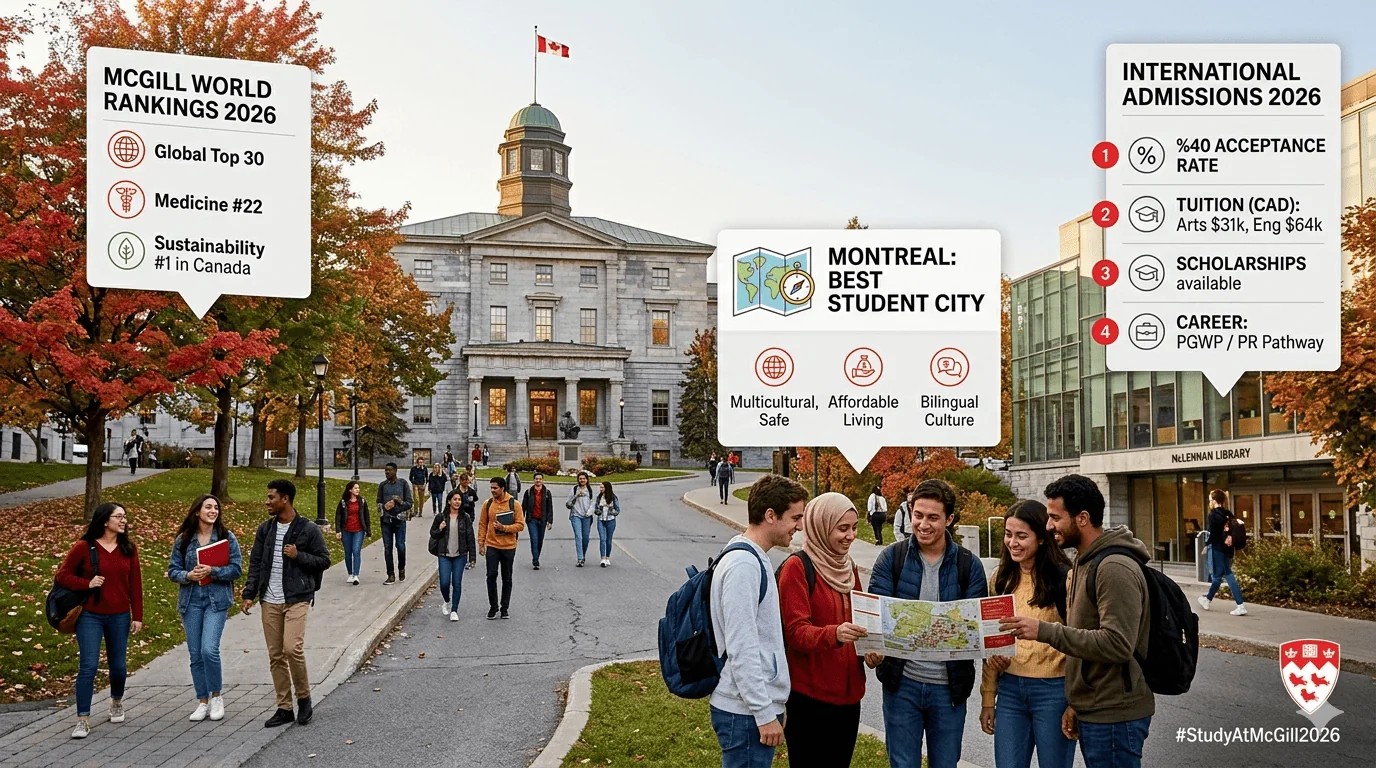
McGill University for International Students: The Comprehensive 2026 Admissions Guide
Founded in 1821, McGill University is not just a school; it is a global research powerhouse.
Read the guide →Frequently Asked Questions: McGill vs UofT
Which university has better global recognition?
Both the University of Toronto (UofT) and McGill University enjoy elite global reputations. UofT typically ranks slightly higher in global commercial rankings (often in the top 20 worldwide) due to its massive research output and larger faculty. McGill (often top 40) is highly prestigious, particularly in the United States, where it is frequently dubbed the "Harvard of Canada" due to its rigorous academics and historic prestige.
How does student life differ between Montreal and Toronto?
This is often the deciding factor for students. Montreal (McGill) is widely considered one of the best student cities in the world—it is highly affordable, culturally rich, bilingual, and has a vibrant nightlife. Toronto (UofT) is Canada's financial capital, offering unparalleled corporate networking and internship opportunities, but it comes with an extraordinarily high cost of living and a more intense, commuter-heavy campus vibe.
Is it harder to get high grades at UofT or McGill?
Both universities are infamous in Canada for their rigorous grading curves and academic intensity, a phenomenon often referred to as "grade deflation." First-year life sciences and engineering at both institutions act as intense "weeder" programs. However, UofT's massive class sizes in the first two years often make students feel they must fight harder to stand out to professors.
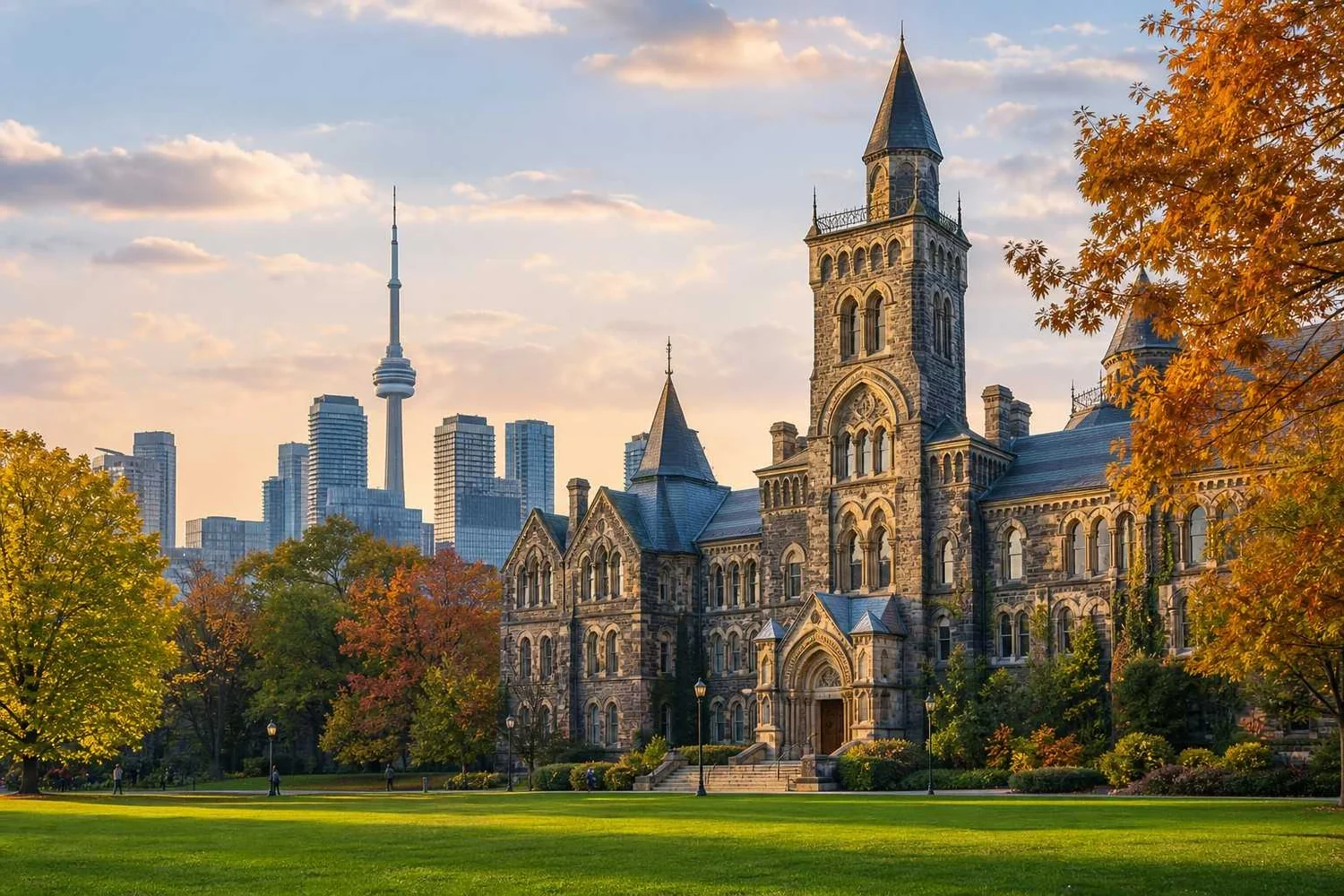
University of Toronto Admissions 2026: Complete Guide for International Students
University of Toronto admissions 2026 for international students: requirements, OUAC deadlines, tuition, Pearson scholarships, and campus overview.
Read the guide →Frequently Asked Questions: McGill vs UofT
Which university has better global recognition?
Both the University of Toronto (UofT) and McGill University enjoy elite global reputations. UofT typically ranks slightly higher in global commercial rankings (often in the top 20 worldwide) due to its massive research output and larger faculty. McGill (often top 40) is highly prestigious, particularly in the United States, where it is frequently dubbed the "Harvard of Canada" due to its rigorous academics and historic prestige.
How does student life differ between Montreal and Toronto?
This is often the deciding factor for students. Montreal (McGill) is widely considered one of the best student cities in the world—it is highly affordable, culturally rich, bilingual, and has a vibrant nightlife. Toronto (UofT) is Canada's financial capital, offering unparalleled corporate networking and internship opportunities, but it comes with an extraordinarily high cost of living and a more intense, commuter-heavy campus vibe.
Is it harder to get high grades at UofT or McGill?
Both universities are infamous in Canada for their rigorous grading curves and academic intensity, a phenomenon often referred to as "grade deflation." First-year life sciences and engineering at both institutions act as intense "weeder" programs. However, UofT's massive class sizes in the first two years often make students feel they must fight harder to stand out to professors.

How to Compare Universities Beyond Rankings: A 2026 Framework
Compare course fit, cost, outcomes, support and learning experience with official data instead of relying on one league-table position.
Read the guide →Frequently Asked Questions: McGill vs UofT
Which university has better global recognition?
Both the University of Toronto (UofT) and McGill University enjoy elite global reputations. UofT typically ranks slightly higher in global commercial rankings (often in the top 20 worldwide) due to its massive research output and larger faculty. McGill (often top 40) is highly prestigious, particularly in the United States, where it is frequently dubbed the "Harvard of Canada" due to its rigorous academics and historic prestige.
How does student life differ between Montreal and Toronto?
This is often the deciding factor for students. Montreal (McGill) is widely considered one of the best student cities in the world—it is highly affordable, culturally rich, bilingual, and has a vibrant nightlife. Toronto (UofT) is Canada's financial capital, offering unparalleled corporate networking and internship opportunities, but it comes with an extraordinarily high cost of living and a more intense, commuter-heavy campus vibe.
Is it harder to get high grades at UofT or McGill?
Both universities are infamous in Canada for their rigorous grading curves and academic intensity, a phenomenon often referred to as "grade deflation." First-year life sciences and engineering at both institutions act as intense "weeder" programs. However, UofT's massive class sizes in the first two years often make students feel they must fight harder to stand out to professors.
Frequently Asked Questions: McGill vs UofT
Which university has better global recognition?
Both the University of Toronto (UofT) and McGill University enjoy elite global reputations. UofT typically ranks slightly higher in global commercial rankings (often in the top 20 worldwide) due to its massive research output and larger faculty. McGill (often top 40) is highly prestigious, particularly in the United States, where it is frequently dubbed the "Harvard of Canada" due to its rigorous academics and historic prestige.
How does student life differ between Montreal and Toronto?
This is often the deciding factor for students. Montreal (McGill) is widely considered one of the best student cities in the world—it is highly affordable, culturally rich, bilingual, and has a vibrant nightlife. Toronto (UofT) is Canada's financial capital, offering unparalleled corporate networking and internship opportunities, but it comes with an extraordinarily high cost of living and a more intense, commuter-heavy campus vibe.
Is it harder to get high grades at UofT or McGill?
Both universities are infamous in Canada for their rigorous grading curves and academic intensity, a phenomenon often referred to as "grade deflation." First-year life sciences and engineering at both institutions act as intense "weeder" programs. However, UofT's massive class sizes in the first two years often make students feel they must fight harder to stand out to professors.