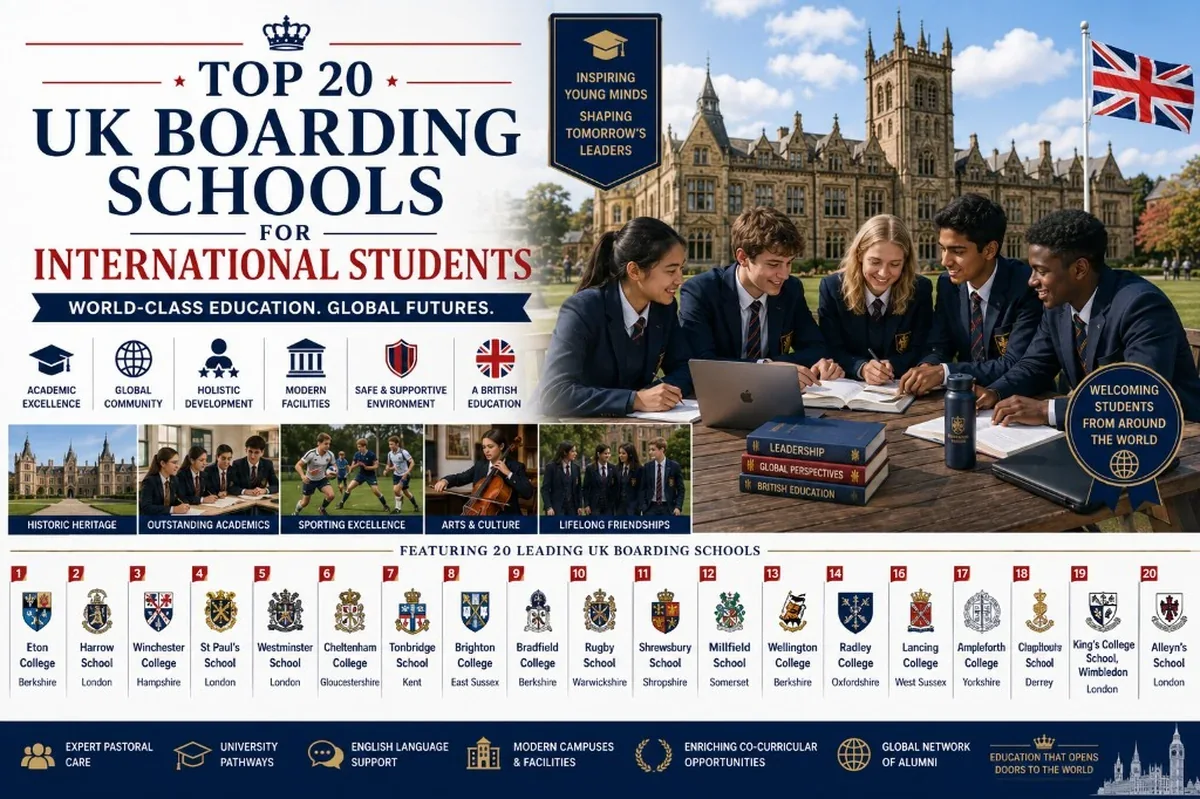
For international families seeking elite secondary education, the choice often comes down to the historic UK Boarding Schools (such as Eton, Harrow, or Winchester) and the prestigious USA Boarding Schools (such as Phillips Exeter, Andover, or Choate). Both pathways offer exceptional resources, but their educational philosophies and university outcomes differ drastically.
1. Curriculum and Academic Philosophy
UK Boarding Schools focus on early specialization. Students take GCSEs around age 16 and then narrow their focus to just 3 or 4 subjects for their A-Levels. This creates deep subject-matter experts who are prepared for the specialized nature of UK universities.
USA Boarding Schools emphasize a broad, liberal arts education. Students take a wide variety of subjects through 12th grade, often including Advanced Placement (AP) courses. This broad foundation is designed to prepare students for the holistic admissions process of Ivy League and US colleges.
2. Culture and Environment
UK schools are steeped in centuries of tradition, featuring house systems, formal uniforms (sometimes including tailcoats), and strong hierarchical structures (prefects, head boys/girls). They place a heavy emphasis on pastoral care within the boarding house.
US boarding schools feel more like small liberal arts colleges. They feature modern facilities, a strong emphasis on student-led clubs and activism, and highly competitive athletics. Uniforms are rare, though dress codes exist.
| Factor | UK Boarding Schools | US Boarding Schools |
|---|---|---|
| Curriculum | GCSEs and A-Levels (Early Specialization) | US High School Diploma + APs (Broad Liberal Arts) |
| Teaching Style | Traditional, rigorous, exam-focused | Discussion-based (Harkness method), continuous assessment |
| University Pathway | Direct feed into Oxbridge and Russell Group | Direct feed into Ivy League and Elite US Colleges |
| Vibe | Traditional, structured, heritage-focused | Progressive, collegiate, resource-heavy |
3. The "Harkness" Table vs. Traditional Teaching
Many elite US boarding schools (pioneered by Phillips Exeter) use the Harkness Method, where 12 students sit around an oval table and lead discussions with the teacher acting only as a moderator. UK schools, while highly interactive, still tend to rely more on traditional classroom instruction and lecture formats to prepare students for high-stakes A-Level exams.
4. Which Pathway is Right?
Choose the UK if your child knows exactly what they want to study (e.g., Medicine, Law) and prefers structured, tradition-rich environments. Choose the USA if your child is intellectually curious across many subjects, excels in continuous assessment rather than just final exams, and is targeting US universities.
Frequently Asked Questions (FAQs)
Are US boarding schools more expensive than UK boarding schools?
Yes. Elite US boarding schools currently cost upwards of $65,000 to $70,000 USD per year. UK boarding schools typically charge around £40,000 to £50,000 GBP per year. However, top US schools often have massive endowments and can offer generous need-based financial aid, even to international students, which is less common in the UK.
Use a decision framework, not a winner label
Score each option against exact programme fit, full cost, learning environment, verified outcomes, location and support.
Open the full comparison frameworkContinue your research
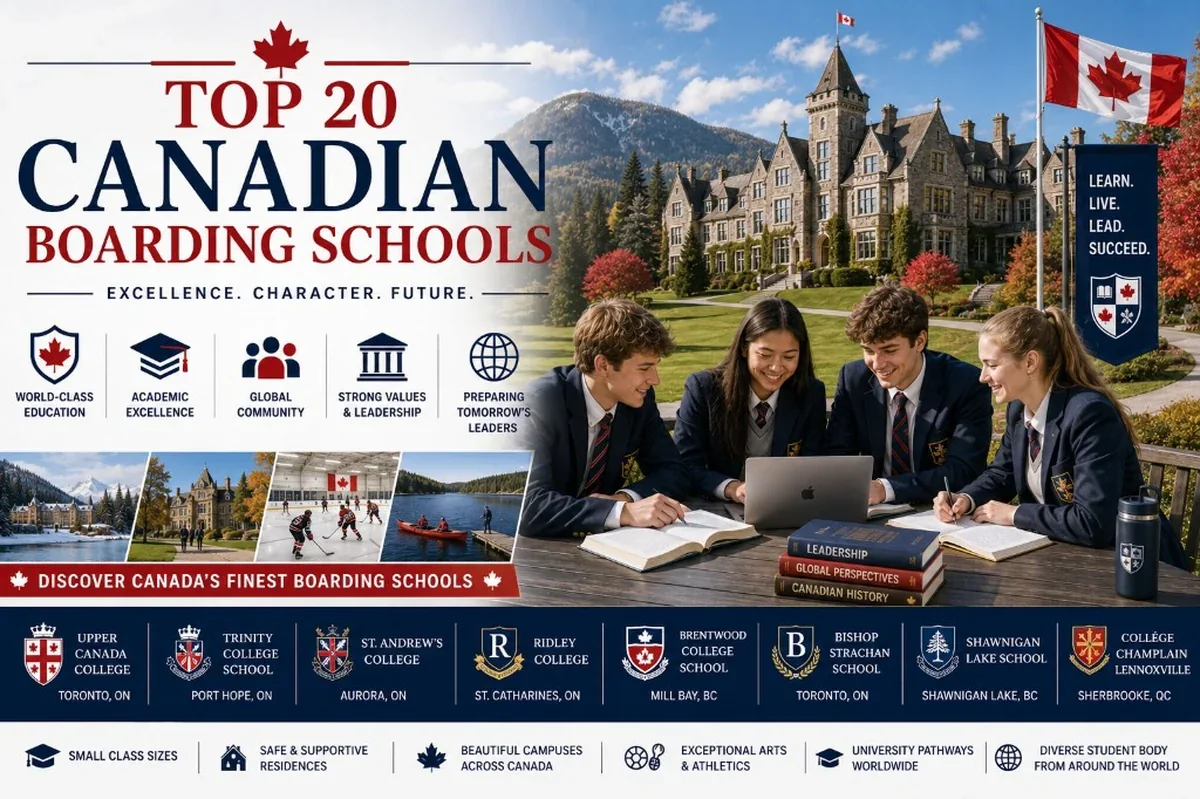
Top 20 Canadian Boarding Schools (2026 Admissions Guide)
Top 20 Canadian boarding schools for 2026: Upper Canada College, Appleby, Branksome Hall, Bodwell, and more, with admissions, IB availability, and cost guidance.
Read the guide →Frequently Asked Questions: Transatlantic Boarding
How do the academic systems compare?
UK boarding schools typically follow the highly specialized A-Level (or occasionally IB) curriculum, where students narrow their focus to just 3 or 4 subjects in their final two years. US boarding schools follow a broader liberal arts high school diploma model, often incorporating Advanced Placement (AP) classes, requiring students to maintain breadth across math, science, humanities, and languages until graduation.
Is there a difference in university admissions outcomes?
Yes. UK boarding schools are explicitly engineered to prepare students for the UCAS system (Oxford, Cambridge, Russell Group), focusing heavily on deep, subject-specific academic mastery. US boarding schools are optimized for the holistic Ivy League admissions process, placing massive emphasis on leadership, varsity athletics, and multifaceted extracurricular profiles.
Which system is more strict or traditional?
Traditional UK boarding schools (like Eton or Harrow) retain many historic eccentricities, including highly formal uniforms (tailcoats), hierarchical prefect systems, and mandatory chapel attendance. US elite boarding schools (like Andover or Exeter) tend to feel more like small progressive liberal arts colleges, with looser dress codes, first-name basis with some faculty, and a highly discussion-based seminar culture.
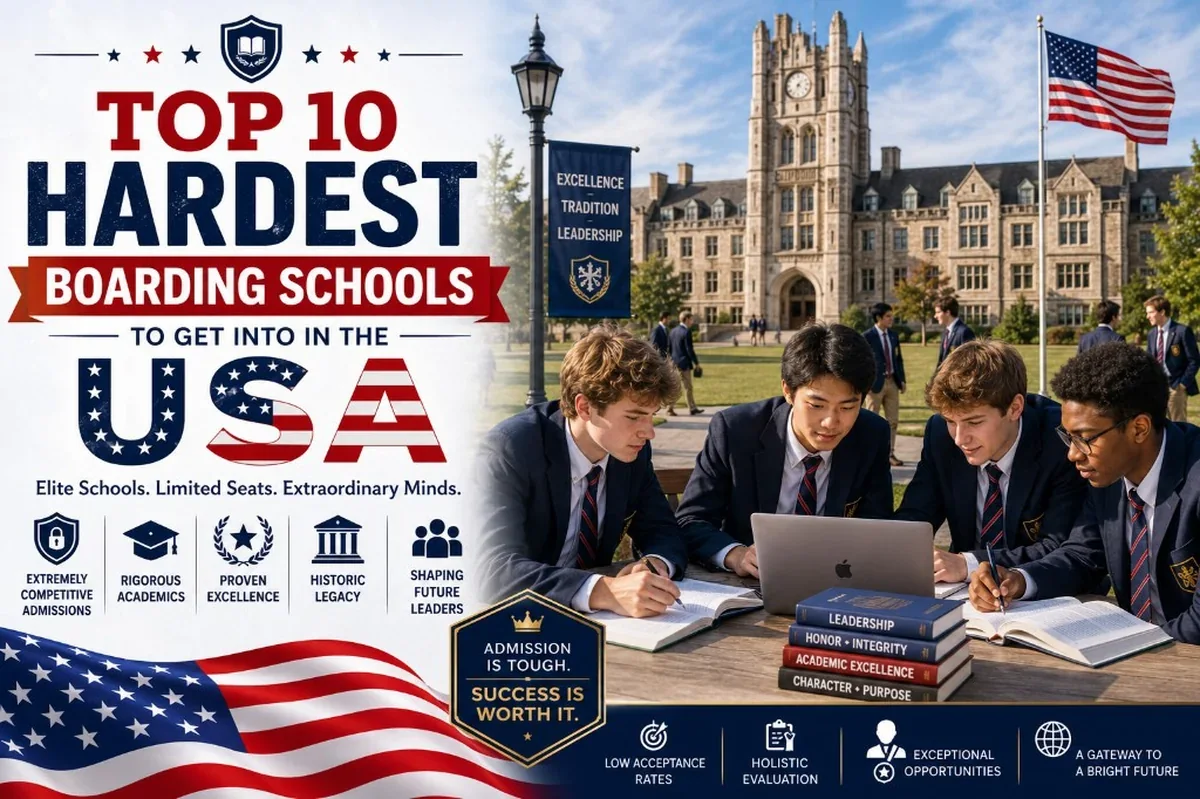
Top 10 Hardest Boarding Schools to Get Into in the USA (2026 Guide)
The top 10 hardest boarding schools to get into in the USA for 2026 by reported selectivity: Groton, Exeter, Andover, St. Paul's, Hotchkiss, Deerfield, Lawrenceville, Choate, Milton, and Cate.
Read the guide →Frequently Asked Questions: Transatlantic Boarding
How do the academic systems compare?
UK boarding schools typically follow the highly specialized A-Level (or occasionally IB) curriculum, where students narrow their focus to just 3 or 4 subjects in their final two years. US boarding schools follow a broader liberal arts high school diploma model, often incorporating Advanced Placement (AP) classes, requiring students to maintain breadth across math, science, humanities, and languages until graduation.
Is there a difference in university admissions outcomes?
Yes. UK boarding schools are explicitly engineered to prepare students for the UCAS system (Oxford, Cambridge, Russell Group), focusing heavily on deep, subject-specific academic mastery. US boarding schools are optimized for the holistic Ivy League admissions process, placing massive emphasis on leadership, varsity athletics, and multifaceted extracurricular profiles.
Which system is more strict or traditional?
Traditional UK boarding schools (like Eton or Harrow) retain many historic eccentricities, including highly formal uniforms (tailcoats), hierarchical prefect systems, and mandatory chapel attendance. US elite boarding schools (like Andover or Exeter) tend to feel more like small progressive liberal arts colleges, with looser dress codes, first-name basis with some faculty, and a highly discussion-based seminar culture.

Top 10 STEM Boarding Schools in the USA (2026 Guide)
The top 10 STEM boarding schools in the USA for 2026, ranked by science research programs, math competition results, and robotics strength - not just overall Niche rank.
Read the guide →Frequently Asked Questions: Transatlantic Boarding
How do the academic systems compare?
UK boarding schools typically follow the highly specialized A-Level (or occasionally IB) curriculum, where students narrow their focus to just 3 or 4 subjects in their final two years. US boarding schools follow a broader liberal arts high school diploma model, often incorporating Advanced Placement (AP) classes, requiring students to maintain breadth across math, science, humanities, and languages until graduation.
Is there a difference in university admissions outcomes?
Yes. UK boarding schools are explicitly engineered to prepare students for the UCAS system (Oxford, Cambridge, Russell Group), focusing heavily on deep, subject-specific academic mastery. US boarding schools are optimized for the holistic Ivy League admissions process, placing massive emphasis on leadership, varsity athletics, and multifaceted extracurricular profiles.
Which system is more strict or traditional?
Traditional UK boarding schools (like Eton or Harrow) retain many historic eccentricities, including highly formal uniforms (tailcoats), hierarchical prefect systems, and mandatory chapel attendance. US elite boarding schools (like Andover or Exeter) tend to feel more like small progressive liberal arts colleges, with looser dress codes, first-name basis with some faculty, and a highly discussion-based seminar culture.
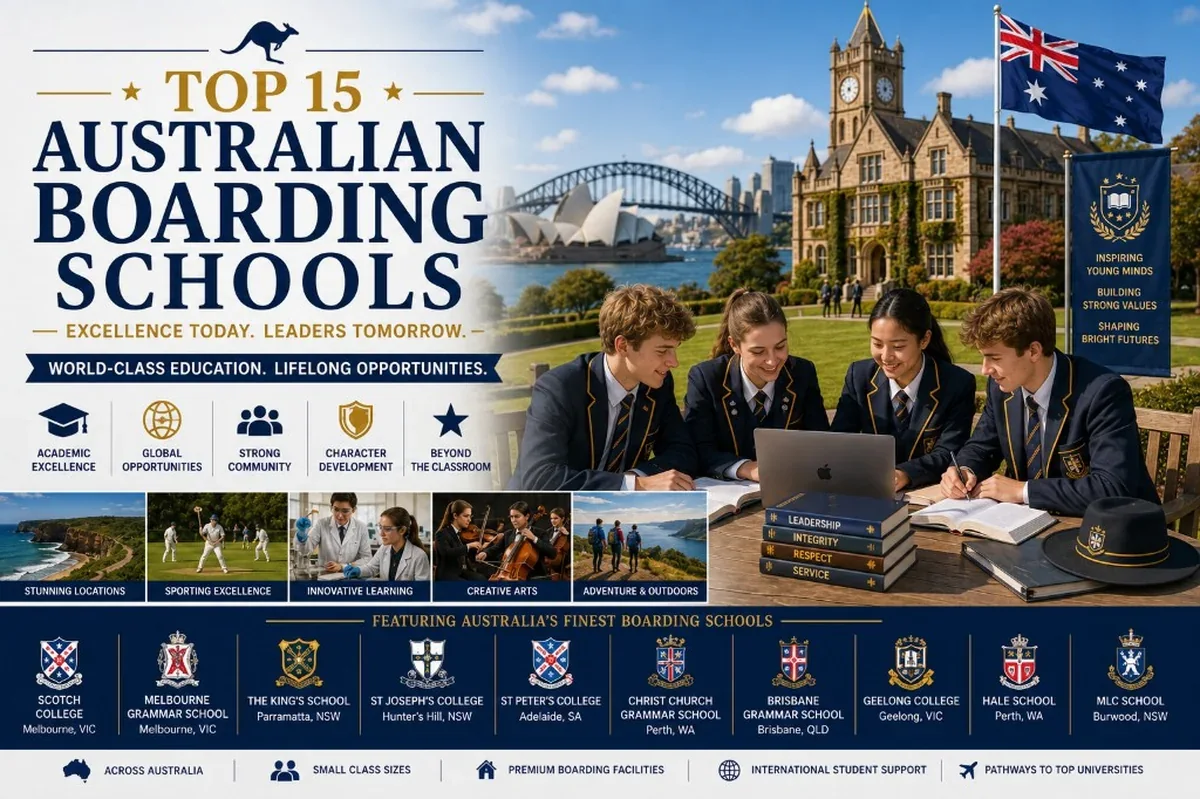
Top 15 Australian Boarding Schools (2026 Guide)
Top 15 Australian boarding schools for 2026: Geelong Grammar, Melbourne Grammar, King's School, Scotch College, and more, with state curriculum differences and FAQs.
Read the guide →Frequently Asked Questions: Transatlantic Boarding
How do the academic systems compare?
UK boarding schools typically follow the highly specialized A-Level (or occasionally IB) curriculum, where students narrow their focus to just 3 or 4 subjects in their final two years. US boarding schools follow a broader liberal arts high school diploma model, often incorporating Advanced Placement (AP) classes, requiring students to maintain breadth across math, science, humanities, and languages until graduation.
Is there a difference in university admissions outcomes?
Yes. UK boarding schools are explicitly engineered to prepare students for the UCAS system (Oxford, Cambridge, Russell Group), focusing heavily on deep, subject-specific academic mastery. US boarding schools are optimized for the holistic Ivy League admissions process, placing massive emphasis on leadership, varsity athletics, and multifaceted extracurricular profiles.
Which system is more strict or traditional?
Traditional UK boarding schools (like Eton or Harrow) retain many historic eccentricities, including highly formal uniforms (tailcoats), hierarchical prefect systems, and mandatory chapel attendance. US elite boarding schools (like Andover or Exeter) tend to feel more like small progressive liberal arts colleges, with looser dress codes, first-name basis with some faculty, and a highly discussion-based seminar culture.
Frequently Asked Questions: Transatlantic Boarding
How do the academic systems compare?
UK boarding schools typically follow the highly specialized A-Level (or occasionally IB) curriculum, where students narrow their focus to just 3 or 4 subjects in their final two years. US boarding schools follow a broader liberal arts high school diploma model, often incorporating Advanced Placement (AP) classes, requiring students to maintain breadth across math, science, humanities, and languages until graduation.
Is there a difference in university admissions outcomes?
Yes. UK boarding schools are explicitly engineered to prepare students for the UCAS system (Oxford, Cambridge, Russell Group), focusing heavily on deep, subject-specific academic mastery. US boarding schools are optimized for the holistic Ivy League admissions process, placing massive emphasis on leadership, varsity athletics, and multifaceted extracurricular profiles.
Which system is more strict or traditional?
Traditional UK boarding schools (like Eton or Harrow) retain many historic eccentricities, including highly formal uniforms (tailcoats), hierarchical prefect systems, and mandatory chapel attendance. US elite boarding schools (like Andover or Exeter) tend to feel more like small progressive liberal arts colleges, with looser dress codes, first-name basis with some faculty, and a highly discussion-based seminar culture.