

Technology has changed the way students learn. Earlier, most learning happened only inside the classroom, through textbooks, notes, and teacher explanations. Today, students can continue learning even after school hours with the help of digital tools, videos, practice apps, online tests, and AI-based learning platforms.
This does not mean technology is replacing teachers. Instead, it is supporting students when they need extra help, revision, practice, or doubt-solving outside the classroom.
Learning Is No Longer Limited to School Hours
One of the biggest benefits of technology is that students can learn anytime. If a student misses a class or does not understand a topic clearly, they can watch videos, read digital notes, or solve practice questions later at home.
Government platforms like DIKSHA and ePathshala have also made digital learning resources more accessible for students and teachers in India. DIKSHA is India’s national digital platform for school education, while ePathshala provides access to NCERT learning resources in digital form.
This is especially useful for students who need repeated explanations or prefer learning at their own speed.
Better Practice and Revision
Classroom learning gives students the foundation, but regular practice is what helps them improve. Technology makes practice more structured and easier to track.
Students can now solve chapter-wise questions, take quizzes, attempt mock tests, and immediately see where they made mistakes. This instant feedback helps them understand weak areas faster instead of waiting for the next test in school.
For example, AI-powered learning tools can suggest questions based on a student’s performance. Platforms like Edzy.ai can help learners revise concepts, practice NCERT-based questions, and get guided support beyond classroom teaching.
Instant Doubt Support
Many students hesitate to ask doubts in class. Some feel shy, while others may need more time to understand the question properly. Technology gives them another way to ask doubts without pressure.
With online learning tools and AI-based support, students can ask questions at home and get step-by-step explanations. This helps them continue studying without getting stuck for too long.
However, students should still discuss important doubts with teachers because human guidance, motivation, and explanation remain very important.
Personalized Learning for Every Student
Every student learns differently. Some students are strong in maths but weak in science. Some understand theory quickly but struggle with application-based questions.
Technology helps by making learning more personalized. Instead of giving the same type of practice to everyone, digital tools can show what a student needs to revise more. This saves time and makes studying less stressful.
Research and education discussions around AI also highlight that technology works best when it assists teachers and students rather than replacing human teaching.
Access to More Learning Resources
Technology gives students access to resources that may not always be available in school. They can use animations, simulations, videos, digital books, and virtual labs to understand difficult topics.
For subjects like science and mathematics, virtual labs and simulations can make abstract concepts easier to understand. In India, virtual lab initiatives under digital education programs are also being used to support experiential learning for school students.
This makes learning more visual, interactive, and engaging.
Supporting Exam Preparation
During exams, students often feel confused about what to study first. Technology can help them organize revision better.
Students can use digital planners, online tests, previous-year questions, flashcards, and performance reports to revise smarter. Tools like Edzy.ai can also support students with CBSE-focused practice and revision, helping them prepare chapter by chapter. .
This helps reduce exam stress and makes preparation more focused.
Challenges of Technology in Learning
Technology is useful, but it also has some challenges. Not every student has equal access to devices or good internet. Too much screen time can also affect focus and health.
That is why technology should be used in a balanced way. It should support reading, writing, practice, and teacher-led learning, not replace them completely. Parents and teachers should guide students on how to use digital tools properly.
Conclusion
Technology is becoming an important support system for school students beyond the classroom. It helps with revision, practice, doubt-solving, personalized learning, and exam preparation.
The best use of technology is not to replace teachers or textbooks, but to extend learning beyond school hours. When used correctly, it can help students learn with more confidence, clarity, and consistency.
FAQs:
1)How does technology help students outside the classroom?
Technology helps students revise lessons, watch explanations, solve practice questions, take tests, and clear doubts even after school hours.
2)Can technology replace teachers?
No. Technology can support learning, but teachers are still important for guidance, explanation, motivation, and personal attention.
3)Is online learning useful for CBSE students?
Yes. Online learning can help CBSE students with NCERT-based revision, chapter-wise practice, mock tests, and doubt support.
4)What are the risks of using too much technology?
Too much screen time, distraction, and unreliable content are common risks. Students should use trusted learning platforms and maintain a healthy balance.
5)How can parents support technology-based learning?
Parents can help by choosing reliable learning tools, setting study time limits, checking progress, and encouraging students to use technology for practice rather than entertainment only.

Saahil
Saahil is an education researcher and content creator specializing in university rankings, admissions strategies, and student guides. He is dedicated to helping students make informed academic decisions.
Continue your research

How to Compare Universities Beyond Rankings: A 2026 Framework
Compare course fit, cost, outcomes, support and learning experience with official data instead of relying on one league-table position.
Read the guide →Frequently Asked Questions About EdTech Integration
Does more screen time negatively impact student wellbeing?
This is a major concern for educators and parents. While passive screen time (like endless scrolling) is linked to negative wellbeing, active, purpose-driven screen time (like coding, interactive learning, and collaborative projects) can be highly beneficial. The key is strict digital boundaries and balancing technology with physical, outdoor activities.
How is AI changing homework and assessment?
Generative AI (like ChatGPT) is forcing schools to rethink homework entirely. Instead of assigning essays that can be easily generated by AI, teachers are moving towards "flipped classrooms," in-class oral assessments, and project-based learning where AI is used as a brainstorming tool rather than a shortcut.
Are digital learning platforms secure?
Data privacy is critical. Reputable school districts only use enterprise-grade platforms (like Google Workspace for Education or Canvas) that comply with strict student privacy laws (like COPPA and FERPA in the US). Parents should always have the right to know what data is being collected on their child.
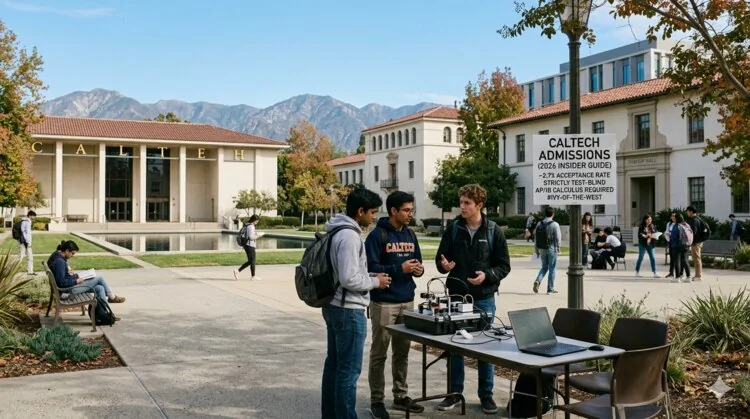
California Institute of Technology Acceptance Rate (2026): How Hard Is It to Get Into Caltech?
If you're searching for the California Institute of Technology acceptance rate, you're probably wondering just how competitive this elite university really is.
Read the guide →Frequently Asked Questions About EdTech Integration
Does more screen time negatively impact student wellbeing?
This is a major concern for educators and parents. While passive screen time (like endless scrolling) is linked to negative wellbeing, active, purpose-driven screen time (like coding, interactive learning, and collaborative projects) can be highly beneficial. The key is strict digital boundaries and balancing technology with physical, outdoor activities.
How is AI changing homework and assessment?
Generative AI (like ChatGPT) is forcing schools to rethink homework entirely. Instead of assigning essays that can be easily generated by AI, teachers are moving towards "flipped classrooms," in-class oral assessments, and project-based learning where AI is used as a brainstorming tool rather than a shortcut.
Are digital learning platforms secure?
Data privacy is critical. Reputable school districts only use enterprise-grade platforms (like Google Workspace for Education or Canvas) that comply with strict student privacy laws (like COPPA and FERPA in the US). Parents should always have the right to know what data is being collected on their child.

Massachusetts Institute of Technology: Complete Overview, Key Facts, and Official Contact Details
MIT is a private research university in Cambridge, Massachusetts, founded in 1861 and globally recognized for its leadership in science, engineering,…
Read the guide →Frequently Asked Questions About EdTech Integration
Does more screen time negatively impact student wellbeing?
This is a major concern for educators and parents. While passive screen time (like endless scrolling) is linked to negative wellbeing, active, purpose-driven screen time (like coding, interactive learning, and collaborative projects) can be highly beneficial. The key is strict digital boundaries and balancing technology with physical, outdoor activities.
How is AI changing homework and assessment?
Generative AI (like ChatGPT) is forcing schools to rethink homework entirely. Instead of assigning essays that can be easily generated by AI, teachers are moving towards "flipped classrooms," in-class oral assessments, and project-based learning where AI is used as a brainstorming tool rather than a shortcut.
Are digital learning platforms secure?
Data privacy is critical. Reputable school districts only use enterprise-grade platforms (like Google Workspace for Education or Canvas) that comply with strict student privacy laws (like COPPA and FERPA in the US). Parents should always have the right to know what data is being collected on their child.

How to Verify University Accreditation Before You Apply
A practical country-by-country checklist for checking whether a university and programme are officially recognized before paying an application fee.
Read the guide →Frequently Asked Questions About EdTech Integration
Does more screen time negatively impact student wellbeing?
This is a major concern for educators and parents. While passive screen time (like endless scrolling) is linked to negative wellbeing, active, purpose-driven screen time (like coding, interactive learning, and collaborative projects) can be highly beneficial. The key is strict digital boundaries and balancing technology with physical, outdoor activities.
How is AI changing homework and assessment?
Generative AI (like ChatGPT) is forcing schools to rethink homework entirely. Instead of assigning essays that can be easily generated by AI, teachers are moving towards "flipped classrooms," in-class oral assessments, and project-based learning where AI is used as a brainstorming tool rather than a shortcut.
Are digital learning platforms secure?
Data privacy is critical. Reputable school districts only use enterprise-grade platforms (like Google Workspace for Education or Canvas) that comply with strict student privacy laws (like COPPA and FERPA in the US). Parents should always have the right to know what data is being collected on their child.
Frequently Asked Questions About EdTech Integration
Does more screen time negatively impact student wellbeing?
This is a major concern for educators and parents. While passive screen time (like endless scrolling) is linked to negative wellbeing, active, purpose-driven screen time (like coding, interactive learning, and collaborative projects) can be highly beneficial. The key is strict digital boundaries and balancing technology with physical, outdoor activities.
How is AI changing homework and assessment?
Generative AI (like ChatGPT) is forcing schools to rethink homework entirely. Instead of assigning essays that can be easily generated by AI, teachers are moving towards "flipped classrooms," in-class oral assessments, and project-based learning where AI is used as a brainstorming tool rather than a shortcut.
Are digital learning platforms secure?
Data privacy is critical. Reputable school districts only use enterprise-grade platforms (like Google Workspace for Education or Canvas) that comply with strict student privacy laws (like COPPA and FERPA in the US). Parents should always have the right to know what data is being collected on their child.