
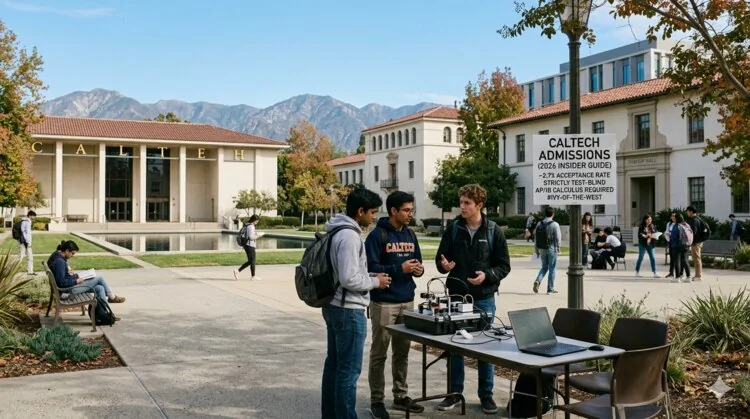
California Institute of Technology (Caltech) Admissions Guide — This independent editorial guide helps prospective applicants understand the intense selectivity, academic prerequisites, and international student policies at Caltech.
Please note: This is an independent research guide compiled by Top Schools Rankings. We are not affiliated with, nor officially endorsed by, the California Institute of Technology. Always verify deadlines, statistics, and requirements directly on the official Caltech Undergraduate Admissions website.
How Hard is it to Get Into Caltech?
The short answer: Extremely hard. Caltech is widely considered one of the most rigorous and selective STEM-focused universities in the world.
Unlike larger research universities, Caltech intentionally maintains a microscopic undergraduate population, typically enrolling an incoming freshman class of roughly 225 to 235 students. Because global interest in elite STEM education continues to grow, this small class size naturally creates an intensely competitive admissions environment.
Latest Acceptance Rate Data
It is crucial not to confuse historical estimates with current data. For recent admissions cycles (such as the Class of 2028), Caltech received over 13,000 applications and admitted slightly over 300 students, resulting in an overall acceptance rate hovering between 2% and 3%.
This statistical bottleneck makes Caltech quantitatively harder to enter than almost every Ivy League university.
Caltech Academic Prerequisites (2026 Update)
You cannot simply have a high GPA to be admitted to Caltech. The institute enforces exceptionally strict academic prerequisites. If you do not meet these minimums in high school, your application will not be competitive.
- Mandatory Calculus: You must have completed a full year of calculus before graduating high school.
- Mandatory Physics and Chemistry: You must have completed a full year of physics and a full year of chemistry.
- Standardized Testing (Test-Required): Caltech has reinstated its standardized testing requirement. All first-year applicants must submit either an SAT or ACT score.
International Student Admissions at Caltech
International applicants are evaluated under the same rigorous academic standards as domestic students, but face a uniquely challenging admissions and financial aid landscape.
- English Proficiency: If English is not your native language, or if English was not the primary language of instruction at your secondary school, Caltech strongly recommends submitting scores from the Duolingo English Test (DET) or the TOEFL.
- Need-Aware Admissions: Unlike some of its elite peers (such as MIT or Harvard), Caltech is need-aware for international applicants during the admissions process. This means a family's ability to pay may be factored into the admissions decision for non-US citizens.
- 100% Demonstrated Need Met: Despite being need-aware during the application read, if an international student is admitted and applies for financial aid, Caltech guarantees to meet 100% of their demonstrated financial need.
Why is Caltech so Selective?
- Microscopic Class Size: Enrolling roughly 230 students per year means there is no room to admit applicants who are merely "good." Every admitted student must show exceptional potential for scientific discovery.
- STEM-Only Focus: Caltech's curriculum is relentlessly focused on math, physics, engineering, and the sciences. Every student, regardless of major, must pass the rigorous Core Curriculum, which includes advanced calculus, classical mechanics, electromagnetism, chemistry, and biology.
- Research DNA: Caltech manages the Jet Propulsion Laboratory (JPL) for NASA and operates numerous global observatories. They look for applicants who have already demonstrated an authentic passion for research, often through Science Olympiads, independent lab work, or high-level coding projects.
Caltech Application Deadlines (2026–2027 Cycle)
Applying to Caltech requires careful planning. Always verify the exact calendar dates for the current application cycle on the official Caltech admissions site.
- Restrictive Early Action (REA): Typically due November 1. This is non-binding, but if you apply REA to Caltech, you may not apply Early Action or Early Decision to any other private US university.
- Regular Decision (RD): Typically due January 3. This is the standard timeline for the majority of the applicant pool.
- Financial Aid Deadlines: The CSS Profile and related financial documents are usually due around the same time as the application. Submitting these late can jeopardize your aid package.
FAQs About Caltech Admissions
Is Caltech harder to get into than MIT?
Statistically, yes. Because Caltech's freshman class is roughly one-quarter the size of MIT's, its acceptance rate often dips below 3%, making it quantitatively more selective, though both seek the highest caliber of STEM talent in the world.
Does Caltech require the SAT or ACT?
Yes. Caltech officially reinstated the SAT/ACT requirement for undergraduate admissions. All applicants must submit valid test scores.
Is Caltech need-blind for international students?
No. Caltech is need-aware for international applicants during the admissions process. However, if admitted, Caltech will meet 100% of your demonstrated financial need.
Can I apply to Caltech without taking Calculus?
No. One full year of high school calculus is a strict, non-negotiable prerequisite for admission.
Disclaimer: Admissions policies, deadlines, and financial aid rules are subject to change. This guide summarizes publicly available data for planning purposes only. Confirm all details directly on admissions.caltech.edu and finaid.caltech.edu before applying.

Saahil
Saahil is an education researcher and content creator specializing in university rankings, admissions strategies, and student guides. He is dedicated to helping students make informed academic decisions.
Continue your research
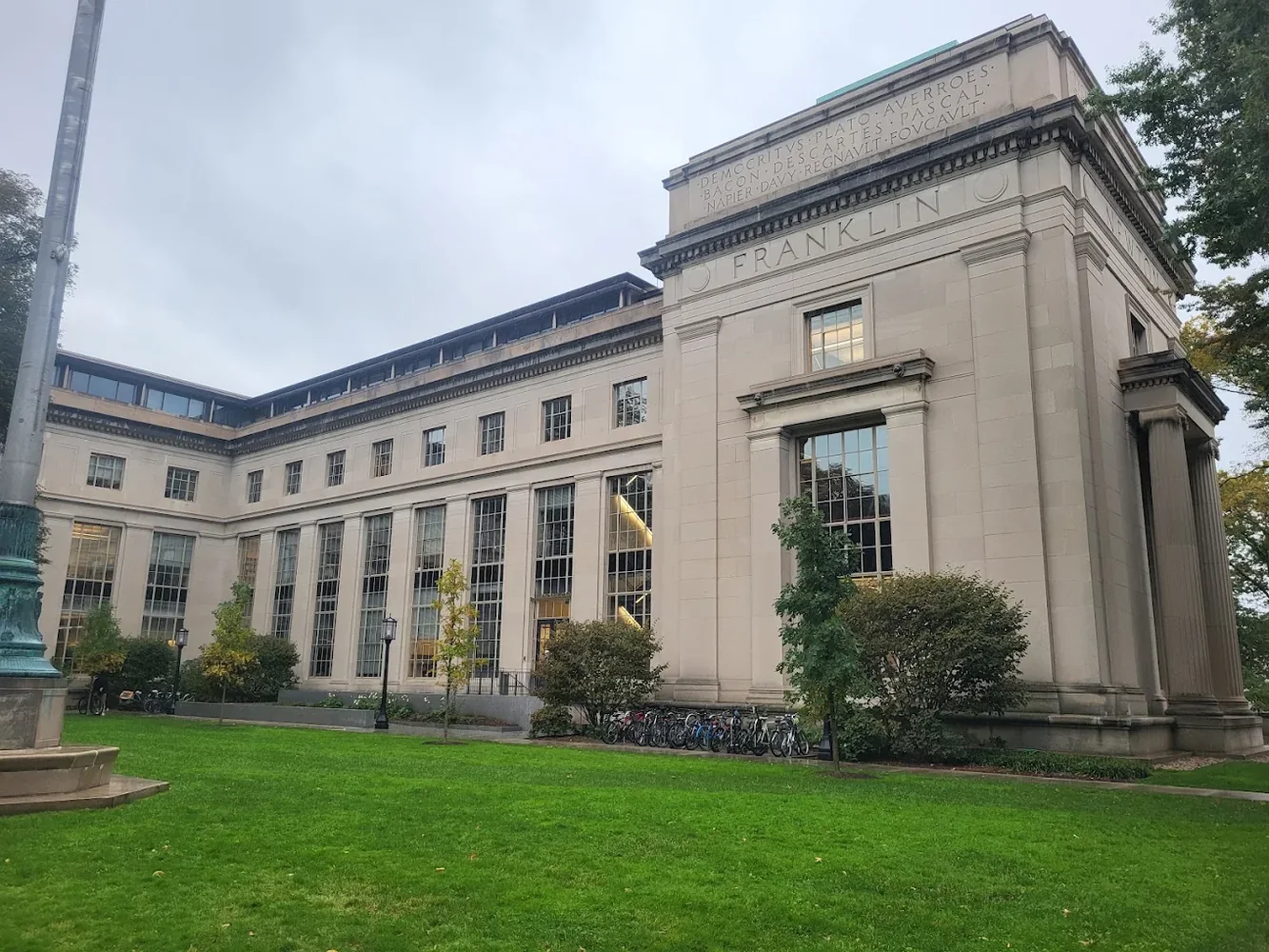
Massachusetts Institute of Technology: Complete Overview, Key Facts, and Official Contact Details
MIT is a private research university in Cambridge, Massachusetts, founded in 1861 and globally recognized for its leadership in science, engineering,…
Read the guide →Frequently Asked Questions About Caltech Admissions
How is Caltech different from MIT?
While both are premier STEM institutes, Caltech is dramatically smaller. Caltech has fewer than 1,000 undergraduate students (compared to MIT's ~4,600). This incredibly small size results in a roughly 3:1 student-to-faculty ratio, allowing undergraduates to engage in high-level research with Nobel laureates almost immediately.
Is Caltech test-blind or test-optional?
Caltech previously implemented a test-blind policy during the pandemic, but policies evolve rapidly. Always check the official Caltech admissions page for the current cycle. Historically, Caltech students boast some of the highest perfect or near-perfect SAT and ACT math scores in the world.
What is the Core Curriculum at Caltech?
The Core at Caltech is legendary for its extreme rigor. Regardless of your major, every student must pass multiple terms of intensive calculus, classical mechanics, electromagnetism, chemistry, and biology, alongside humanities courses. The workload is immense, requiring intense collaboration among students.
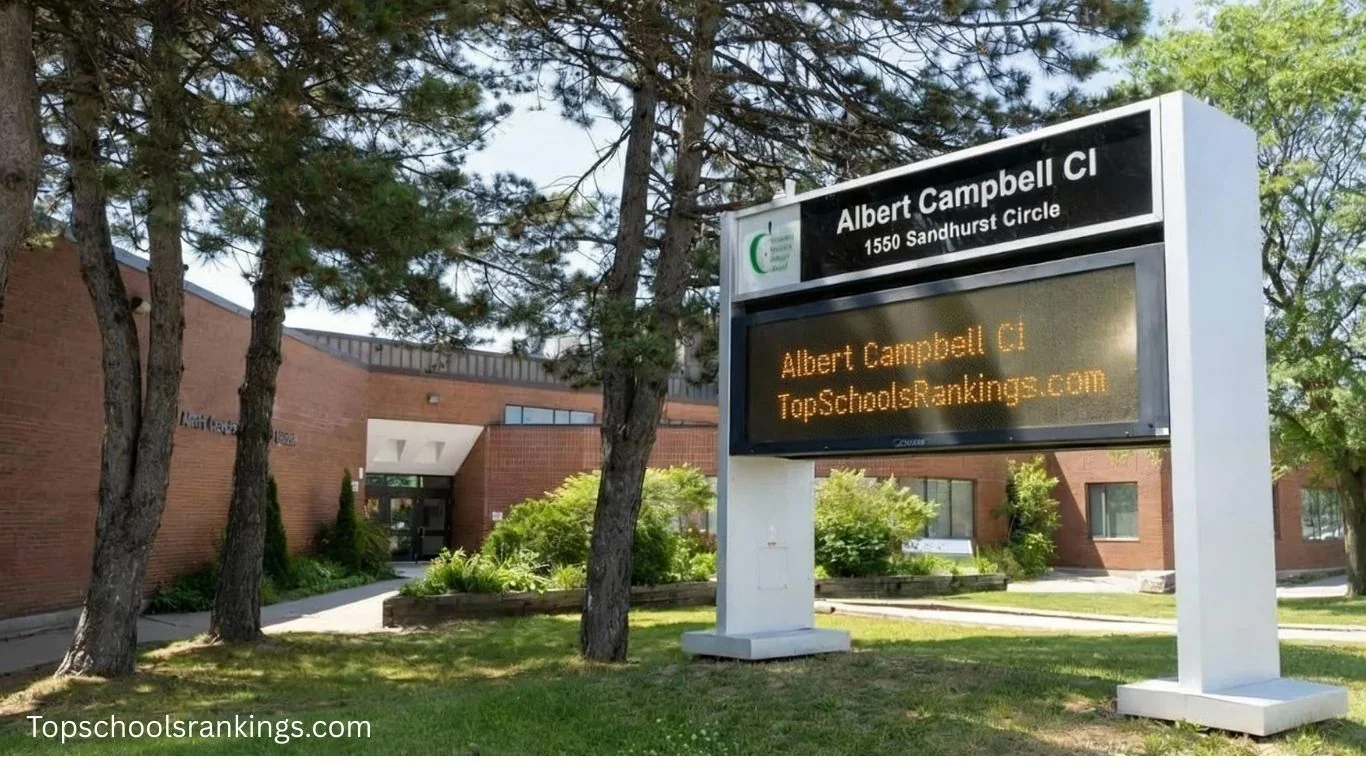
Albert Campbell Collegiate Institute School Overview
Albert Campbell Collegiate Institute (ACCI) is a large, diverse public high school in Scarborough, Toronto, known for its strong academic focus, wide program…
Read the guide →Frequently Asked Questions About Caltech Admissions
How is Caltech different from MIT?
While both are premier STEM institutes, Caltech is dramatically smaller. Caltech has fewer than 1,000 undergraduate students (compared to MIT's ~4,600). This incredibly small size results in a roughly 3:1 student-to-faculty ratio, allowing undergraduates to engage in high-level research with Nobel laureates almost immediately.
Is Caltech test-blind or test-optional?
Caltech previously implemented a test-blind policy during the pandemic, but policies evolve rapidly. Always check the official Caltech admissions page for the current cycle. Historically, Caltech students boast some of the highest perfect or near-perfect SAT and ACT math scores in the world.
What is the Core Curriculum at Caltech?
The Core at Caltech is legendary for its extreme rigor. Regardless of your major, every student must pass multiple terms of intensive calculus, classical mechanics, electromagnetism, chemistry, and biology, alongside humanities courses. The workload is immense, requiring intense collaboration among students.
Bodwell High School Acceptance Rate 2026: Admissions Guide
Want to crack Bodwell High School admissions? Discover the real acceptance rate metrics, interview guide, and the preparation guide to stand out.
Read the guide →Frequently Asked Questions About Caltech Admissions
How is Caltech different from MIT?
While both are premier STEM institutes, Caltech is dramatically smaller. Caltech has fewer than 1,000 undergraduate students (compared to MIT's ~4,600). This incredibly small size results in a roughly 3:1 student-to-faculty ratio, allowing undergraduates to engage in high-level research with Nobel laureates almost immediately.
Is Caltech test-blind or test-optional?
Caltech previously implemented a test-blind policy during the pandemic, but policies evolve rapidly. Always check the official Caltech admissions page for the current cycle. Historically, Caltech students boast some of the highest perfect or near-perfect SAT and ACT math scores in the world.
What is the Core Curriculum at Caltech?
The Core at Caltech is legendary for its extreme rigor. Regardless of your major, every student must pass multiple terms of intensive calculus, classical mechanics, electromagnetism, chemistry, and biology, alongside humanities courses. The workload is immense, requiring intense collaboration among students.

How Technology is Supporting School Students Beyond the Classroom
Learn how technology helps school students beyond the classroom through online practice, doubt support, personalized learning, revision tools, and exam preparat
Read the guide →Frequently Asked Questions About Caltech Admissions
How is Caltech different from MIT?
While both are premier STEM institutes, Caltech is dramatically smaller. Caltech has fewer than 1,000 undergraduate students (compared to MIT's ~4,600). This incredibly small size results in a roughly 3:1 student-to-faculty ratio, allowing undergraduates to engage in high-level research with Nobel laureates almost immediately.
Is Caltech test-blind or test-optional?
Caltech previously implemented a test-blind policy during the pandemic, but policies evolve rapidly. Always check the official Caltech admissions page for the current cycle. Historically, Caltech students boast some of the highest perfect or near-perfect SAT and ACT math scores in the world.
What is the Core Curriculum at Caltech?
The Core at Caltech is legendary for its extreme rigor. Regardless of your major, every student must pass multiple terms of intensive calculus, classical mechanics, electromagnetism, chemistry, and biology, alongside humanities courses. The workload is immense, requiring intense collaboration among students.
Frequently Asked Questions About Caltech Admissions
How is Caltech different from MIT?
While both are premier STEM institutes, Caltech is dramatically smaller. Caltech has fewer than 1,000 undergraduate students (compared to MIT's ~4,600). This incredibly small size results in a roughly 3:1 student-to-faculty ratio, allowing undergraduates to engage in high-level research with Nobel laureates almost immediately.
Is Caltech test-blind or test-optional?
Caltech previously implemented a test-blind policy during the pandemic, but policies evolve rapidly. Always check the official Caltech admissions page for the current cycle. Historically, Caltech students boast some of the highest perfect or near-perfect SAT and ACT math scores in the world.
What is the Core Curriculum at Caltech?
The Core at Caltech is legendary for its extreme rigor. Regardless of your major, every student must pass multiple terms of intensive calculus, classical mechanics, electromagnetism, chemistry, and biology, alongside humanities courses. The workload is immense, requiring intense collaboration among students.