
This page helps students and families research McMaster University. It is not a ranking, paid placement, review score or admission recommendation.
About McMaster University
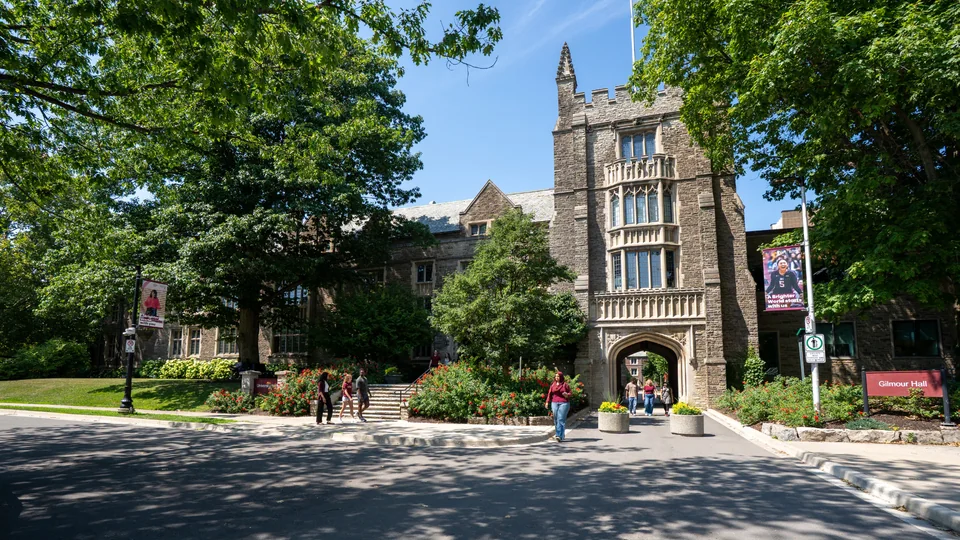
McMaster University is a public research university founded in 1887 through a bequest from Senator William McMaster and incorporated by the Ontario legislature that year. Originally established in Toronto, the university relocated to Hamilton in 1930 and today occupies a landmark campus at 1280 Main Street West.
McMaster offers undergraduate and graduate programs across six faculties, with global recognition in health sciences, engineering, science, humanities, social sciences and business. Its problem-based, student-centred approach to learning, known as the McMaster Method, has influenced medical and professional education worldwide.
Prospective undergraduates can connect with the Student Recruitment Office through live chat and an online contact form at future.mcmaster.ca/contact-us. The Registrar's Office can be reached at 905-525-4600, and the university main line is 905-525-9140.
Key facts and contact details
These profile fields provide a practical research snapshot. Confirm time-sensitive items with the institution because programmes, contacts and entry policies can change.
- Address
- 1280 Main Street West, Hamilton, Ontario L8S 4L8
- Established
- 1887
- Grades / levels
- Undergraduate and graduate degrees
- Courses offered
- Undergraduate and graduate programs across six faculties, including health sciences, engineering, science, humanities, social sciences and the DeGroote School of Business.
- Languages
- English
- Accreditation
- Member of Universities Canada; degree-granting authority in Ontario
- Phone
- 905-525-9140
- Admissions phone
- 905-525-4600
Academic and student-fit questions
Use this university · public / government · universities · canada profile as a starting point. Use it to compare the course, grade pathway or curriculum in detail: the campus it runs on, the teaching format, the support available to students, and how results are measured.
- Does the exact programme or grade pathway match the student’s academic goal?
- Which campus, delivery mode, class format and assessment system apply?
- What academic, language, accessibility and wellbeing support is available?
- Which outcomes are published, and are they relevant to the specific programme?
- What student experience, housing or boarding expectations should be checked directly?
Admissions, cost and eligibility checks
Check the current requirements for your exact intake before paying any application fee or deposit. Then compare the whole cost rather than tuition alone — compulsory charges, housing, meals, insurance, transport, equipment and any international-student or boarding costs that apply.
- Official recognition or accreditation for the institution and programme
- Current course availability, entry requirements and application deadline
- Full tuition, compulsory fees, deposits and refund conditions
- Campus, study mode, accommodation and student-support arrangements
- Visa or professional-licensing implications from the relevant authority
What makes McMaster distinctive
McMaster’s best-known export is a way of teaching. Problem-based learning began here in 1969, in a medical school established only four years earlier whose first MD class numbered just 20 students. In the “McMaster Model”, the problem comes first: small groups of students, guided by a tutor, work out what they need to learn from a clinical problem instead of receiving the content by lecture first. The approach spread from Hamilton to medical schools — and then to other disciplines — around the world, and it still shapes how the university teaches far beyond medicine.
The same founding-era appetite for building shows in the McMaster Nuclear Reactor, which began operating in 1959 and was at the time the only university-based research reactor in the Commonwealth. Both landmarks belong to the university’s reinvention in Hamilton: McMaster had been incorporated in 1887 through the bequest of William McMaster and opened in Toronto, relocating to Hamilton in 1930 — and within a generation of the move it had built that reactor and founded the medical school that changed clinical teaching. For applicants, the combination is the point: a research university in Hamilton whose medical school changed how medicine is taught worldwide, and whose campus hosts the reactor that was a Commonwealth first in 1959.
Explore further
Researching McMaster University? These resources on this site connect this profile to the bigger decisions around it:
- Top 25 Universities in Canada for International Students — where McMaster sits among Canada’s leading options for international applicants.
- University Cost Calculator — turn tuition and living figures into a full annual budget before you compare institutions.
- Related institution profiles: University of Toronto, University of Waterloo, Western University.
- Browse all institution profiles — the full directory this profile belongs to.
How this profile was prepared
We prepared this profile by checking the institution’s details against official sources, keeping its existing URL, and restoring campus context where it was missing. Facts sit apart from editorial guidance on the page, and material decisions should still be confirmed using official institution, regulator and government sources.
There are no fabricated star ratings or testimonials on this page. If a detail is outdated, send the page URL and a current primary source through our correction channel.
Read the accreditation checklist
Saahil
Saahil is an education researcher and content creator specializing in university rankings, admissions strategies, and student guides. He is dedicated to helping students make informed academic decisions.