
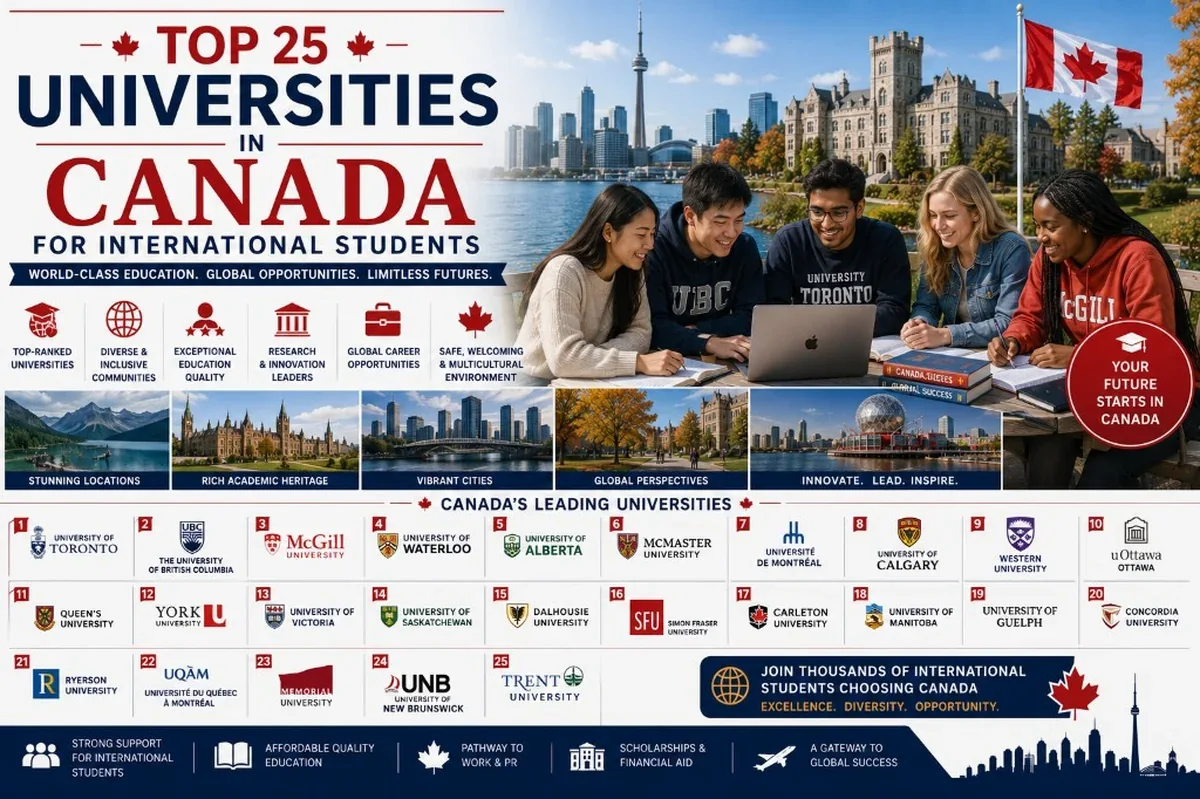
Top 25 universities in Canada for international students (2026) — This independent editorial guide provides a curated look at Canada’s leading universities. It is designed specifically to help international applicants balance global prestige with practical factors like co-op opportunities, location, and study-permit pathways.
Our "Top 25" list aggregates and contextualizes data from major educational indices. Please note: This is a research guide compiled by Top Schools Rankings. While we use recognized datasets like the QS World University Rankings as foundational reference points, this is not an official ranking published by QS, the Canadian government, or any university.
Ranking Methodology & Sources
To build this guide, we referenced the QS World University Rankings (2026 edition) to establish the top 20 Canadian institutions by global academic reputation. QS evaluates universities on metrics such as academic and employer reputation, faculty-student ratio, and international research network.
For ranks 21–25, we editorially added additional high-interest campuses that offer excellent regional pathways, lower living costs, or specialized programs for international students. These final five do not claim a higher global QS rank than #20, but represent strong alternatives for prospective applicants.
Top 25 Universities in Canada for International Students (2026)
The table below outlines the top 25 institutions, their locations, and their 2026 QS World University Rank (where applicable in the top 20).
| Canada # | University | City | QS 2026 / note |
|---|---|---|---|
| 1 | McGill University | Montreal | 27 |
| 2 | University of Toronto | Toronto | 29 |
| 3 | University of British Columbia | Vancouver | 40 |
| 4 | University of Alberta | Edmonton | =94 |
| 5 | University of Waterloo | Waterloo | 119 |
| 6 | Western University | London, ON | 151 |
| 7 | Université de Montréal | Montreal | 168 |
| 8 | McMaster University | Hamilton | 173 |
| 9 | Queen's University | Kingston | 191 |
| 10 | University of Calgary | Calgary | 211 |
| 11 | University of Ottawa | Ottawa | 219 |
| 12 | Dalhousie University | Halifax | 283 |
| 13 | Simon Fraser University | Burnaby | 308 |
| 14 | York University | Toronto | 333 |
| 15 | University of Victoria | Victoria | 358 |
| 16 | University of Saskatchewan | Saskatoon | 378 |
| 17 | Concordia University | Montreal | 465 |
| 18 | Université Laval | Quebec City | 469 |
| 19 | University of Guelph | Guelph | 504 |
| 20 | University of Windsor | Windsor | 546 |
| 21 | University of Manitoba | Winnipeg | Strong Prairie research option |
| 22 | Carleton University | Ottawa | Capital-city programmes |
| 23 | Memorial University | St. John's | Atlantic value pathway |
| 24 | Toronto Metropolitan University | Toronto | Career-focused urban campus |
| 25 | University of New Brunswick | Fredericton | Atlantic research university |
Key Highlights Among the Top Tier
The "Big Three"—University of Toronto, McGill University, and the University of British Columbia (UBC)—consistently anchor the top of global Canadian rankings. They offer massive research budgets, global name recognition, and large international student populations.
In the 2026 QS cycle, McGill (#27 globally) edged slightly ahead of Toronto (#29). This shift reflects minor movements in QS's specific indicators (like sustainability and international faculty) rather than a sudden decline in Toronto's teaching quality. For international applicants, choosing between these elite schools should come down to program fit, campus culture, and city preference rather than a two-place global ranking difference.
Read our detailed admissions guides for the big three: McGill, University of Toronto, and UBC.

Co-op, Research, and Employability by Campus Type
Beyond the Big Three, Canada features universities with distinct strengths that often make them better fits for specific career goals.
| University type | Examples from this top 25 | Best for |
|---|---|---|
| Global research flagships | McGill, Toronto, UBC | Prestige, broad majors, large alumni networks |
| Co-op & tech pipelines | Waterloo, SFU, Carleton (tech) | Engineering, CS, paid work terms |
| Medical & health research | McMaster, Alberta, Dalhousie | Health sciences, research labs |
| Francophone excellence | Montréal, Laval | French-language degrees, Quebec culture |
| Value & regional hubs | Manitoba, Memorial, UNB | Lower living costs, strong regional ties |
How International Students Should Use This List
When shortlisting Canadian universities, look beyond the overall rank and consider the following practical factors:
- Program Strength & Co-op: A university ranked lower globally might be the top domestic choice for a specific field. For instance, the University of Waterloo is globally renowned for its computer science and engineering co-op (paid internship) programs, providing unmatched industry experience prior to graduation. Read our Waterloo guide.
- Admissions Focus: Unlike the holistic U.S. admissions system, Canadian universities place a heavy emphasis on Grade 11 and Grade 12 academic marks, particularly in program-specific prerequisite courses (like Calculus or Physics for engineering). Extracurriculars generally carry less weight outside of highly competitive business or specialized scholarship programs.
- Tuition & Cost of Living: International undergraduate tuition at Canadian universities typically ranges from CAD 35,000 to CAD 65,000+ per year. However, the cost of living varies drastically. Studying in Toronto or Vancouver is significantly more expensive than attending the University of Alberta in Edmonton or Memorial University in St. John's.

Study Permits and Post-Graduation Pathways
For many international students, studying in Canada is a step toward gaining international work experience. Graduates of eligible programs at Designated Learning Institutions (DLIs) may apply for a Post-Graduation Work Permit (PGWP).
However, immigration policies are subject to rapid change. Always verify PGWP eligibility, study permit requirements, and program compliance directly on the official Government of Canada (IRCC) website before accepting an offer of admission. Do not select a university based solely on a global ranking if it does not align with your long-term visa and career goals.
Limitations of This Ranking
Rankings cannot measure personal fit. A high QS rank does not guarantee smaller class sizes, better undergraduate teaching, or easier access to professors. Furthermore, rankings largely ignore the cost of living and the availability of on-campus housing—critical factors for international students.
Always verify current tuition rates, admission requirements, and program details directly on the official university websites.
Explore More Canadian Guides
We publish detailed, school-specific admissions guides to help you look beyond the rankings. For secondary pathways into Canada, see our boarding guides:
FAQs: Top Universities in Canada for International Students
Is McGill really ahead of Toronto in 2026?
According to the QS 2026 global ranks, McGill (#27) placed slightly ahead of Toronto (#29). However, both are considered elite, tier-one global research institutions, and other indices may rank them differently.
Which Canadian universities are in the QS top 100?
In the 2026 QS cycle, McGill, Toronto, UBC, and the University of Alberta (#94) were ranked within the global top 100.
Is Waterloo better than McGill for engineering?
While McGill has a higher overall global rank, the University of Waterloo is highly sought after for engineering and computer science due to its massive, integrated co-op program, which provides direct pathways to tech employment.
Do ranks 21–25 follow QS order?
No. Ranks 21–25 on this list are editorial additions highlighting campuses with strong regional pathways or specific international value; they are not ranked higher than #20 on the global QS list.
Are French-language universities included?
Yes. Université de Montréal and Université Laval are included, representing Canada's excellent Francophone and bilingual academic excellence.

Saahil
Saahil is an education researcher and content creator specializing in university rankings, admissions strategies, and student guides. He is dedicated to helping students make informed academic decisions.
Continue your research
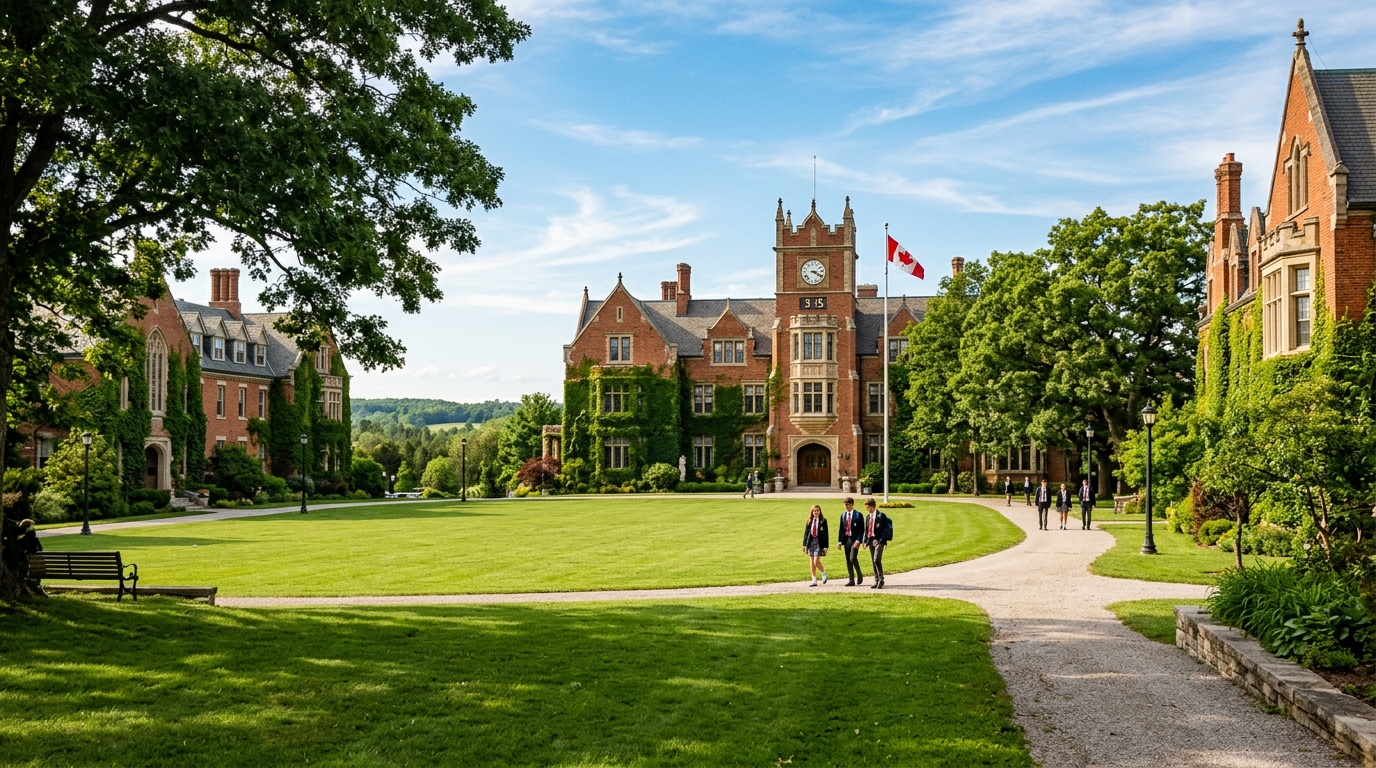
Appleby College Canada: Boarding School, Admissions, Fees & Student Life Guide for International Students
Appleby College is an independent boarding school in Canada.
Read the guide →
Douglas College Canada: Admissions, Fees, Courses & University Transfer Guide for International Students
For international students looking for an affordable and career-focused education in Canada, Douglas College is one of the most popular choices in British…
Read the guide →
Top 10 UK Universities for International Students (QS 2026 Guide)
Top 10 UK universities for international students, ranked using QS World University Rankings 2026: Imperial, Oxford, Cambridge, UCL, Edinburgh, and more.
Read the guide →
Top 10 Universities in Canada for Engineering & Co-op Pathways (2026 Guide)
Discover the top 10 engineering universities in Canada for 2026: Waterloo, Toronto, UBC, McGill, Alberta, and more with co-op work programs, tuition fees, and admission requirements.
Read the guide →