
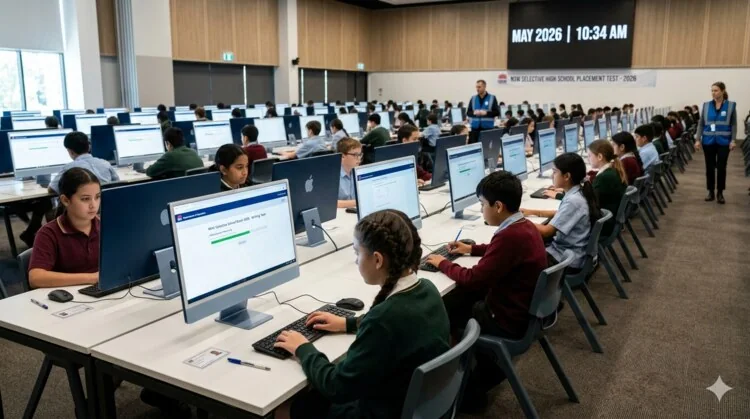
2026 Selective School Exam: The Ultimate Guide for NSW Parents
The NSW Selective High School Placement Test is one of Australia’s most fiercely competitive academic assessments. For Year 7 entry, thousands of Year 5 and Year 6 students across New South Wales compete for roughly 4,200 available placements across fully selective and partially selective high schools.
However, parents preparing their children using advice from prior years risk falling behind. The NSW Department of Education has transitioned the Selective School Placement Test into a fully digital, computer-based exam with revised section weightages and updated placement models.
This comprehensive guide details the test structure, key timeline dates, scoring mechanics, the 20% Equity Placement Model, and actionable preparation strategies.
What Changed for the 2026 Exam Cycle?
Before starting test preparation, parents must understand three fundamental structural shifts implemented by the NSW Department of Education:
1. Equal Section Weighting (The 25% Rule)
Historically, the Thinking Skills section carried disproportionate weight (up to 35%), while the Writing component accounted for only 15%. All four test components now carry an equal 25% weighting. A student who scores in the 99th percentile for Mathematical Reasoning can no longer compensate for a weak Writing score. Balanced proficiency across all four disciplines is mandatory.
2. Fully Digital Test Delivery
The paper-and-pencil era has ended. The Selective High School Placement Test is conducted digitally at designated external testing centers using secure, locked-down browser interfaces. Students interact with on-screen countdown timers, dropdown menus, radio buttons, and text input boxes. Touch-typing speed, digital reading stamina, and on-screen problem navigation are now core test-taking competencies.
3. The 20% Equity Placement Model
The NSW Department of Education continues to implement the Equity Arts and Placement Model. Under this policy, up to 20% of places at each selective high school are held for students from four under-represented equity groups:
- Students from low socio-educational advantage backgrounds.
- Aboriginal and Torres Strait Islander students.
- Rural and remote students.
- Students with disabilities.
General applicants must perform within the top merit tier for the remaining 80% of unreserved seats.
Key Dates & Timeline
| Stage / Milestone | Expected Timing | Details |
|---|---|---|
| Applications Open | Mid-October (Year 5) | Online portal opens via NSW Department of Education site. |
| Applications Close | Mid-November (Year 5) | Strict deadline. Late applications are rarely accepted. |
| Test Authority Advice | Mid-April (Year 6) | Parents receive test center allocations and session times. |
| Exam Date Window | Early May (Year 6) | Test held over designated test days at allocated centers. |
| Illness / Misadventure Window | Late May (Year 6) | Dedicated make-up test date for pre-approved medical cases. |
| Outcome Release | Late August (Year 6) | Outcome notices sent (Offer, Reserve List, or Unsuccessful). |
| Acceptance Deadline | Mid-September (Year 6) | Deadline to accept or decline first-round placement offers. |
2026 Exam Structure: Section-by-Section Breakdown
The exam evaluates aptitude and higher-order thinking rather than curriculum recall.
| Test Component | Time Allowed | Questions / Items | Format | Core Skills Evaluated |
|---|---|---|---|---|
| Reading | 45 Minutes | ~30 Questions | Multiple Choice | Inference, syntax interpretation, thematic synthesis across diverse text extracts. |
| Mathematical Reasoning | 40 Minutes | 35 Questions | Multiple Choice | Multi-step word problems, geometric logic, numerical sequences. (No calculators). |
| Thinking Skills | 40 Minutes | 40 Questions | Multiple Choice | Critical reasoning, syllogisms, argument flaw detection, spatial problem-solving. |
| Writing | 30 Minutes | 1 Open Prompt | Typed Response | Narrative or persuasive writing, grammatical precision, structure, sophisticated vocabulary. |
1. Reading (45 Minutes)
The digital reading section presents diverse stimulus material—including poetry, narrative prose, biographical nonfiction, and analytical essays. Students face roughly 70 to 75 seconds per question. The questions avoid superficial recall; they test a student's ability to detect nuanced author tone, rhetorical devices, and layered subtext across comparative passages.
2. Mathematical Reasoning (40 Minutes)
Calculators are prohibited. This section assesses how candidates apply mathematical principles to unfamiliar scenarios. The questions are heavy on narrative word problems where students must first translate a scenario into a mathematical equation. Time management is critical: candidates have approximately 68 seconds per question.
3. Thinking Skills (40 Minutes)
Replacing the legacy General Ability test, Thinking Skills evaluates formal logic. Expect question types covering:
- Deductive Reasoning: Determining absolute truths from given premises.
- Evaluating Arguments: Pinpointing flaws, unwarranted assumptions, or circular reasoning in short arguments.
- Spatial & Non-Verbal Logic: Identifying pattern continuations, 3D net folds, and symmetry sequences.
4. Writing (30 Minutes)
Students are given a single prompt (either persuasive, imaginative, or informative) accompanied by visual or textual stimuli.
- The Digital Typing Reality: A child must brainstorm, organize, write, and proofread an essay of 250 to 350 words in 30 minutes on an unfamiliar external keyboard.
- Marking Criteria: Markers score on structural coherence, creative syntax, relevant paragraph transitions, and precise vocabulary rather than raw length.
Competitiveness & Indicative School Tiers
Admission is based entirely on relative cohort performance. While specific raw-score cutoffs are no longer publicly published by the Department in traditional aggregate scores, schools generally fall into distinct competitiveness bands based on student demand:
- Tier 1 (Top 5% State Merit Band): James Ruse Agricultural High School, Baulkham Hills High School, North Sydney Boys High School, North Sydney Girls High School, Sydney Boys High School, Sydney Girls High School.
- Tier 2 (Top 8%–12% State Merit Band): Hornsby Girls High School, Fort Street High School, Normanhurst Boys High School, St George Girls High School, Northern Beaches Secondary College (Manly Campus).
- Tier 3 & Partially Selective High Schools: Chatsworth, Caringbah High School, Penrith High School, Macquarie Fields High School, and regional partially selective cohorts.
Strategic Preparation: How to Build a High-Scoring Routine
Achieving an offer requires a balanced preparation system rather than endless paper worksheets.
1. Master Touch-Typing Early
In a 30-minute typed exam, a student who hunts and pecks with two fingers at 12 words per minute (WPM) loses over 15 minutes purely to physical mechanics. Aim for a typing speed of at least 25–35 WPM with 95%+ accuracy before the exam window.
2. Implement the "60-Second Skip" Rule
Because every multiple-choice question in a section carries equal mark value, spending 3 minutes struggling on an intricate geometry problem in Mathematical Reasoning is counterproductive. Train candidates to attempt for 45–50 seconds, flag if unclear, make an educated guess, and advance.
3. Maintain an "Error Log"
Track mistakes across three categories: Careless Slips, Concept Gaps, and Time Panic. Targeting concept gaps and careless slips yields faster score improvements than simply repeating mock papers.
Frequently Asked Questions (Parent FAQs)
Can students bring scrap paper into the digital exam?
Yes. Test invigilators supply official scratch paper and pencils inside the test center for rough calculations and essay planning. However, all scrap paper is collected at the conclusion of each module and is not assessed.
What happens if my child experiences technical issues during the test?
If a computer freezes, crashes, or the screen lags during the digital exam, the student must raise their hand immediately. Center invigilators will log the incident. The testing software automatically caches responses up to the moment of disconnection, and technical time lost is compensated by invigilators.
Can we modify our school choices after sitting the exam?
Yes. The NSW Department of Education typically permits parents to change their selective school preference order through the parent portal until early June. Ensure your highest preferred school is placed as Preference 1.
Does the test penalize incorrect answers?
No. There is no negative marking in the NSW Selective High School Placement Test. Students should ensure every multiple-choice item has a selected answer before the timer expires.
Editorial Standard & Source Verification: This guide reflects official examination frameworks, digital specifications, and policies published by the NSW Department of Education (Selective High Schools and Opportunity Classes Placement Unit). For official candidate bulletins and portal access, visit the NSW Department of Education portal.

Saahil
Saahil is an education researcher and content creator specializing in university rankings, admissions strategies, and student guides. He is dedicated to helping students make informed academic decisions.
Continue your research

The Hills Schools Expo 2026: The Comprehensive Parent’s Guide to Sydney’s Premier Education Event
The Hills Schools Expo 2026 guide for Sydney parents — dates, venue, exhibitors, waitlists, questions to ask, and tips for Castle Hill (7–8 March).
Read the guide →Frequently Asked Questions About the NSW Selective Exam
When should my child start preparing for the exam?
Most students sit the exam in March of Year 6. To avoid extreme burnout, educational psychologists generally recommend beginning steady, low-pressure familiarization in mid-Year 5. Cramming heavily in the weeks prior is often counterproductive and drastically increases student anxiety.
Are private tutoring colleges necessary?
No. While many parents use tutoring colleges to provide structure and practice exams, the NSW Department of Education explicitly designs the new test format to assess higher-order thinking and problem-solving, making it much harder to "coach" or rote-learn than past exams. Consistent reading and critical thinking practice at home is equally valid.
What happens if my child is sick on the day of the exam?
If a student is genuinely ill, parents must immediately notify the Selective Education Unit and submit an Illness/Misadventure claim with robust medical evidence (a doctor's certificate). The department has strict protocols for assessing these cases, often relying on the student's primary school assessment scores if the claim is approved.
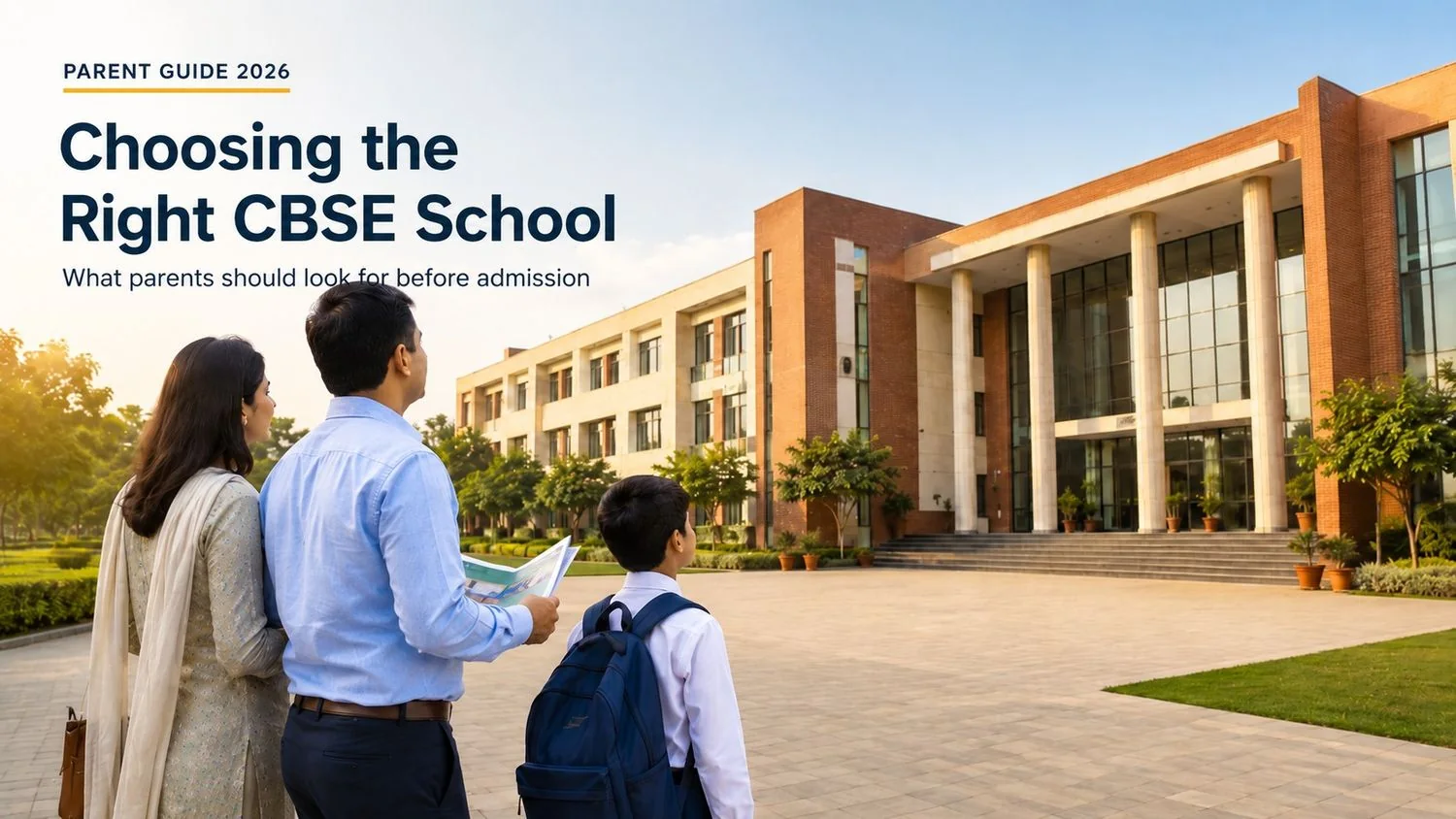
How Parents Can Choose the Right CBSE School in 2026
Learn how parents can choose the right CBSE school in 2026 by checking affiliation, teaching quality, safety, fees, technology, academics, and student support.
Read the guide →Frequently Asked Questions About the NSW Selective Exam
When should my child start preparing for the exam?
Most students sit the exam in March of Year 6. To avoid extreme burnout, educational psychologists generally recommend beginning steady, low-pressure familiarization in mid-Year 5. Cramming heavily in the weeks prior is often counterproductive and drastically increases student anxiety.
Are private tutoring colleges necessary?
No. While many parents use tutoring colleges to provide structure and practice exams, the NSW Department of Education explicitly designs the new test format to assess higher-order thinking and problem-solving, making it much harder to "coach" or rote-learn than past exams. Consistent reading and critical thinking practice at home is equally valid.
What happens if my child is sick on the day of the exam?
If a student is genuinely ill, parents must immediately notify the Selective Education Unit and submit an Illness/Misadventure claim with robust medical evidence (a doctor's certificate). The department has strict protocols for assessing these cases, often relying on the student's primary school assessment scores if the claim is approved.
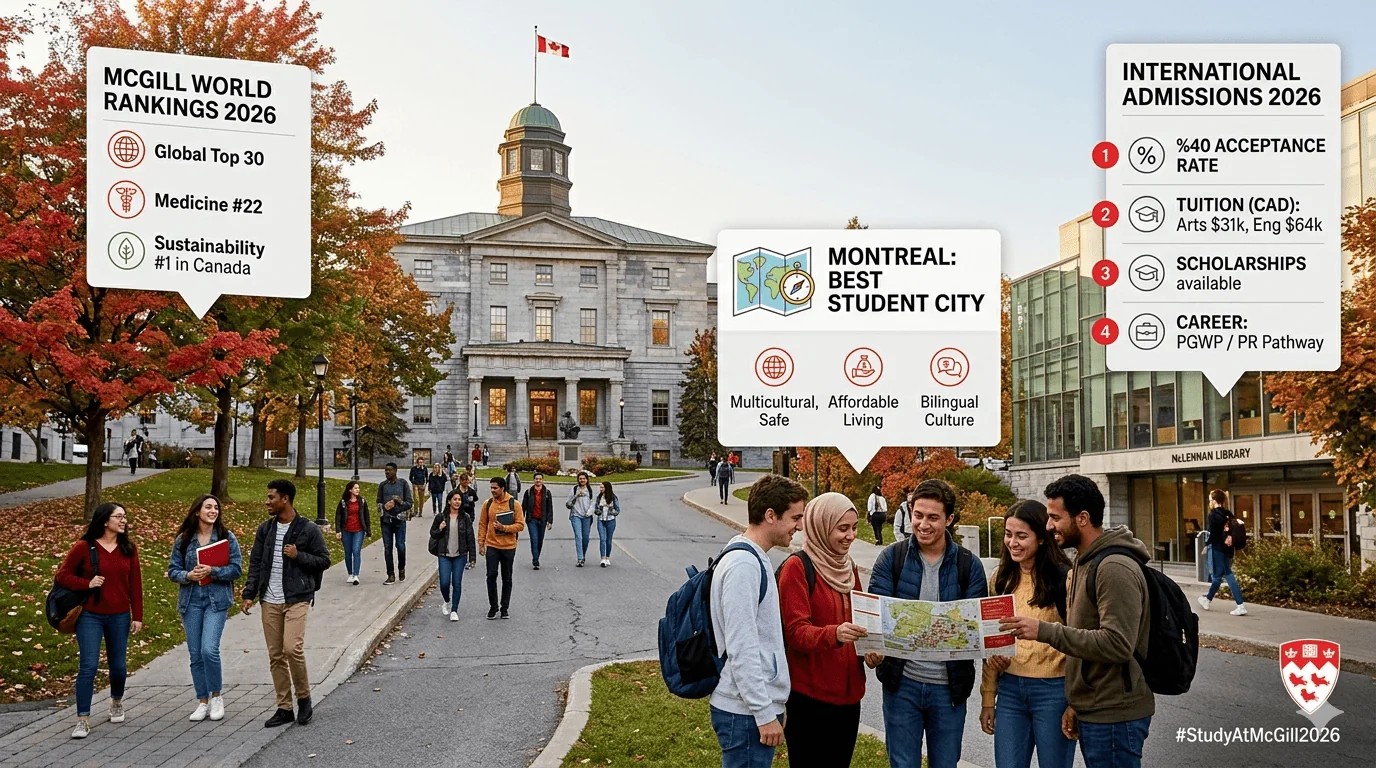
McGill University for International Students: The Comprehensive 2026 Admissions Guide
Founded in 1821, McGill University is not just a school; it is a global research powerhouse.
Read the guide →Frequently Asked Questions About the NSW Selective Exam
When should my child start preparing for the exam?
Most students sit the exam in March of Year 6. To avoid extreme burnout, educational psychologists generally recommend beginning steady, low-pressure familiarization in mid-Year 5. Cramming heavily in the weeks prior is often counterproductive and drastically increases student anxiety.
Are private tutoring colleges necessary?
No. While many parents use tutoring colleges to provide structure and practice exams, the NSW Department of Education explicitly designs the new test format to assess higher-order thinking and problem-solving, making it much harder to "coach" or rote-learn than past exams. Consistent reading and critical thinking practice at home is equally valid.
What happens if my child is sick on the day of the exam?
If a student is genuinely ill, parents must immediately notify the Selective Education Unit and submit an Illness/Misadventure claim with robust medical evidence (a doctor's certificate). The department has strict protocols for assessing these cases, often relying on the student's primary school assessment scores if the claim is approved.
University of British Columbia Admissions 2026: A Guide for International Students
The University of British Columbia (UBC) is consistently ranked among the top 3 universities in Canada and the top 40 globally.
Read the guide →Frequently Asked Questions About the NSW Selective Exam
When should my child start preparing for the exam?
Most students sit the exam in March of Year 6. To avoid extreme burnout, educational psychologists generally recommend beginning steady, low-pressure familiarization in mid-Year 5. Cramming heavily in the weeks prior is often counterproductive and drastically increases student anxiety.
Are private tutoring colleges necessary?
No. While many parents use tutoring colleges to provide structure and practice exams, the NSW Department of Education explicitly designs the new test format to assess higher-order thinking and problem-solving, making it much harder to "coach" or rote-learn than past exams. Consistent reading and critical thinking practice at home is equally valid.
What happens if my child is sick on the day of the exam?
If a student is genuinely ill, parents must immediately notify the Selective Education Unit and submit an Illness/Misadventure claim with robust medical evidence (a doctor's certificate). The department has strict protocols for assessing these cases, often relying on the student's primary school assessment scores if the claim is approved.
Frequently Asked Questions About the NSW Selective Exam
When should my child start preparing for the exam?
Most students sit the exam in March of Year 6. To avoid extreme burnout, educational psychologists generally recommend beginning steady, low-pressure familiarization in mid-Year 5. Cramming heavily in the weeks prior is often counterproductive and drastically increases student anxiety.
Are private tutoring colleges necessary?
No. While many parents use tutoring colleges to provide structure and practice exams, the NSW Department of Education explicitly designs the new test format to assess higher-order thinking and problem-solving, making it much harder to "coach" or rote-learn than past exams. Consistent reading and critical thinking practice at home is equally valid.
What happens if my child is sick on the day of the exam?
If a student is genuinely ill, parents must immediately notify the Selective Education Unit and submit an Illness/Misadventure claim with robust medical evidence (a doctor's certificate). The department has strict protocols for assessing these cases, often relying on the student's primary school assessment scores if the claim is approved.