
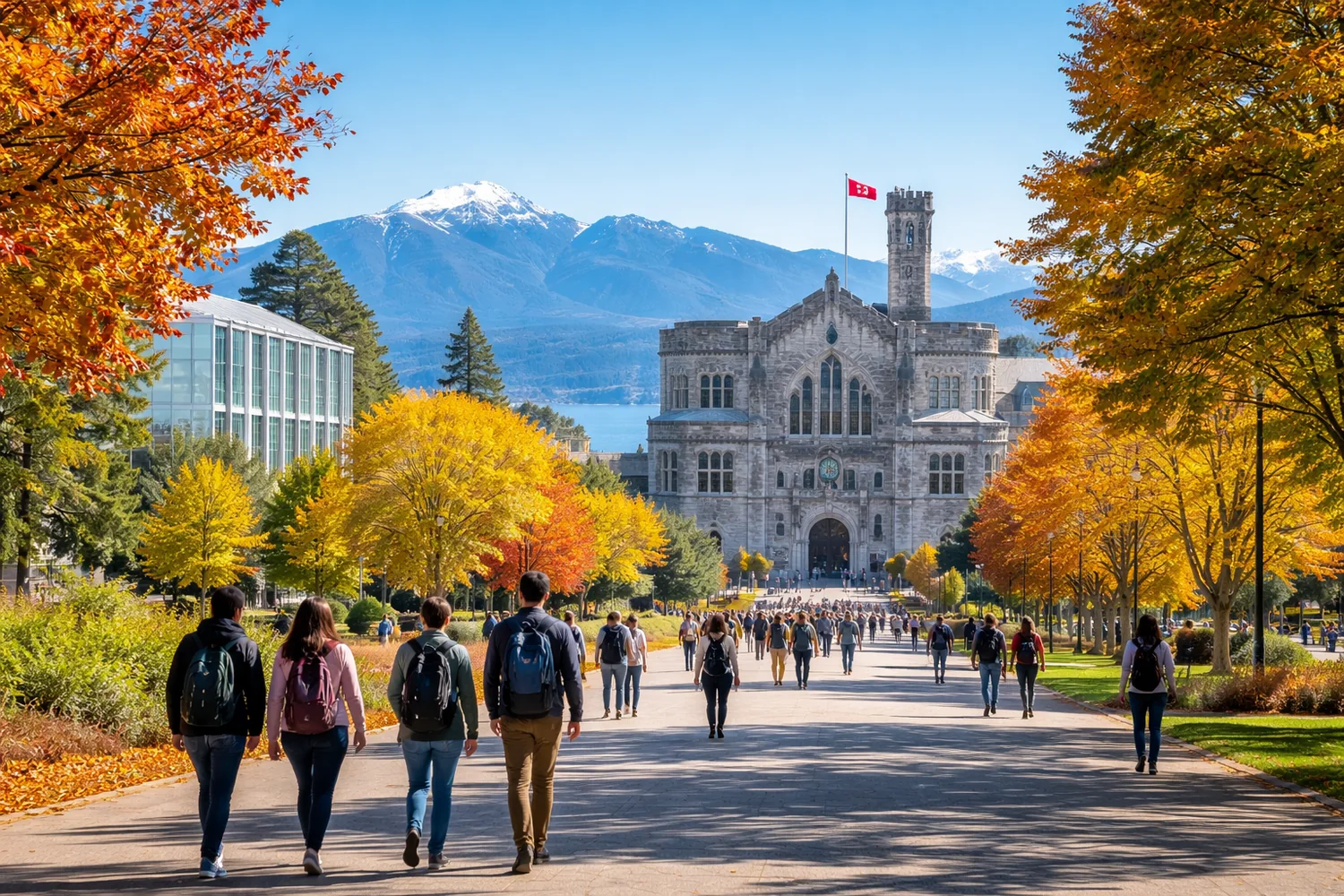
Quick summary: The University of British Columbia (UBC) is consistently ranked among the top 3 universities in Canada and the top 40 globally. With two stunning campuses—Vancouver and Okanagan—UBC offers a highly regarded research environment that attracts over 18,000 international students annually.
Why UBC is the Top Choice for 2026
The University of British Columbia (UBC) is consistently ranked among the top 3 universities in Canada and the top 40 globally. With two stunning campuses—Vancouver and Okanagan—UBC offers a highly regarded research environment that attracts over 18,000 international students annually.
However, as we enter the 2026-2027 admission cycle, competition for specialized programs like Computer Science and Commerce has intensified. This guide provides a 100% verified, data-driven roadmap to help you navigate the application process and secure your place at UBC.
1. UBC World Rankings 2026: Beyond the Numbers
UBC isn't just about prestige; it’s about impact. In the QS World University Rankings 2026, UBC holds a formidable position:
- Global Rank: Top 35 worldwide.
- Sustainability: #1 in Canada for climate action.
- Employment: Ranked among the top 40 globally for graduate employability.
2. Acceptance Rate: The "71% Myth" vs. Reality
While recent data shows an undergraduate acceptance rate of 71% for international students, don't let that number mislead you.
- Competitive Faculties: For the Sauder School of Business or UBC Engineering, the acceptance rate is significantly lower, often under 20-25%.
- Okanagan Advantage: The Okanagan campus generally has a more flexible admission threshold compared to the Vancouver campus, making it a strategic choice for many.
3. Admission Requirements for 2026 (The Checklist)
UBC follows a holistic admission process. They don't just look at your grades; they look at who you are.
Academic Requirements
- High School Diploma: Minimum 75-80% aggregate (varies by country and curriculum).
- Competitive GPA: Most admitted students have an average above 90% in their core subjects (English, Math, and Science).
The Personal Profile (The Game Changer)
This is a series of short essay questions. UBC uses this to assess your leadership, resilience, and community impact.
Tip: Focus on "Quality over Quantity." One deep leadership role is better than five minor clubs.
English Language Admission Standard (ELAS)
| Test | Minimum Requirement | Recommended for 2026 |
| IELTS | 6.5 (No band < 6.0) | 7.5+ |
| TOEFL iBT | 90 (Reading/Listening 22, Writing/Speaking 21) | 100+ |
| PTE Academic | 65 | 70+ |
| Duolingo (DET) | 125 | 135+ |
4. The "Vantage One" Pathway: A Secret Entry for 2026
If you have excellent grades but your English scores are slightly below the ELAS (e.g., IELTS 5.5), you can apply through UBC Vantage College.
- How it works: You spend your first year in an intensive academic English environment while earning full credits toward your degree.
- Transition: After Year 1, you move directly into Year 2 of your Arts, Science, or Engineering degree at the Vancouver or Okanagan campus.
5. Tuition Fees & Living Costs (Updated 2026-2027)
Vancouver is one of the most expensive cities in Canada, so budgeting is crucial.
Estimated Annual Tuition (International)
- Arts: ~$46,000 – $48,000 CAD
- Science/Applied Science: ~$58,000 – $61,000 CAD
- Commerce (Sauder): ~$60,000+ CAD
Living Expenses in Vancouver (Monthly)
| Expense | Estimated Cost (CAD) |
| Shared Housing | $1,200 – $1,800 |
| On-Campus Housing | $900 – $1,400 |
| Food & Groceries | $450 – $600 |
| Transport (U-Pass) | Included in fees |
6. Scholarships: The International Scholars Program
UBC offers some of the most generous scholarships in Canada.
- Karen McKellin International Leader of Tomorrow Award: Full-ride scholarship based on need and merit.
- Donald A. Wehrung International Student Award: For students from war-torn or politically unstable regions.
- Deadline: The application for these major awards usually closes on November 15 (for the following year's intake).
7. 3 Pro-Tips to Rank Your Application
Pro-Tip 1: Choose Your Campus Wisely
Many students only apply to the Vancouver campus. However, the Okanagan campus (Kelowna) offers smaller class sizes, lower living costs, and the same prestigious UBC degree. If you are worried about the competitive Vancouver cutoff, put Okanagan as your second choice.
Pro-Tip 2: The Co-op Advantage
UBC has one of the largest Co-op programs in Canada. This allows you to work at top companies (Amazon, Google, Microsoft, Lululemon) for 4-8 months during your degree. It is the best way to pay off your tuition and secure a job before you graduate.
Pro-Tip 3: The "Waitlist" Strategy
If you are waitlisted, do not panic. Send a Letter of Continued Interest highlighting any new academic achievements or extracurricular milestones since you applied.
8. UBC vs. University of Toronto (U of T)
- UBC: Better for lifestyle, outdoors, and tech-industry proximity (Vancouver is "Silicon Valley North").
- U of T: Better for Finance, Law, and a more "big-city" corporate vibe in Toronto.
9. Frequently Asked Questions (FAQs)
Q1: Is the SAT required for UBC in 2026?
No. Standardized tests like SAT/ACT are optional for most international curriculums, but highly recommended for students from the US curriculum to strengthen their profile.
Q2: Can I work while studying at UBC?
Yes, as an international student, you can typically work up to 20-24 hours per week off-campus (subject to IRCC's latest 2026 regulations).
Q3: When is the UBC application deadline for 2026?
The main deadline is January 15, 2027 for the Winter 2027 session, but for early admission and scholarship consideration, aim for December 1, 2026.
Conclusion: Start Your UBC Journey Today
UBC is more than just an education; it is a gateway to a permanent life in Canada. With the Post-Graduation Work Permit (PGWP), most UBC graduates transition smoothly into high-paying roles and eventual Permanent Residency.

Saahil
Saahil is an education researcher and content creator specializing in university rankings, admissions strategies, and student guides. He is dedicated to helping students make informed academic decisions.
Continue your research
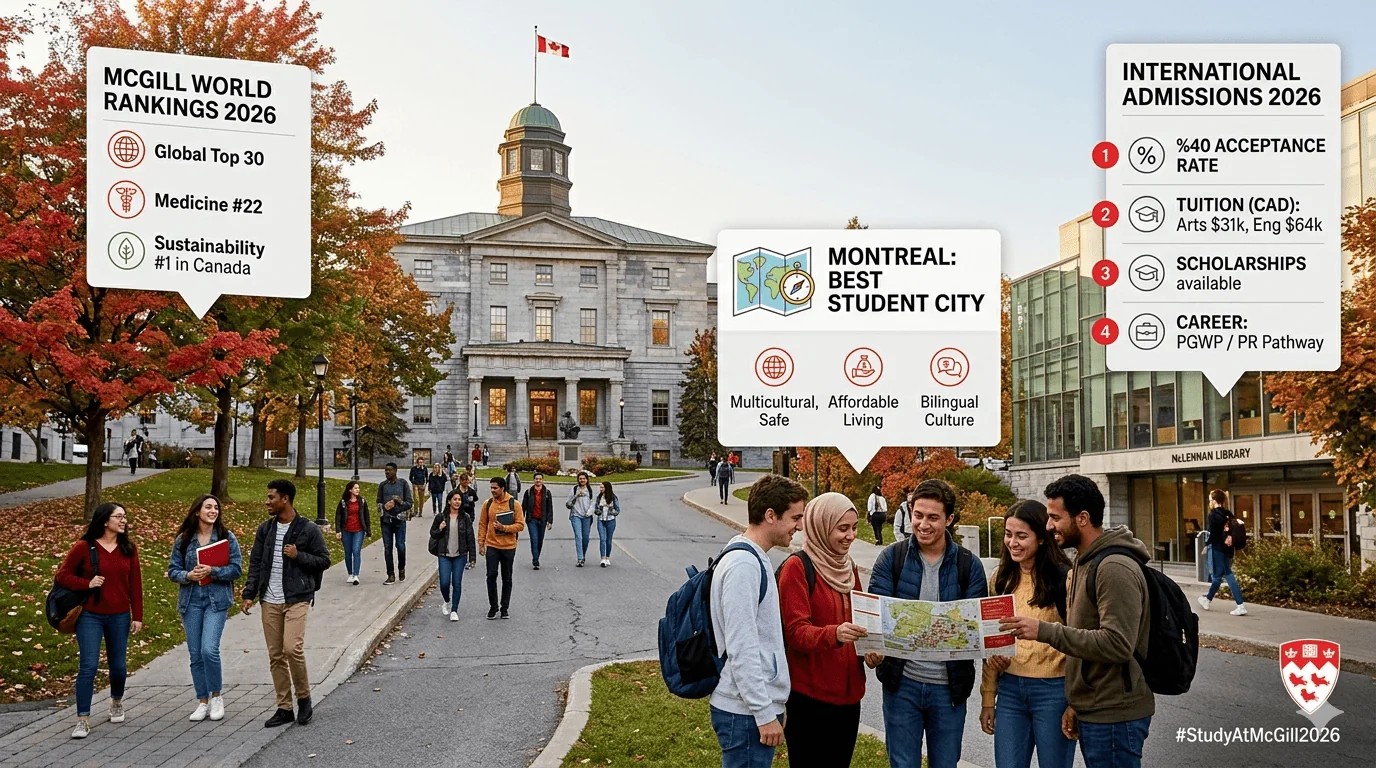
McGill University for International Students: The Comprehensive 2026 Admissions Guide
Founded in 1821, McGill University is not just a school; it is a global research powerhouse.
Read the guide →Frequently Asked Questions About UBC Admissions
What is the difference between the Vancouver and Okanagan campuses?
UBC operates two main campuses. UBC Vancouver (UBCV) is the historic, massive campus located on the coast, known for intense research output and a bustling urban environment. UBC Okanagan (UBCO) in Kelowna is smaller, more intimate, and often has slightly more accessible admission averages while still granting the exact same prestigious UBC degree.
What is the UBC Personal Profile?
Unlike many Canadian universities that only look at grades, UBC requires all applicants to submit a Personal Profile. This consists of several short essay questions detailing your extracurricular activities, leadership experiences, and how you have overcome challenges. It is a critical component of the admission decision.
Does UBC require the SAT/ACT for US applicants?
As of recent admissions cycles, UBC has moved away from requiring the SAT or ACT for American applicants, aligning more closely with the test-optional movement. Instead, they heavily weigh your high school transcript, AP/IB scores, and the depth of your Personal Profile.
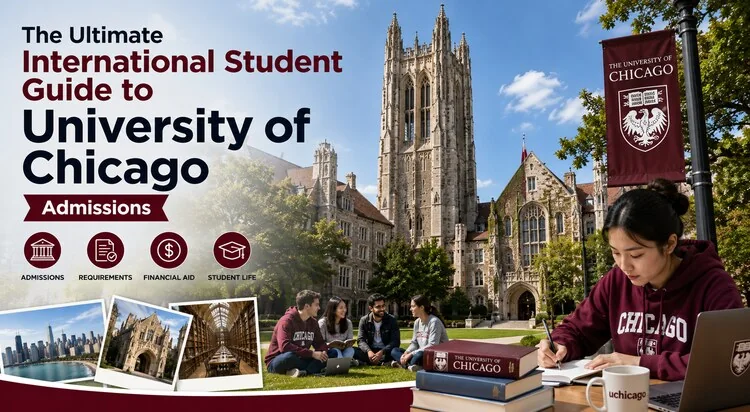
The Comprehensive International Student Guide to University of Chicago Admissions
Discover everything about the University of Chicago—admissions requirements, tuition fees, academic programs, campus life.
Read the guide →Frequently Asked Questions About UBC Admissions
What is the difference between the Vancouver and Okanagan campuses?
UBC operates two main campuses. UBC Vancouver (UBCV) is the historic, massive campus located on the coast, known for intense research output and a bustling urban environment. UBC Okanagan (UBCO) in Kelowna is smaller, more intimate, and often has slightly more accessible admission averages while still granting the exact same prestigious UBC degree.
What is the UBC Personal Profile?
Unlike many Canadian universities that only look at grades, UBC requires all applicants to submit a Personal Profile. This consists of several short essay questions detailing your extracurricular activities, leadership experiences, and how you have overcome challenges. It is a critical component of the admission decision.
Does UBC require the SAT/ACT for US applicants?
As of recent admissions cycles, UBC has moved away from requiring the SAT or ACT for American applicants, aligning more closely with the test-optional movement. Instead, they heavily weigh your high school transcript, AP/IB scores, and the depth of your Personal Profile.
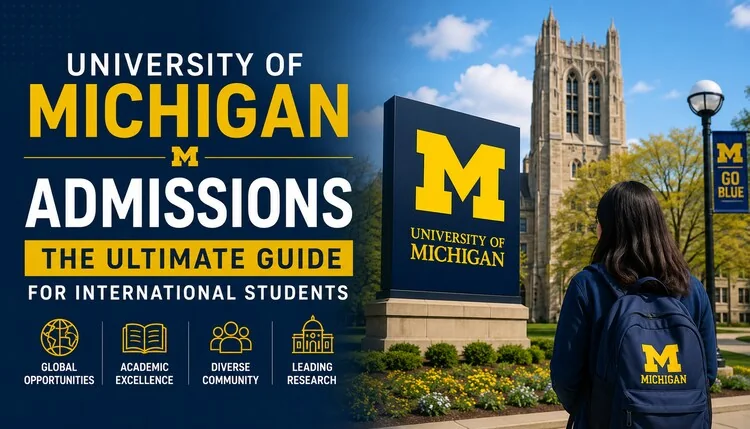
University of Michigan Admissions 2026: The Comprehensive Guide for International Students
Discover everything about the University of Michigan—rankings, acceptance rate, tuition fees for international students, top programs, campus life.
Read the guide →Frequently Asked Questions About UBC Admissions
What is the difference between the Vancouver and Okanagan campuses?
UBC operates two main campuses. UBC Vancouver (UBCV) is the historic, massive campus located on the coast, known for intense research output and a bustling urban environment. UBC Okanagan (UBCO) in Kelowna is smaller, more intimate, and often has slightly more accessible admission averages while still granting the exact same prestigious UBC degree.
What is the UBC Personal Profile?
Unlike many Canadian universities that only look at grades, UBC requires all applicants to submit a Personal Profile. This consists of several short essay questions detailing your extracurricular activities, leadership experiences, and how you have overcome challenges. It is a critical component of the admission decision.
Does UBC require the SAT/ACT for US applicants?
As of recent admissions cycles, UBC has moved away from requiring the SAT or ACT for American applicants, aligning more closely with the test-optional movement. Instead, they heavily weigh your high school transcript, AP/IB scores, and the depth of your Personal Profile.
Algoma University for International Students: Admissions, Fees, Courses & Visa Guide
Choosing the right university in Canada is a crucial decision for international students.
Read the guide →Frequently Asked Questions About UBC Admissions
What is the difference between the Vancouver and Okanagan campuses?
UBC operates two main campuses. UBC Vancouver (UBCV) is the historic, massive campus located on the coast, known for intense research output and a bustling urban environment. UBC Okanagan (UBCO) in Kelowna is smaller, more intimate, and often has slightly more accessible admission averages while still granting the exact same prestigious UBC degree.
What is the UBC Personal Profile?
Unlike many Canadian universities that only look at grades, UBC requires all applicants to submit a Personal Profile. This consists of several short essay questions detailing your extracurricular activities, leadership experiences, and how you have overcome challenges. It is a critical component of the admission decision.
Does UBC require the SAT/ACT for US applicants?
As of recent admissions cycles, UBC has moved away from requiring the SAT or ACT for American applicants, aligning more closely with the test-optional movement. Instead, they heavily weigh your high school transcript, AP/IB scores, and the depth of your Personal Profile.
Frequently Asked Questions About UBC Admissions
What is the difference between the Vancouver and Okanagan campuses?
UBC operates two main campuses. UBC Vancouver (UBCV) is the historic, massive campus located on the coast, known for intense research output and a bustling urban environment. UBC Okanagan (UBCO) in Kelowna is smaller, more intimate, and often has slightly more accessible admission averages while still granting the exact same prestigious UBC degree.
What is the UBC Personal Profile?
Unlike many Canadian universities that only look at grades, UBC requires all applicants to submit a Personal Profile. This consists of several short essay questions detailing your extracurricular activities, leadership experiences, and how you have overcome challenges. It is a critical component of the admission decision.
Does UBC require the SAT/ACT for US applicants?
As of recent admissions cycles, UBC has moved away from requiring the SAT or ACT for American applicants, aligning more closely with the test-optional movement. Instead, they heavily weigh your high school transcript, AP/IB scores, and the depth of your Personal Profile.