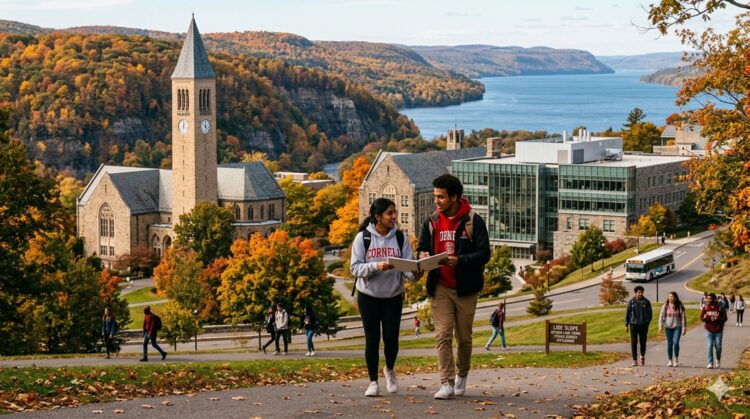
MIT is a private research university in Cambridge, Massachusetts, founded in 1861 and globally recognized for its leadership in science, engineering, technology, and management education. Below is an updated, in‑depth school overview of Massachusetts Institute of Technology that includes the contact and profile details visible in your screenshot, structured with headings and tables for easy use in your content.
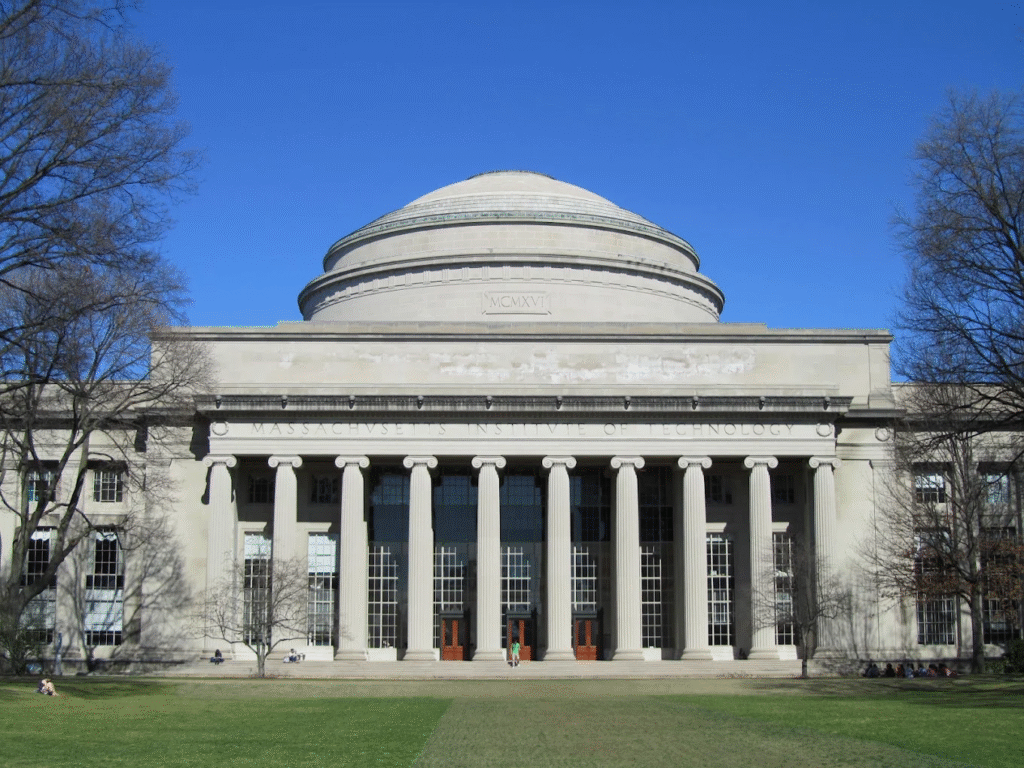
Basic profile
- Full name: Massachusetts Institute of Technology (MIT).
- Type: Private research university.
- Location: 77 Massachusetts Ave, Cambridge, MA 02139, United States.
- Campus: Midsize city, approximately 166 acres (about 67.2 hectares).
- Founded: Chartered on April 10, 1861; widely recognized as established in 1861.
- Global role: MIT has played a significant role in the development of many areas of modern technology and science.
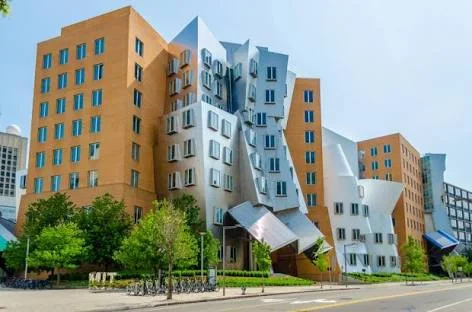
Key facts table
| Category | Details |
| Institution type | Private research university in Cambridge, Massachusetts, United States. |
| Address | 77 Massachusetts Ave, Cambridge, MA 02139, United States. |
| Established | April 10, 1861. |
| Campus size | Around 166 acres / 67.2 ha, urban/midsize city campus. |
| Founder | William Barton Rogers, a geologist and educator who advocated for a polytechnic institute. |
| Students (approx.) | Around 11,886 students in 2024–25 across undergraduate and graduate levels (figure from screenshot; always verify with latest MIT data before publishing). |
| Mascot | Tim the Beaver, chosen to symbolize engineering and industriousness. |
| Colors | Cardinal red and steel gray (often represented as red and gray). |
| President | Sally Kornbluth (note: confirm current president on MIT’s official site when you publish, as leadership can change). |
| Acceptance rate (UG) | Listed as about 4.7% for 2023 in your screenshot; MIT is known as one of the most selective universities in the world. |
| Endowment | Around 27.4 billion USD (2025 figure in screenshot; cross‑check with latest MIT financial reports for accuracy at time of writing). |
| Undergraduate tuition & fees | Screenshot shows about 60,156 USD for 2023–24 (tuition and mandatory fees; housing and other costs additional). |
| Average salary after undergrad | Screenshot cites about 1.43 lakh USD (143,000 USD) average salary after undergraduate study (IPEDS‑style statistic; verify with the most current career outcomes data). |
| Official phone number | +1 617‑253‑1000 (general MIT telephone). |
| Website | https://www.mit.edu (official MIT website). |
| Typical hours in listing | Google profile shows “Closed · Opens 9 am Mon” for general administrative hours (always check department‑specific hours separately). |
History and mission
- Founding purpose: MIT was created by William Barton Rogers to promote education that combined scientific theory with practical application, at a time when the United States was industrializing rapidly.
- Early development: Classes began in Boston in 1865; the institute later moved across the Charles River to its current Cambridge campus, gradually expanding its science and engineering programs and adding architecture, management, humanities, and social sciences.
- Mission: MIT’s mission is to advance knowledge and educate students in science, technology, and areas of scholarship that will best serve the nation and the world in the 21st century.
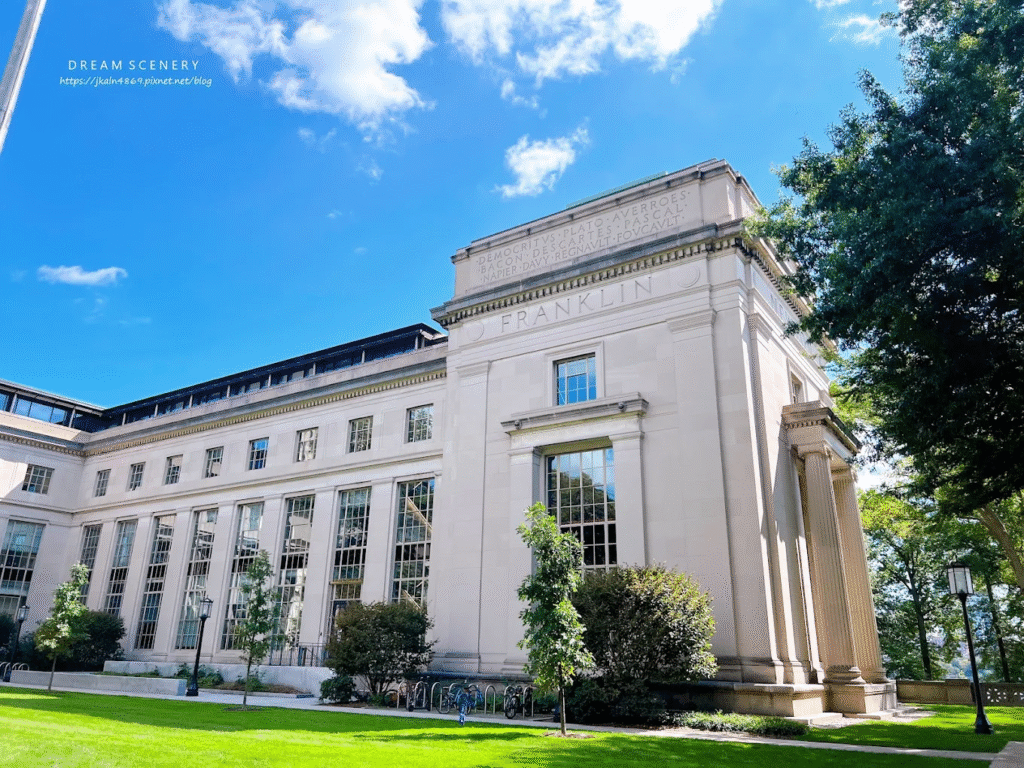
Academic structure
MIT’s academics are organized into five schools plus the Schwarzman College of Computing.
| School / College | Main areas of focus |
| School of Architecture and Planning | Architecture, urban studies, city planning, media and design innovation. |
| School of Engineering | Disciplines such as electrical engineering, computer science, mechanical, civil, chemical, aerospace, materials, and biological engineering. |
| School of Humanities, Arts, and Social Sciences | Economics, political science, linguistics, philosophy, history, literature, music, and more. |
| MIT Sloan School of Management | Management, finance, business analytics, entrepreneurship, operations, and leadership programs. |
| School of Science | Physics, mathematics, chemistry, biology, brain and cognitive sciences, and Earth/atmospheric sciences. |
| Schwarzman College of Computing | Cross‑cutting programs in computer science, AI, data science, and computing across disciplines. |
- Degrees offered: MIT offers bachelor’s, master’s, and PhD degrees, as well as professional degrees and joint programs across these schools.
- Curriculum style: The undergraduate curriculum combines a strong General Institute Requirements core (math, science, humanities, arts, social sciences) with specialized majors, emphasizing laboratory work and project‑based learning.
Research and innovation
- Research intensity: MIT is recognized as one of the world’s most research‑intensive universities, with annual research expenditures in the billions of dollars across government, industry, and foundation‑funded projects.
- Major research areas: Key strengths include artificial intelligence, robotics, information technology, energy and climate, aerospace engineering, biotechnology, materials science, nanotechnology, and economics.
- Institutes and labs: MIT hosts many major research units such as the Computer Science and Artificial Intelligence Laboratory (CSAIL), the Media Lab, the Koch Institute for Integrative Cancer Research, and the MIT Energy Initiative.
- Innovation ecosystem: The institute supports entrepreneurship through programs like the Martin Trust Center for MIT Entrepreneurship and various accelerators, helping students and faculty launch startups that have a significant global economic impact.
Admissions and outcomes
- Selectivity: Recent undergraduate acceptance rates are under 5%, with your screenshot showing 4.7% for 2023, reflecting extremely competitive admissions.
- Evaluation: MIT looks for strong academic preparation in math and science, evidence of creativity and problem‑solving, research or project experience, and alignment with MIT’s mission to use science and technology to serve society.
- Career results: Graduates frequently secure high‑impact roles in technology, engineering, finance, consulting, research, and entrepreneurship, with high average starting salaries and long‑term earning potential, as illustrated by the 1.43 lakh USD average salary figure in your screenshot (verify with MIT Career Advising & Professional Development data for the latest report).
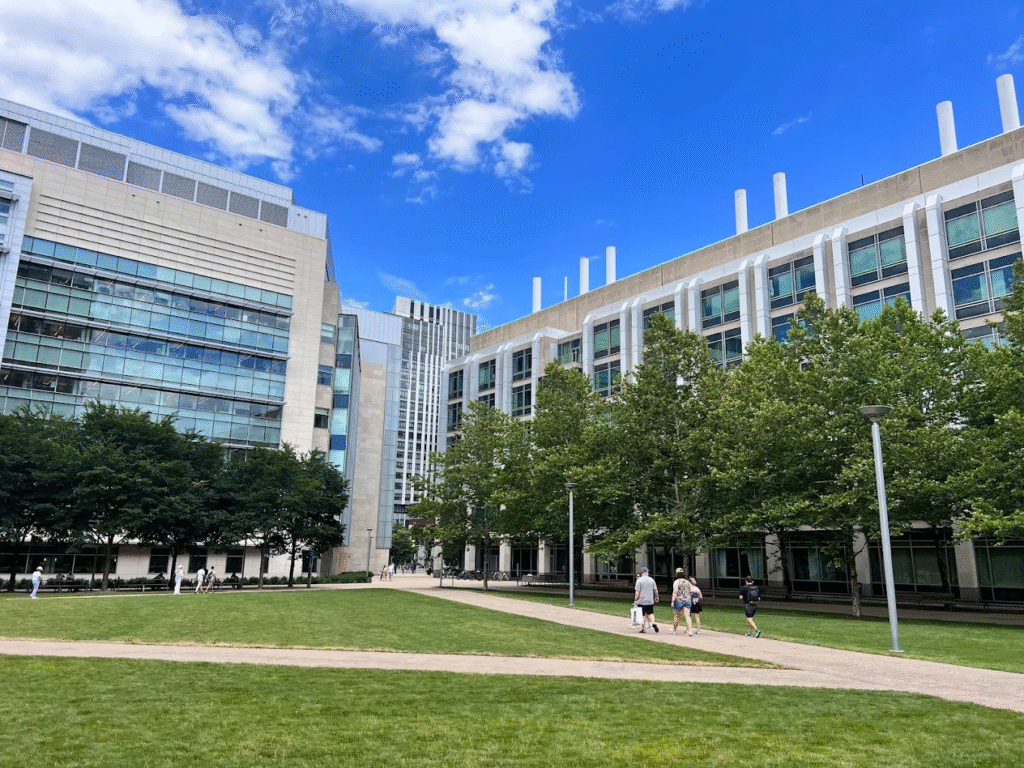
Student life and campus culture
- Residential system: Most undergraduates live in residence halls on or near campus, each with its own culture and traditions, while many graduate students live in MIT housing or nearby Cambridge and Boston neighborhoods.
- Learning culture: The environment is known for being rigorous but collaborative, with students engaging in problem sets, lab work, and the Undergraduate Research Opportunities Program (UROP), which allows undergraduates to work directly on faculty research.
- Activities: MIT offers numerous student organizations, athletics, performing arts groups, robotics teams, hackathons, and maker spaces, reflecting a culture that values creativity, hands‑on building, and innovation.
Contact and practical information
You asked specifically to add the correct contact data from the screenshot; these details are integrated below so you can plug them directly into your article or table. Always check MIT’s site and Google Business profile shortly before publishing, as numbers and hours can change.
| Item | Information (from your screenshot) |
| Official name | Massachusetts Institute of Technology (MIT) |
| Address | 77 Massachusetts Ave, Cambridge, MA 02139, United States |
| Main phone | +1 617‑253‑1000 |
| General website | https://www.mit.edu |
| Listed hours | Closed · Opens 9 am Monday (for main administrative offices; academic and departmental hours vary) |
| Category in listing | Private university in Cambridge, Massachusetts |
- For admissions‑specific questions, prospective students should consult the MIT Admissions website and contact forms rather than the general main phone, as different offices have dedicated contact details.
- For international students, MIT’s International Students Office and dedicated pages provide guidance on visas, funding, and arrival support, reachable through the MIT website rather than the general switchboard.