

Executive Summary: Founded in 1746 in Princeton, New Jersey, Princeton University is one of the world's leading research institutions. Unlike many of its Ivy League peers that prioritize massive graduate schools, Princeton remains uniquely undergraduate-focused. Gaining admission requires mastering a highly selective admissions process—where overall acceptance rates hover below 5%—and navigating specific institutional requirements such as Single-Choice Early Action (SCEA), the legendary Eating Clubs social system, and the rigorous mandatory Senior Thesis.
| Institutional Metric | Data Benchmark (2025–2026 Cycle) | Admissions Context & Strategic Note |
|---|---|---|
| Overall Acceptance Rate | 4.4% – 4.7% | Ranked among the top 3 most competitive universities in the United States |
| Single-Choice Early Action (SCEA) | ~9.5% – 10.5% acceptance rate | Non-binding early program; restricts applying early to other private US institutions |
| Middle 50% SAT Score | 1510 – 1580 | Evidence-Based Reading & Writing: 740–790; Mathematics: 770–800 |
| Middle 50% ACT Score | 34 – 35 | Composite score across English, Math, Reading, and Science sections |
| Undergraduate Enrollment | ~5,600 students | Intimate undergraduate focus; 5:1 student-to-faculty ratio |
| Undergraduate Financial Aid | 100% need met without loans | Full tuition, room, and board covered for families earning under $100,000 |
| Endowment Value | >$34.1 Billion | Generates exceptional per-student funding, lab grants, and summer research stipends |
Understanding Princeton's Undergraduate-First Philosophy
While Harvard, Yale, and Columbia operate vast professional schools (business, law, and medical centers), Princeton deliberately maintains no medical school or law school. Its institutional focus, endowment capital, and faculty resources are concentrated directly on its undergraduate student body. The university's faculty members—including Nobel laureates, Pulitzer Prize winners, and Fields Medalists—teach undergraduate lectures and lead small-group discussions known as preceptorials.
For prospective applicants, this structure dictates the entire admissions evaluation. Admissions officers do not seek students looking for a passive lecture hall experience. Instead, they look for intellectually courageous scholars eager to participate in vigorous academic discourse, conduct faculty-mentored independent research, and thrive under rigorous academic accountability.
Single-Choice Early Action (SCEA): Strategic Admissions Breakdown
One of the most consequential decisions an applicant faces is whether to apply via Single-Choice Early Action (SCEA) or Regular Decision (RD). Princeton's SCEA deadline is strictly November 1, with admissions decisions released in mid-December.
How SCEA Differs From Binding Early Decision (ED)
Unlike Columbia, Dartmouth, Penn, or Brown—which utilize binding Early Decision plans requiring students to enroll upon acceptance—Princeton's Early Action program is completely non-binding. Admitted students have until the national candidate reply date of May 1 to compare financial aid offers and make their final college selection.
However, Princeton's program is "Single-Choice" (restrictive). By choosing SCEA at Princeton, candidates agree to the following institutional restrictions:
- No Early Applications to Private US Institutions: You cannot apply to any other private university in the United States under any Early Action, Early Decision, or Restrictive Early Action plan.
- Permitted Public University Applications: You are permitted to apply to public institutions (such as UC Berkeley, Michigan, or UVA) through non-binding rolling admission or early action plans.
- Permitted International Applications: You may apply to international universities (e.g., Oxford, Cambridge, McGill, or Toronto) under non-binding deadlines.
- Military and Scholarship Exceptions: Applications to military service academies or non-binding scholarship programs with early deadlines are fully exempt.
The Statistical Reality of SCEA
Historically, the SCEA acceptance rate at Princeton has hovered between 9.5% and 11%, compared to approximately 3.2% to 3.8% in the Regular Decision round. While this higher percentage appears enticing, applicants must recognize the self-selecting nature of the early pool. The SCEA cohort is heavily composed of recruited NCAA Division I varsity athletes, legacy applicants, and exceptionally accomplished international science Olympiad medalists. Applying early provides a strategic boost only if the candidate's portfolio, test scores, essays, and teacher recommendations are fully polished by November 1.
Admissions Criteria & What Princeton Evaluates
Princeton employs a holistic admissions review process. Because virtually all applicants possess top-tier GPAs and near-perfect standardized test scores, admissions readers differentiate candidates through secondary and qualitative markers.
1. Academic Trajectory & Course Rigor
Princeton expects applicants to pursue the most demanding curriculum available at their secondary school. For applicants attending US high schools, this means extensive enrollment in Advanced Placement (AP) or International Baccalaureate (IB) courses across mathematics, laboratory sciences, English, history, and foreign languages. Admissions officers recalculate unweighted GPAs and evaluate transcripts within the context of the school's official School Profile.
2. The Graded Written Paper Requirement
A distinctive feature of Princeton's application process is the Graded Written Paper requirement. Applicants must submit an authentic academic paper written during their junior or senior year of high school. Key guidelines include:
- Subject Area: Must be written for an English, History, or Social Studies course.
- Length: Typically 1 to 2 pages in length.
- Authenticity: Must include the teacher's original handwritten or electronic grades and detailed marginal comments.
- Objective: Evaluates the applicant's expository writing ability, clarity of argumentation, and analytical depth outside the coached environment of the personal essay.
3. Extracurricular "Spike" vs. Well-Rounded Profiles
Princeton does not construct a freshman class out of students who are moderately skilled at ten different activities. Instead, the admissions committee constructs a well-rounded class of deeply specialized individuals. Applicants who demonstrate a clear "spike"—such as national recognition in competitive debate, published scientific research, significant civic leadership, or elite artistic accomplishment—consistently outperform candidates with generic laundry lists of club memberships.
The Senior Thesis: Princeton's Defining Academic Hallmark
No discussion of Princeton's undergraduate experience is complete without examining the Senior Thesis. Princeton is one of the only major research universities in the world where every single Bachelor of Arts (A.B.) candidate—and many Bachelor of Science in Engineering (B.S.E.) candidates—must complete a substantial, year-long independent research thesis to graduate.
Structure and Timeline of the Thesis
The thesis is not a glorified term paper; it is an extensive, book-length original contribution to scholarship, generally spanning 70 to 100 pages. Preparation begins during the junior year through mandatory Junior Papers (JPs), which teach undergraduates how to frame primary research questions, conduct archival investigations, analyze empirical datasets, and defend analytical theses.
Senior thesis writers are paired with a dedicated faculty mentor. Students receive institutional research funding from Princeton's endowment to travel worldwide for primary field research during summer and winter breaks—whether interviewing policymakers in Washington, excavating archaeological sites in Greece, or synthesizing novel chemical compounds in Frick Chemistry Laboratory.
Bound copies of completed theses are permanently cataloged in the Princeton University Archives at Mudd Manuscript Library, standing as permanent historical records of each student's undergraduate scholarly contribution.
Social Life & The Eating Clubs Tradition
Social dynamics at Princeton differ markedly from those of other Ivy League schools. Princeton has no recognized Greek life (fraternities or sororities). Instead, upperclass social life revolves around the historic Eating Clubs situated along Prospect Avenue, affectionately known to students as "The Street."
How the Eating Clubs Function
Dating back to the late 19th century, the Eating Clubs serve as co-educational dining halls, study facilities, and social centers for juniors and seniors. Sophomores participate in the club selection process during the spring semester. The 11 active clubs fall into two distinct administrative categories:
- Sign-In Clubs (5 Clubs): Selection is conducted through a transparent lottery or first-come, first-served enrollment system. These clubs include Charter Club, Cloister Inn, Colonial Club, Terrace Club, and Quadrangle Club.
- Bicker Clubs (6 Clubs): Selection involves "Bicker"—a mutual interview and socialization process where current members evaluate prospective candidates over several days. These clubs include The Ivy Club (founded 1879), Cottage Club, Cap and Gown Club, Tiger Inn, Cannon Dial Elm Club, and Tower Club.
Financial Aid Integration on The Street
Historically, eating clubs were criticized as exclusive enclaves for wealthy students. To eliminate socioeconomic barriers, Princeton overhauled its financial aid policy. The university increases its junior and senior board financial aid allowance to cover the average cost of eating club dues. Consequently, students receiving full financial aid can participate fully in eating club dining and social life without out-of-pocket financial strain.
Financial Aid: One of the Most Generous Programs in Higher Education
Princeton is globally celebrated for its revolutionary financial aid program. It was the first university in the United States to eliminate student loans entirely from its financial aid packages in 2001, replacing them with outright grant aid that never has to be repaid.
Key Pillars of Princeton Financial Aid:
- Need-Blind Admissions: Princeton evaluates all candidates—both domestic US citizens and international students—without regard to their family's ability to pay. An applicant's financial need has zero negative influence on their admissions chances.
- 100% Demonstrated Need Met: For every admitted student, Princeton calculates the exact cost of attendance minus expected family contribution and provides grants covering 100% of the difference.
- Free Tuition Under $100,000: For families earning under $100,000 with typical assets, Princeton covers 100% of tuition, room, board, books, and miscellaneous personal expenses. Most students from these families pay $0 to attend.
- Substantial Aid for Middle-Income Families: Even families earning up to $250,000 to $300,000 frequently qualify for substantial tuition reduction grants if they have multiple children enrolled in college simultaneously.
Actionable Application Checklist for Princeton Hopefuls
- Evaluate SCEA Readiness Early: Decide by September of your senior year whether your testing, letters of recommendation, and personal statement will be at peak strength by November 1. If not, wait for the Regular Decision January 1 deadline.
- Select Your Graded Paper Strategically: Save graded essays from junior year AP European History, AP US History, or AP Literature that display deep analytical thesis statements and positive teacher marginalia.
- Articulate Specific Departmental Fit: In your Princeton supplemental essays, do not praise the university's prestige or gothic architecture. Reference specific academic courses, named laboratories, research initiatives, or faculty members aligned with your academic passions.
- Prepare for the Alumni Interview: Princeton attempts to offer virtual or in-person evaluative interviews with local alumni for nearly all applicants. Approach the interview as an intellectual conversation rather than a rehearsed monologue.
Frequently Asked Questions (FAQ)
Does applying SCEA guarantee an admissions advantage?
No. While the numerical acceptance rate is higher in SCEA (around 10% vs. 3.5% in RD), the applicant pool is heavily populated by recruited athletes and top-ranked scholars. SCEA offers an advantage only if your entire portfolio is thoroughly prepared by November 1.
Is Princeton need-blind for international students?
Yes. Princeton is one of only eight US higher education institutions (alongside MIT, Harvard, Yale, Dartmouth, Amherst, Bowdoin, and Brown) that extend need-blind admissions to all international applicants while guaranteeing to meet 100% of demonstrated financial need without loans.
What GPA is needed to get into Princeton?
Most admitted students have an unweighted high school GPA of 3.90 or higher on a 4.0 scale, with straight A's in rigorous honors, AP, or IB courses. However, GPA alone is never sufficient; qualitative factors, independent research, and extracurricular achievements are pivotal.
Are the Eating Clubs mandatory?
No. Upperclass students may choose an independent dining plan, cook their own meals in apartment-style dormitories, join a student food co-op, or remain on a university dining hall residential college meal plan.

Saahil Sharma | Education Research Lead
Saahil Sharma leads higher education research and admissions analysis at Top Schools Rankings. He specializes in Ivy League admissions data, institutional ranking methodologies, and international student credential verification.
Continue your research
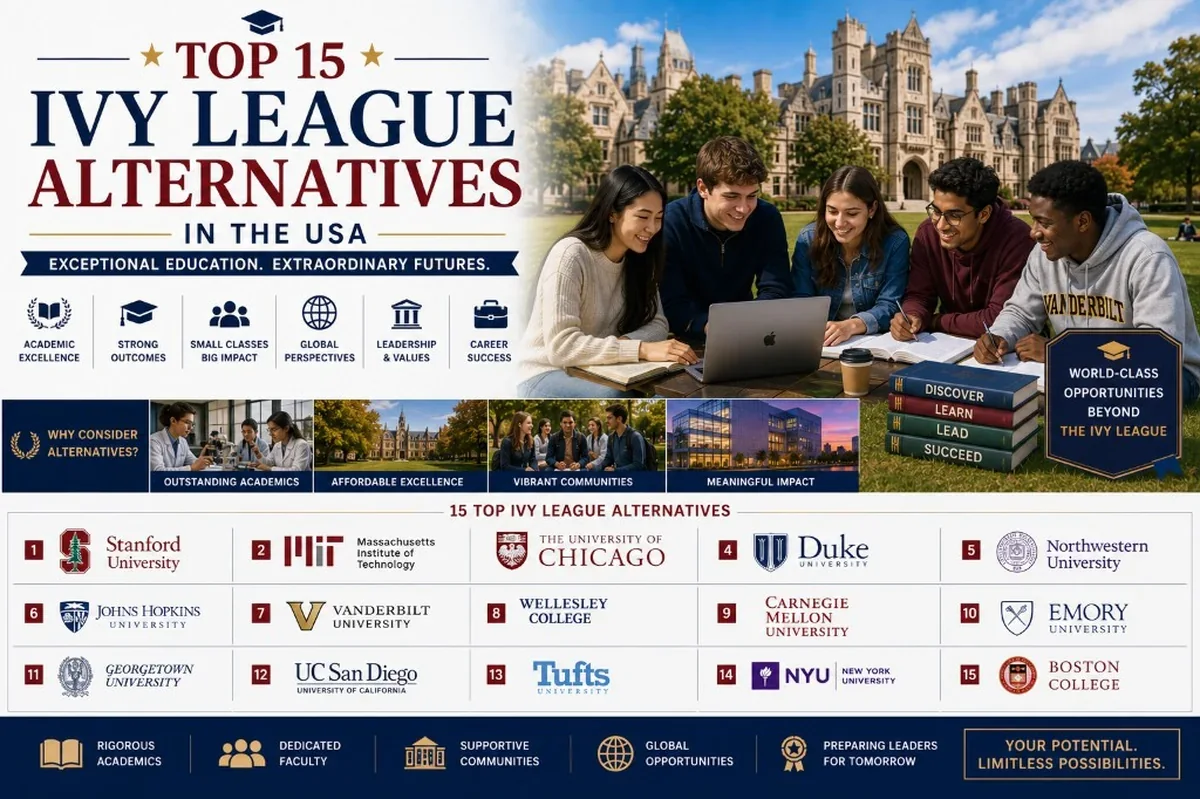
Top 15 Ivy League Alternatives in the USA (2026 Rankings Guide)
Top 15 Ivy League alternatives in the USA for 2026: MIT, Stanford, Chicago, Caltech, Duke, Northwestern, Hopkins and more.
Read the guide →
University of Pennsylvania: Complete Guide to Penn's Ivy League Excellence
Discover everything about the University of Pennsylvania – Ivy League rankings, Wharton & engineering programs, tuition fees, admissions requirements.
Read the guide →
How to Verify University Accreditation Before You Apply
A practical country-by-country checklist for checking whether a university and programme are officially recognized before paying an application fee.
Read the guide →
How to Compare Universities Beyond Rankings: A 2026 Framework
Compare course fit, cost, outcomes, support and learning experience with official data instead of relying on one league-table position.
Read the guide →