
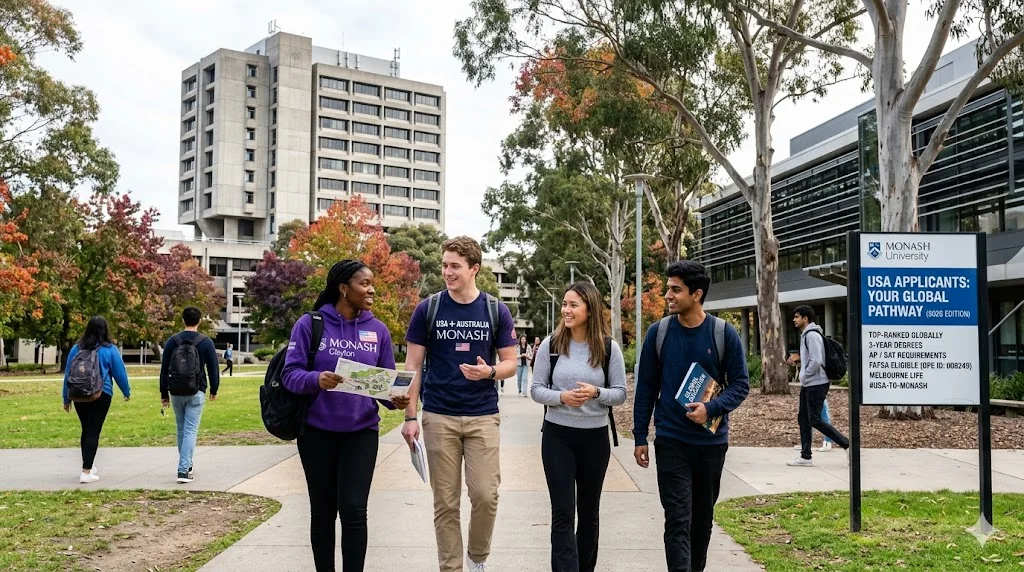
Monash University, a prestigious Group of Eight institution in Melbourne, Australia, is highly attractive to US applicants. It offers direct-entry professional degrees (like Law and Medicine), accepts US Federal Student Loans (FAFSA), and typically requires a high school diploma with standardized test scores (SAT/ACT) or AP exams for admission.
Why US Students Choose Monash University
Monash University is Australia's largest university and a founding member of the Group of Eight (Australia's equivalent to the Ivy League). Located in Melbourne—consistently ranked as one of the world's most livable and student-friendly cities—Monash has become a major destination for American high school graduates seeking a global education.
US students are primarily drawn to Monash for three reasons: academic prestige (consistently ranked in the global Top 50), a vibrant campus lifestyle, and the structure of Australian degrees. Unlike the US system, where students spend two years taking general education courses before declaring a major, Australian degrees are highly specialized from day one.
The Direct-Entry Degree Advantage
One of the biggest structural differences between the US and Australia is the "direct-entry" system. If you want to be a lawyer, doctor, pharmacist, or physiotherapist in the United States, you must complete a four-year bachelor's degree first, take a grueling entrance exam (LSAT, MCAT), and then apply to a graduate professional school.
At Monash University, you can apply directly from high school into an undergraduate Bachelor of Laws (LLB) or a direct-entry Bachelor of Medical Science and Doctor of Medicine (MD) pathway. This can save American students years of study and hundreds of thousands of dollars in tuition, allowing them to enter their chosen profession significantly faster.
Admissions Requirements for US High School Graduates
Monash University is highly transparent about its entry requirements. Unlike US holistic admissions (which weigh heavily on essays, extracurriculars, and legacy status), Monash admissions are almost entirely data-driven based on your academic results.
- High School Diploma: You must graduate from a recognized US high school with a competitive GPA.
- Standardized Testing: Monash generally requires either an SAT or ACT score. Unlike many US colleges that went "test-optional" during the pandemic, Australian universities heavily rely on these scores to standardize international grading.
- Advanced Placement (AP) Exams: Alternatively, Monash accepts AP exam scores. Many competitive degrees require a specific aggregate score across 2 to 4 AP exams.
- Prerequisites: If you are applying for Engineering or Science, you must prove you have taken high-level Mathematics (e.g., AP Calculus) in high school.
Financial Aid, FAFSA, and the Cost of Attendance
Studying internationally can be expensive, but Monash is financially accessible for many Americans because it is fully accredited by the US Department of Education to administer US Federal Student Aid.
- FAFSA Eligibility: US citizens can submit a FAFSA and use Direct Subsidized, Unsubsidized, and PLUS loans to pay for Monash tuition and Melbourne living expenses. (Note: Pell Grants cannot be used internationally).
- Tuition Costs: International tuition at Monash ranges from ,000 to ,000 AUD per year (roughly ,000 to ,000 USD, depending on exchange rates). This is often significantly cheaper than out-of-state tuition or private college tuition in the US.
- Currency Advantage: When the US Dollar is strong against the Australian Dollar, studying in Melbourne becomes a massive financial bargain for American families.
Campus Life and Accommodation in Melbourne
Monash operates several campuses, but the vast majority of undergraduate students are based at the sprawling Clayton campus or the urban Caulfield campus. The Clayton campus functions like a mini-city, complete with its own zip code, massive sporting facilities, performing arts centers, and dozens of cafes.
First-year international students are heavily encouraged to live on-campus in the Monash Residential Services (MRS) dormitories. Unlike many US dorms where students share a tiny room, Monash accommodations generally provide students with their own private bedroom, sharing only kitchens and bathrooms. The university's strong club culture ensures US students integrate quickly into Australian life.
Frequently Asked Questions
Can I work in Australia while studying at Monash?
Yes. The standard Australian Subclass 500 Student Visa allows international students to work up to 48 hours per fortnight (two weeks) during the academic semester, and unlimited hours during scheduled university holidays. This is a massive advantage compared to the US F-1 visa, which heavily restricts off-campus work.
Will my Monash degree be recognized in the United States?
Yes, Monash degrees are globally recognized. However, if you study a regulated profession (like Law, Medicine, or Engineering), you must check the specific licensing requirements in your home US state. For example, returning to the US with an Australian law degree usually requires taking a state bar exam (like the New York Bar), which has specific foreign-credential verification processes.
Does Monash require a personal essay or recommendation letters?
Generally, no. For most undergraduate degrees, Monash does not read personal statements or letters of recommendation. Admission is based strictly on your academic metrics (GPA and SAT/ACT/AP scores) meeting the published cutoff.
Primary Sources
Sources were accessed for this guide on 20 August 2026. Please verify directly with official portals for the most up-to-date regulations.

Saahil
Saahil is an education researcher and content creator specializing in university rankings, admissions strategies, and student guides. He is dedicated to helping students make informed academic decisions.
Continue your research

University Cost Comparison Checklist: Find the Real Total
A step-by-step worksheet for comparing tuition, living expenses, aid, deposits and hidden study costs across universities and countries.
Read the guide →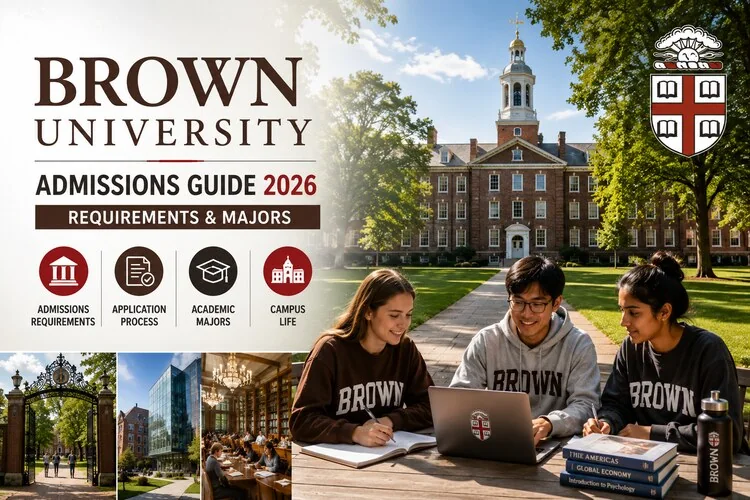
Brown University: Admissions Guide 2026 | Requirements & Majors
Everything you need to know about Brown University: admission requirements, SAT/ACT scores, tuition costs, popular majors, and campus life. Apply now!
Read the guide →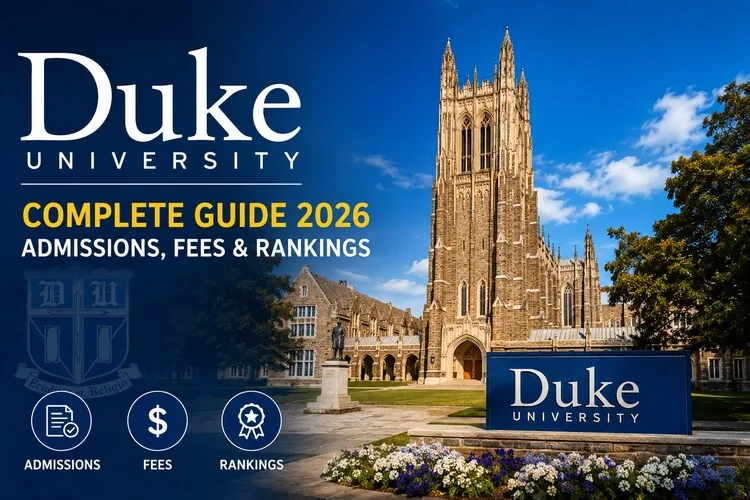
Duke University: Complete Guide 2026 – Admissions, Fees & Rankings
Discover everything about Duke University in 2026. Learn about admissions requirements, tuition fees ($70,265), rankings (#6 US News), acceptance rate (4.8%).
Read the guide →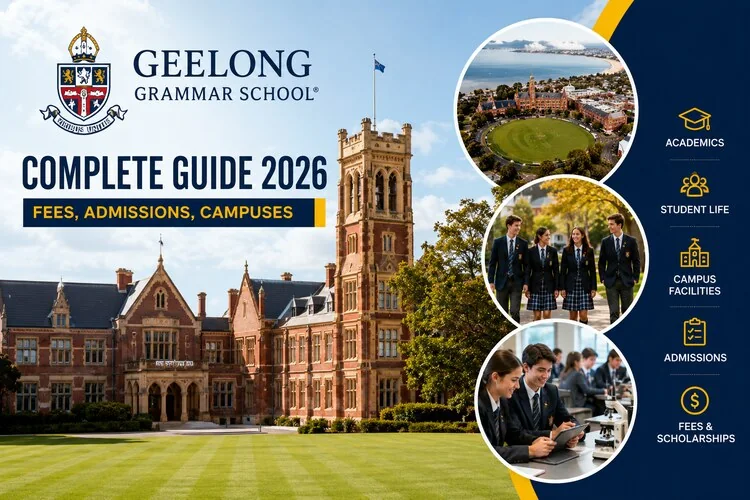
Geelong Grammar School: Complete Guide 2026 | Fees, Admissions, Campuses
Discover everything about Geelong Grammar School – fees, 4 campuses, IB & VCE programs, boarding options, admissions process, and notable alumni. Apply today!
Read the guide →