
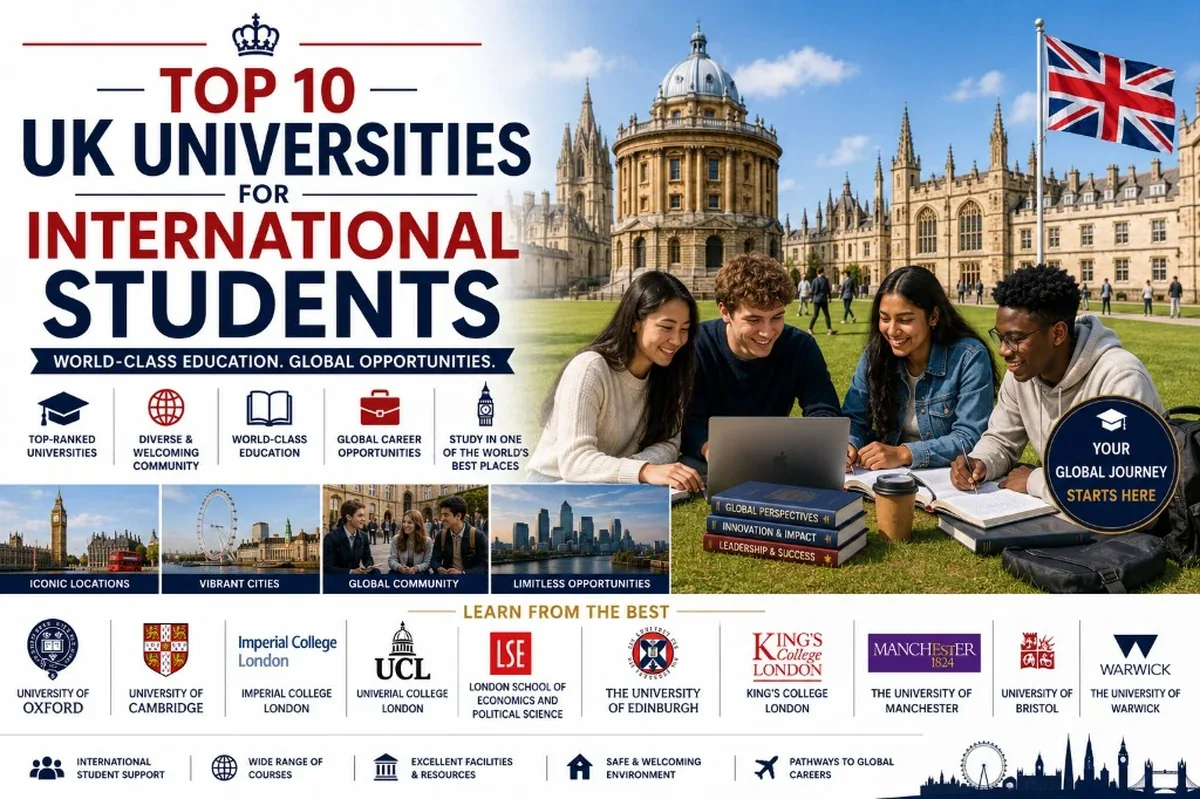
Top 10 UK universities for international students (2026) — This independent editorial guide helps prospective applicants navigate the United Kingdom's leading higher education institutions. We break down global research flagships, London-based specialist schools, and critical factors like UCAS, tuition, and the Graduate Route visa.
Our "Top 10" list aggregates and contextualizes data from major educational indices. Please note: This is a research guide compiled by Top Schools Rankings. While we use recognized datasets like the QS World University Rankings as foundational reference points, this is not an official ranking published by the UK Government, UCAS, the Russell Group, or QS.
Ranking Methodology & Sources
To build this guide, we referenced the QS World University Rankings (2026 edition) to establish the leading UK institutions by global academic reputation. QS evaluates universities heavily on academic reputation, employer reputation, and research citations per faculty.
This Top 10 list highlights the highest-placing UK universities within the global top 75, offering a mix of historic prestige (Oxford, Cambridge), London dominance (Imperial, UCL, LSE), and broad research excellence (Manchester, Edinburgh, Bristol, Warwick).

Top 10 UK Universities for International Students (2026 Guide)
The table below outlines the top 10 UK institutions, their primary city locations, and their 2026 QS World University Rank.
| QS 2026 world rank | University | City | Known for |
|---|---|---|---|
| 2 | Imperial College London | London | Engineering, medicine, computer science, business |
| 4 | University of Oxford | Oxford | Humanities, law, medicine, PPE (Politics, Philosophy & Economics) |
| 6 | University of Cambridge | Cambridge | Mathematics, engineering, natural sciences, economics |
| 9 | UCL (University College London) | London | Architecture, medicine, law, education |
| 31 | King's College London | London | Medicine, law, international relations, humanities |
| 34 | University of Edinburgh | Edinburgh | Computer science/AI, medicine, literature, philosophy |
| 35 | University of Manchester | Manchester | Engineering, business, computer science, physics |
| 51 | University of Bristol | Bristol | Engineering, law, social sciences, computer science |
| 56 | London School of Economics (LSE) | London | Economics, finance, politics, sociology |
| 74 | University of Warwick | Coventry | Economics, mathematics, business, data science |
The Russell Group Explained
When researching UK universities, international students will frequently encounter the Russell Group. This is an association of 24 leading, research-intensive UK universities (similar in concept to the Ivy League in the US or the Group of Eight in Australia). All ten universities listed in this guide are Russell Group members.
Graduating from a Russell Group university often provides strong global brand recognition, massive alumni networks, and deep ties to top-tier graduate employers across finance, law, engineering, and consulting.

Critical Factors for International Applicants
Before applying to a UK university, evaluate these critical factors beyond global prestige:
- The UCAS System & Admissions: Undergraduate applications for the UK are handled centrally through UCAS. You apply to up to five courses using a single, highly academic Personal Statement. Unlike the US system, UK universities do not care about well-rounded extracurriculars; they look strictly for deep, demonstrated academic passion for your specific subject.
- Degree Length & Conditional Offers: A standard bachelor's degree in England, Wales, and Northern Ireland takes three years. In Scotland (e.g., University of Edinburgh), it takes four years. If you are admitted before finishing high school, you will receive a "Conditional Offer," meaning your acceptance is entirely dependent on achieving specific final grades (e.g., A*AA at A-Level, or a 38 in the IB Diploma).
- Post-Study Work Visas: The UK offers a highly attractive Graduate Route visa. Eligible international students can stay and work in the UK for two years after completing an undergraduate or master's degree, or three years after a PhD, without needing a corporate sponsor. Always verify current visa regulations directly on the official UK Government website.
2026 Estimated International Tuition & Living Costs
While UK tuition fees are high for international students, the three-year degree structure often makes the total cost lower than a comparable four-year US degree.
| Expense Type | Typical Annual Cost (GBP) |
|---|---|
| Arts, humanities, and social sciences tuition | £22,000 – £33,000 |
| Science and engineering tuition | £28,000 – £40,000 |
| Clinical medicine and dentistry tuition | £45,000 – £65,000+ |
| Living costs (London) | £13,000 – £18,000+ per year |
| Living costs (outside London) | £10,000 – £14,000 per year |
Limitations of This Ranking
Global rankings like QS heavily weight international research citations and academic reputation. They do not measure undergraduate teaching quality, student satisfaction, or the availability of on-campus housing. For domestic insights on student satisfaction, UK applicants often reference local league tables like the Complete University Guide or The Guardian.
Always verify current tuition rates, admission requirements, subject prerequisites, and visa rules directly on the official university websites and the UK Government portal before accepting an offer.
FAQs: Top Universities in the UK
What is the highest-ranked UK university in QS 2026?
According to the QS 2026 global ranks, Imperial College London (#2 globally) overtook Oxford and Cambridge to become the highest-ranked UK institution, driven by exceptionally strong metrics in research and sustainability.
Do Oxford and Cambridge require extra admissions tests?
Yes. For many courses, Oxford and Cambridge require subject-specific written admissions tests (such as the ESAT, MAT, or LNAT) and highly rigorous academic interviews. You are also not permitted to apply to both Oxford and Cambridge in the same UCAS admissions cycle.
Why isn't LSE ranked higher globally?
The London School of Economics (LSE) is a specialist institution focused purely on social sciences, economics, and politics. Because global indices like QS reward institutions with massive medical and hard-science research output, LSE ranks slightly lower overall (#56), despite being a global powerhouse in its specific disciplines.
How long can international graduates stay in the UK?
Under current immigration rules, the Graduate Route visa allows eligible international graduates to stay in the UK to work, or look for work, for two years (three years for PhD graduates). Always verify these rules on the official gov.uk portal, as immigration policies are subject to change.
How much does it cost to study in the UK?
International undergraduate tuition generally ranges from £22,000 to £40,000+ per year. You must also factor in living costs, which are significantly higher in London compared to northern cities like Manchester or Scottish cities like Edinburgh.

Saahil
Saahil is an education researcher and content creator specializing in university rankings, admissions strategies, and student guides. He is dedicated to helping students make informed academic decisions.
Continue your research
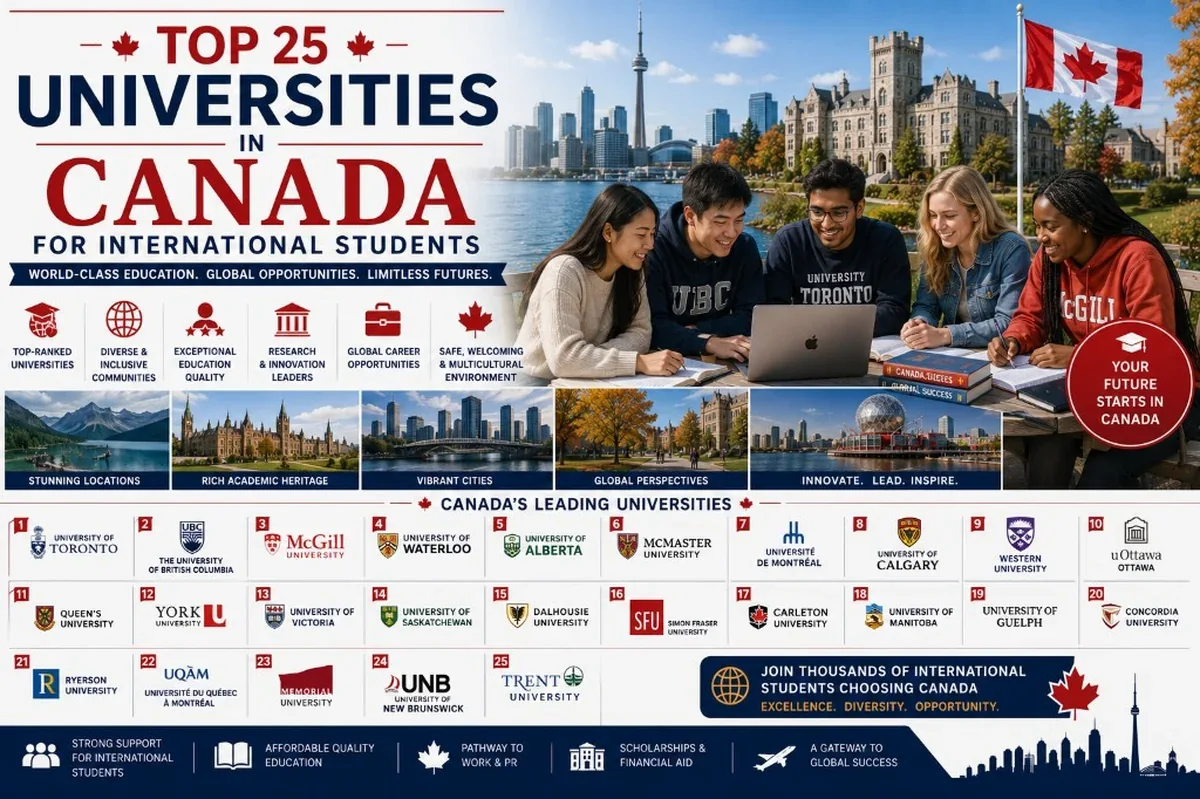
Top 25 Universities in Canada for International Students (QS 2026 Guide)
Top 25 universities in Canada for international students using QS 2026: McGill, Toronto, UBC, Waterloo, plus FAQs and admissions tips.
Read the guide →
How to Compare Universities Beyond Rankings: A 2026 Framework
Compare course fit, cost, outcomes, support and learning experience with official data instead of relying on one league-table position.
Read the guide →
Algoma University for International Students: Admissions, Fees, Courses & Visa Guide
Choosing the right university in Canada is a crucial decision for international students.
Read the guide →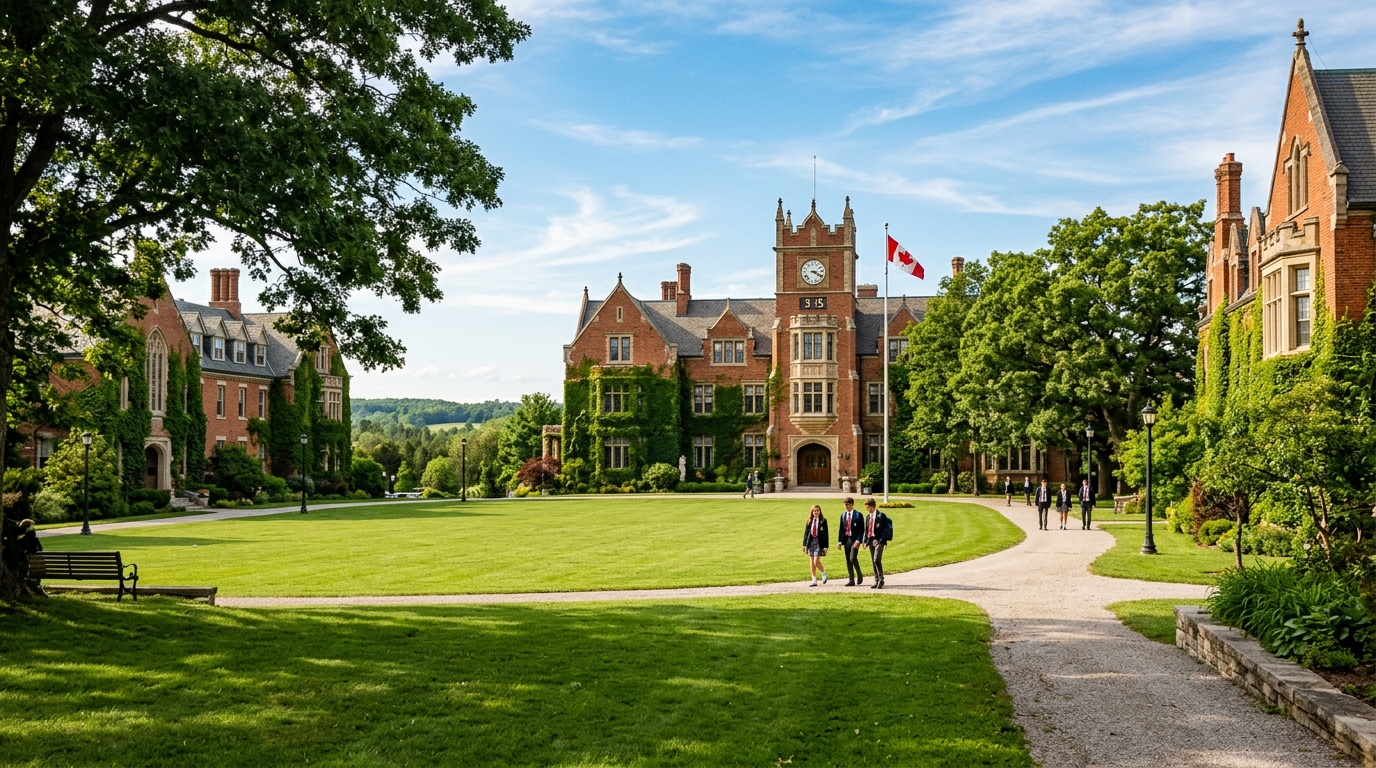
Appleby College Canada: Boarding School, Admissions, Fees & Student Life Guide for International Students
Appleby College is an independent boarding school in Canada.
Read the guide →