
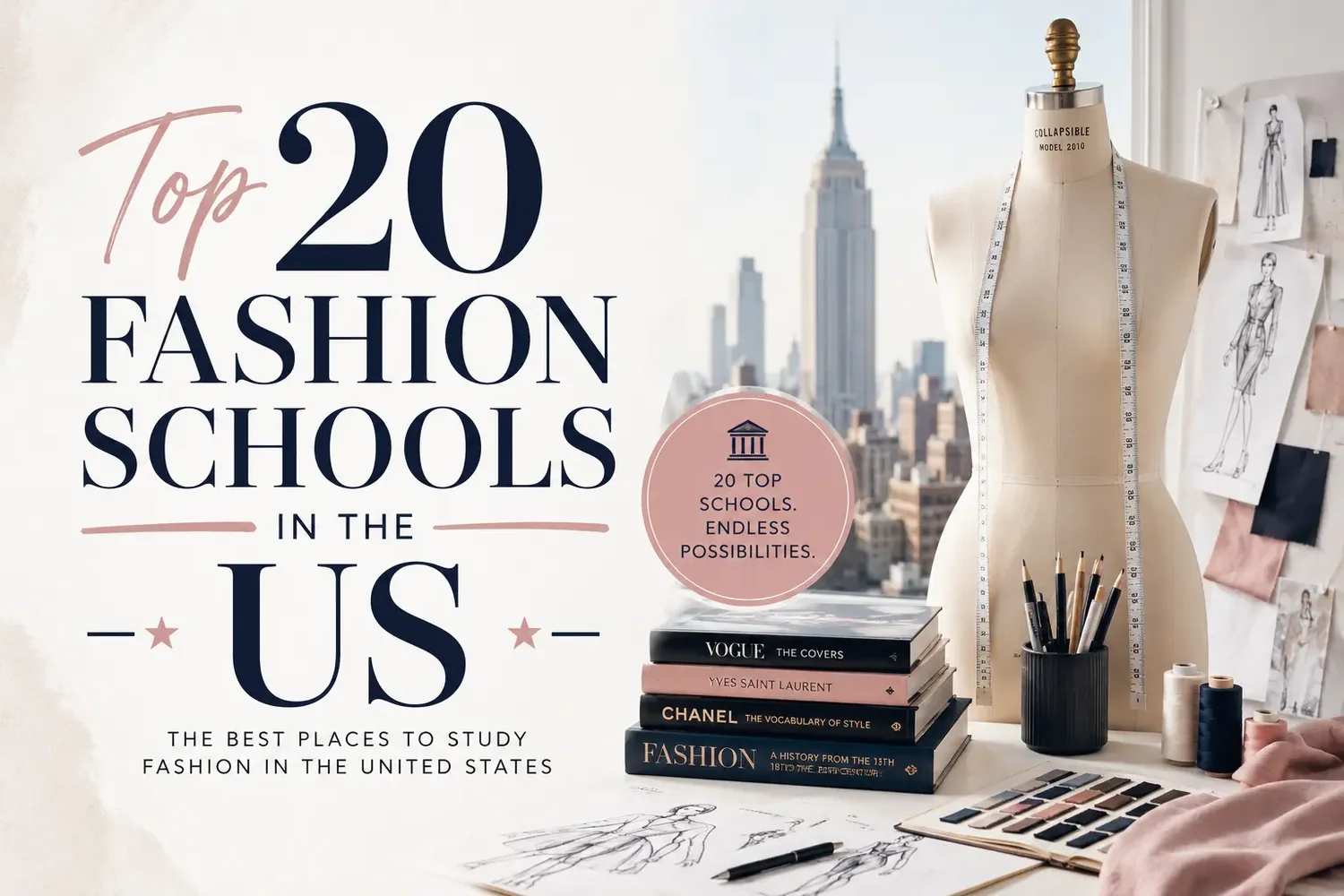
Choosing among the top 20 fashion schools in the US is one of the most important decisions for students who want careers in design, merchandising, styling, or fashion business. This guide compares leading programs across New York, Los Angeles, Chicago, and other creative hubs—using publicly reported program strengths, location advantages, and career outcomes. Rankings vary by source and major focus, so always confirm tuition, deadlines, and portfolio rules on each school’s official website before you apply.
Why the top 20 fashion schools in the US matter for your career
American fashion education is not one-size-fits-all. Some schools train runway designers; others specialize in technical design, textiles, retail buying, or luxury branding. The top fashion schools in the US typically offer studio-heavy coursework, industry critiques, internship pipelines, and access to alumni networks in New York, Los Angeles, and global fashion capitals. Students who graduate from strong programs often build portfolios that include draping, CAD, collection development, and business coursework—skills employers still expect even as digital design tools evolve.
Before you shortlist campuses, decide whether you want a dedicated art and design college, a university-based design school, or a career-focused institute with shorter pathways into merchandising and production. That choice will narrow your list faster than chasing a single “number one” name.
How we evaluated US fashion schools for this list
This list is an editorial comparison for students and parents—not an official government ranking. We weighed program depth, industry access, geographic advantage, graduate outcomes reported by schools, and national visibility in fashion design and related majors. Numbers such as acceptance rates and tuition change every year; treat tables below as planning ranges and verify current figures on admissions pages.
| Evaluation factor | Why it matters |
|---|---|
| Program focus | Design, merchandising, textiles, costume, or fashion business |
| Location | Internships with brands, manufacturers, and retailers near campus |
| Portfolio & critique culture | Prepares students for competitive creative hiring |
| Industry tools | CAD, pattern-making labs, textile science, sustainability studios |
| Career services | Shows, recruiters, alumni mentors, co-op or internship requirements |
| Affordability & aid | Public SUNY options vs. private art school tuition |
Top 20 fashion schools in the US — comparison table
The table summarizes the top 20 fashion schools in the US covered in this guide. “Best for” describes typical student fit, not a guarantee of outcomes.
| # | School | Location | Best for | Notable programs / strengths |
|---|---|---|---|---|
| 1 | Fashion Institute of Technology (FIT) | New York, NY | Industry-ready design & merchandising | Fashion Design, Fashion Business, Textile Development; SUNY value; Museum at FIT |
| 2 | Parsons School of Design (The New School) | New York, NY | Conceptual & sustainable fashion | Fashion Design BFA; strong design theory; NYC Fashion Week proximity |
| 3 | Pratt Institute | Brooklyn, NY | Construction & craft-forward design | Fashion Design; fine-arts foundation; intimate studio culture |
| 4 | Savannah College of Art and Design (SCAD) | Savannah & Atlanta, GA | Large creative university experience | Fashion, luxury marketing, accessory design; SCAD FASH museum |
| 5 | Rhode Island School of Design (RISD) | Providence, RI | Art-school rigor & experimentation | Apparel Design; strong foundation year; Northeast creative corridor |
| 6 | Fashion Institute of Design & Merchandising (FIDM) | Los Angeles, CA | West Coast industry pathways | Design, merchandising, beauty marketing; entertainment & retail ties |
| 7 | Otis College of Art and Design | Los Angeles, CA | Fashion design with LA industry access | Annual scholarship benefit & fashion show; mentorship model |
| 8 | Drexel University (Westphal College) | Philadelphia, PA | Co-op & professional experience | Design & Merchandising; required cooperative education |
| 9 | Kent State University (School of Fashion) | Kent, OH | Design + merchandising at scale | Fashion School; NYC studio semester options; strong alumni network |
| 10 | LIM College | New York, NY | Fashion business & retail | Merchandising, marketing, visual studies; industry-focused curriculum |
| 11 | California College of the Arts (CCA) | San Francisco Bay Area, CA | Experimental design & sustainability | Textiles and fashion-related design pathways |
| 12 | School of the Art Institute of Chicago (SAIC) | Chicago, IL | Critical & interdisciplinary practice | Fashion Design; flexible curriculum; museum campus culture |
| 13 | Academy of Art University | San Francisco, CA | Flexible study & portfolio building | Fashion design, knitwear, merchandising; urban industry exposure |
| 14 | Virginia Commonwealth University (VCUarts) | Richmond, VA | Affordable public art & design depth | Fashion Design; strong arts college within research university |
| 15 | Thomas Jefferson University | Philadelphia, PA | Textiles & fashion design integration | Legacy Philadelphia University fashion programs; industry partnerships |
| 16 | Columbia College Chicago | Chicago, IL | Urban creative scene & internships | Fashion Studies; connected to city’s media and retail economy |
| 17 | Marist College | Poughkeepsie, NY | Fashion merchandising & NYC access | Merchandising, design, luxury branding coursework |
| 18 | University of Cincinnati (DAAP) | Cincinnati, OH | Co-op design education | Fashion Design; mandatory cooperative education in design fields |
| 19 | North Carolina State University (Wilson College of Textiles) | Raleigh, NC | Textile science & technical fashion | Fashion & textile design; innovation in materials and performance wear |
| 20 | Cornell University (Fiber Science & Apparel Design) | Ithaca, NY | Research + Ivy-level academics | Apparel design with fiber science depth; unique blend of STEM and design |
Top fashion schools in the US by region
Geography shapes internships, guest critics, and the kind of collections students build. Many of the top fashion schools in the US cluster on the coasts, but strong public and co-op programs in the Midwest and South add value for cost-conscious families.
| Region | Leading schools in this guide | Industry angle |
|---|---|---|
| New York City metro | FIT, Parsons, Pratt, LIM, Marist (NYC access) | Luxury, media, wholesale, runway, corporate HQ recruiting |
| California | FIDM, Otis, CCA, Academy of Art | Entertainment, denim, activewear, West Coast retail and startups |
| Southeast | SCAD, VCUarts, NC State | Regional manufacturing, textiles, growing design economies |
| Midwest | Kent State, University of Cincinnati, SAIC (Chicago) | Co-ops, alumni networks, lower living costs than NYC/LA |
| Northeast (non-NYC) | RISD, Cornell, Thomas Jefferson | Textile science, apparel engineering, art-school foundations |
Students targeting New York City for college life often compare Parsons, FIT, and LIM in the same application cycle because of shared internship ecosystems—though each campus culture differs sharply.
Deep dive: five flagship US fashion schools
1. Fashion Institute of Technology (FIT)
FIT is part of the State University of New York and widely regarded as a premier public option among the top fashion schools in the US. Programs span design, business, styling, and textile development, which helps students who are unsure whether they want to sew collections or lead merchandising teams. FIT’s location in Manhattan places students near showrooms, retailers, and corporate offices. The Museum at FIT is a major educational resource for fashion history and conservation. Verify current SUNY tuition and portfolio requirements on FIT’s official admissions site.
2. Parsons School of Design
Parsons, part of The New School, is known for conceptual design education with increasing emphasis on sustainability and systems thinking. Students engage in rigorous critique culture and interdisciplinary projects. Parsons alumni have long been visible in American fashion leadership. Admission is selective and portfolio-driven; applicants should show process work—not only finished looks. If you are comparing Parsons with broader liberal arts options, review our USA universities guides for context on how specialized art schools differ from large research campuses.
3. Pratt Institute
Pratt’s Brooklyn campus combines fine-arts foundations with fashion design studios emphasizing construction, material exploration, and responsible design. Class sizes are typically smaller than mega-universities, which appeals to students who want close faculty mentorship. Pratt consistently ranks highly among US art and design schools in global surveys, though you should read methodology before relying on any single rank number.
4. Savannah College of Art and Design (SCAD)
SCAD operates as a large dedicated arts university with fashion, accessory, and luxury-focused pathways. Students benefit from professional presentation opportunities, including high-profile fashion events that attract press and recruiters. SCAD’s multi-campus model suits students who want a full creative-university environment rather than a single-building art institute.
5. Fashion Institute of Design & Merchandising (FIDM)
FIDM anchors West Coast fashion training in Los Angeles, where entertainment, celebrity styling, and commercial product development intersect. Programs include design, merchandising, and marketing-oriented majors that appeal to students seeking faster alignment with industry job functions. Compare FIDM’s program map against Otis and Academy of Art if you know you want California but prefer different campus sizes and mentorship models.
Top fashion schools in the US by career goal
| Your goal | Schools to prioritize from this top 20 list |
|---|---|
| Runway / designer path | Parsons, RISD, Pratt, SCAD, Otis |
| Fashion merchandising & buying | FIT, LIM, Marist, FIDM, Drexel |
| Textile innovation & performance wear | NC State, Cornell, FIT (textile programs) |
| Co-op and paid work experience | Drexel, University of Cincinnati, Kent State |
| Affordable public pathways | FIT (SUNY), VCUarts, Kent State, NC State |
| Interdisciplinary art practice | SAIC, CCA, RISD, Academy of Art |
When researching trends for portfolios and personal design language, studying real-world fashion collections can help students understand color, silhouette, and commercial presentation—then translate those observations into original academic work rather than copying looks.
Admissions at top fashion schools in the US
Most design-focused members of the top 20 fashion schools in the US require a portfolio, personal statement, and official transcripts. Expect to show sketchbooks, process photos, garment photos, and digital layouts. Merchandising and business-heavy programs may weight essays, math readiness, and internships more than draping samples. Common application components include:
- Portfolio (8–20 pieces typical): Process + finished work; follow each school’s format instructions exactly
- Artist/designer statement: Explain concepts, materials, and career direction
- Transcripts & GPA: Competitive programs review academic consistency
- Recommendations: Art teachers, employers, or mentors who know your creative discipline
- English proficiency: TOEFL/IELTS/Duolingo for international students when required
Deadlines often fall between November and February for fall entry. Some colleges offer rolling admission or spring starts—check each portal individually.
Costs and financial planning for US fashion schools
Tuition varies widely between public SUNY tuition (FIT for NY residents vs. out-of-state) and private art colleges exceeding $50,000 per year before housing. Budget for fabric, muslin, tools, software, and portfolio photography—often $1,000–$3,000 annually in design programs.
| Cost type | Typical planning range (USD) | Notes |
|---|---|---|
| Public in-state tuition (example) | ~$7,000–$12,000 / year | SUNY FIT for NY residents—verify current rate |
| Public out-of-state tuition | ~$18,000–$28,000 / year | Varies by campus and residency |
| Private art & design tuition | ~$45,000–$60,000+ / year | Parsons, Pratt, RISD, SCAD—check net price calculators |
| Housing in NYC / LA | ~$15,000–$25,000+ / year | Highly variable by neighborhood and roommates |
| Materials & portfolio costs | ~$1,000–$3,000 / year | Fabric, supplies, shoots, show participation |
Use each institution’s net price calculator and ask financial aid offices about merit scholarships for portfolio strength—not only GPA.
How to choose from the top 20 fashion schools in the US
- Match program to job target: Designer, buyer, stylist, product developer, or entrepreneur
- Visit studios virtually or in person: Inspect sewing labs, CAD labs, and critique spaces
- Compare internship data: Ask career services for recent placement examples
- Review alumni paths: LinkedIn searches by major and school
- Calculate total cost of ownership: Tuition + city living + materials for four years
- Apply to a balanced list: Reach, match, and financially safer options
No single school guarantees fame or employment. The best choice is the program that strengthens your portfolio, professional habits, and network in the city where you want to work after graduation.
FAQs: top fashion schools in the US
What are the top fashion schools in the US for design?
FIT, Parsons, Pratt, SCAD, RISD, and Otis are widely cited for fashion design depth. The best fit depends on whether you want public-university value, art-school critique culture, or a large creative-university environment.
Is FIT or Parsons better for fashion?
FIT is often chosen for industry-aligned training, merchandising breadth, and SUNY affordability. Parsons is often chosen for conceptual design and sustainability-focused studio work. Compare portfolios of recent graduates and internship lists rather than relying on reputation alone.
Do US fashion schools require a portfolio?
Most design BFA programs require a portfolio. Some merchandising or business-oriented tracks place more weight on academics and essays. Always read the current undergraduate requirements for your exact major.
Which US fashion schools offer strong merchandising programs?
FIT, LIM College, Marist, FIDM, and Drexel are commonly selected for merchandising, buying, and fashion business pathways. Co-op schools like Drexel and Cincinnati add paid experience before graduation.
Are fashion schools in the US worth the cost?
They can be worthwhile if you use labs, critiques, internships, and alumni networks actively. Students who skip industry engagement often struggle regardless of school name. Compare net price after aid, not sticker tuition alone.
What GPA do you need for top fashion schools in the US?
There is rarely a universal minimum for portfolio programs, but academic records still matter—especially at university-based colleges. Strong portfolios with weak grades may face more scrutiny at selective institutions.
Can international students study fashion in the US?
Yes. International applicants typically submit portfolios, English proficiency scores, and financial documentation for I-20 visa processing. Deadlines may be earlier than domestic pools.
Which cities are best for fashion internships in the US?
New York City leads for luxury, corporate, and media fashion roles. Los Angeles is strong for commercial design, entertainment styling, and denim/activewear. Chicago, Atlanta, and San Francisco offer regional opportunities with lower living costs than NYC in many cases.
Disclaimer: School names, programs, tuition, and admissions policies change annually. Confirm all requirements on official college websites before applying. This guide is for educational planning—not enrollment advice or a guarantee of admission or employment.

Saahil
Saahil is an education researcher and content creator specializing in university rankings, admissions strategies, and student guides. He is dedicated to helping students make informed academic decisions.
Continue your research

Top 20 Canadian Boarding Schools (2026 Admissions Guide)
Top 20 Canadian boarding schools for 2026: Upper Canada College, Appleby, Branksome Hall, Bodwell, and more, with admissions, IB availability, and cost guidance.
Read the guide →
Top 100 High Schools in England: 2026 Rankings & Admissions Guide
The top 100 high schools in England for 2026, ranked by Sunday Times Parent Power GCSE and A-level results. Grammar, independent schools, fees & admissions.
Read the guide →
Top 20 Medical Schools in Canada: 2026 Rankings & Admissions Guide
Canada’s top medical schools ranked — UofT, McGill, UBC, McMaster & more. MD fees, class sizes, MCAT rules, provincial admissions & how to apply in 2026.
Read the guide →
Harvard University Admissions 2026: Rates, Deadlines, Costs & International Student Guide
Harvard University admissions: official admit data, deadlines, SAT/ACT rules, costs, international tips, tables, and FAQs for parents and students.
Read the guide →