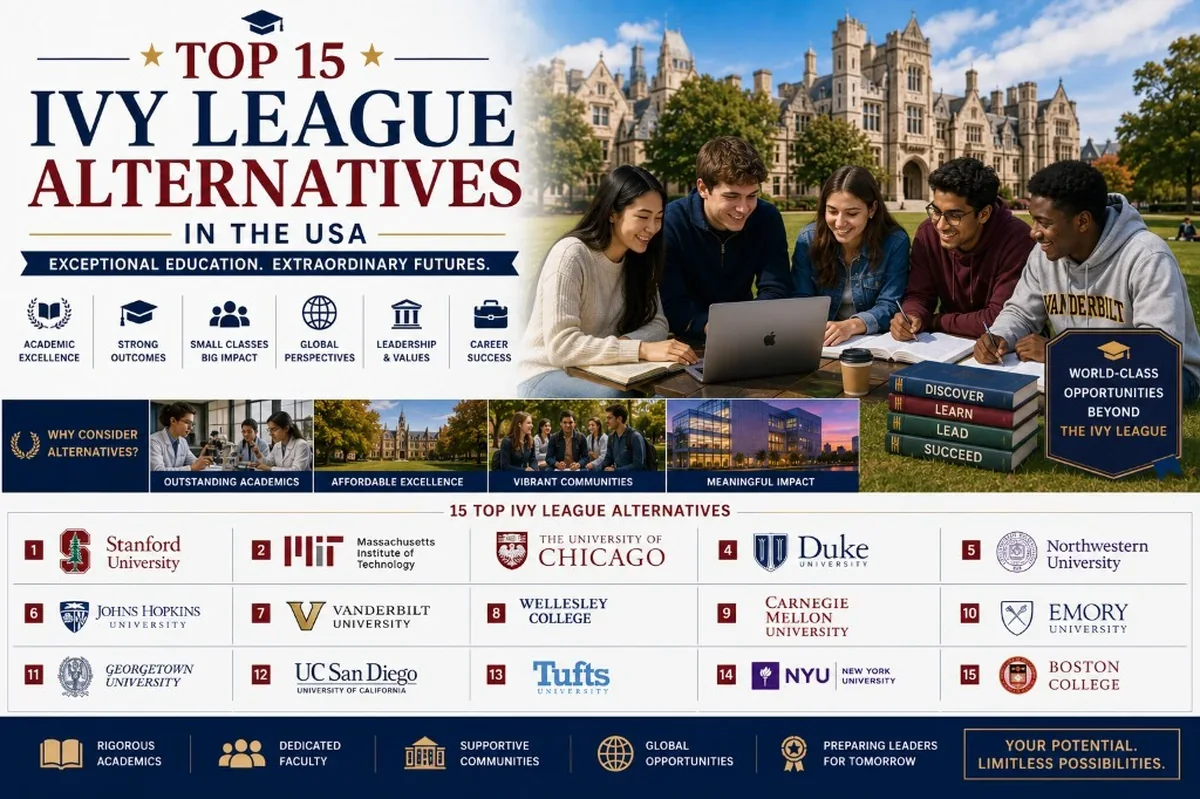
Quick answer: The best Ivy League alternatives are elite non-Ivy universities such as MIT, Stanford, Chicago, Caltech, Duke, Northwestern, and Johns Hopkins. This 2026 guide ranks 15 Ivy alternatives for students who want Ivy-level outcomes without limiting themselves to the eight Ivies.
Families often treat “Ivy” as shorthand for excellence. In reality, several non-Ivy institutions outrank multiple Ivies in STEM, business, or research metrics. This list excludes all eight Ivy League schools.
What counts as an Ivy League alternative in 2026?
We prioritised national research reputation, selectivity, graduate outcomes, and programme depth—aligned with how U.S. News National Universities and global rankings treat MIT/Stanford/Chicago/Caltech as peer or superior to many Ivies in specific fields.
Top 15 Ivy League alternatives in the USA (2026)
| # | University | Location | Why it is an Ivy alternative |
|---|---|---|---|
| 1 | Massachusetts Institute of Technology | Cambridge, MA | STEM global leader |
| 2 | Stanford University | Stanford, CA | Research + entrepreneurship |
| 3 | University of Chicago | Chicago, IL | Core curriculum intensity |
| 4 | California Institute of Technology | Pasadena, CA | Ultra-selective STEM |
| 5 | Duke University | Durham, NC | Research + professional schools |
| 6 | Northwestern University | Evanston, IL | Journalism, engineering, business |
| 7 | Johns Hopkins University | Baltimore, MD | Research & public health |
| 8 | Vanderbilt University | Nashville, TN | Rising national brand |
| 9 | Rice University | Houston, TX | Small elite research uni |
| 10 | University of Notre Dame | Notre Dame, IN | Undergraduate focus |
| 11 | Georgetown University | Washington, DC | Politics & IR |
| 12 | Carnegie Mellon University | Pittsburgh, PA | CS & engineering |
| 13 | New York University | New York, NY | Global campuses |
| 14 | University of Southern California | Los Angeles, CA | Communications & STEM |
| 15 | Emory University | Atlanta, GA | Health & liberal arts balance |
MIT, Stanford, Chicago and Caltech
Guides: MIT overview, Caltech acceptance, Chicago, Caltech listing.

Duke, Northwestern, Johns Hopkins and Vanderbilt
Duke, Northwestern, Johns Hopkins, plus listings for Vanderbilt, Rice, Georgetown, CMU, NYU, USC, Emory, Notre Dame.
Honorable mentions: Washington University in St. Louis, University of Michigan, and UNC Chapel Hill—often called “Public Ivies.”
How to use this rankings guide responsibly
Rankings are starting points. Before you apply to any institution on this list, confirm tuition, deadlines, visa rules, and programme accreditation on official websites. Top Schools Rankings publishes informational guides—we are not affiliated with the ranked institutions unless explicitly stated.
Cross-check with at least two independent sources (ranking publisher methodology, government data, and the school’s own admissions office). If an indicator matters to you—sustainability, employer reputation, class size, or international student ratio—read the methodology PDF rather than trusting a headline number alone.
Related guides on Top Schools Rankings
Explore more listicles: Top 50 universities in USA, Top 100 world universities, Top 100 high schools in England, and our blog index for school-specific admissions guides.
FAQs: Ivy League alternatives
Are MIT and Stanford Ivy League?
Answer: No. They are independent elite universities—often harder to enter than several Ivies.
Is an Ivy always better than these 15?
Answer: No. Programme fit, research, location, and cost matter more than the Ivy label.
Which alternative is best for CS?
Answer: MIT, Stanford, CMU, and Berkeley (public) dominate CS conversations.
Do alternatives offer better aid?
Answer: Some meet full need; policies vary—compare net-price calculators.
Should international students bother with non-Ivies?
Answer: Absolutely—employers and grad schools recognise these brands globally.
Where do Public Ivies fit?
Answer: Michigan, UNC, UVA, etc. are strong public alternatives; this list focuses on private elites plus MIT/Stanford/Caltech.
How many schools should I apply to?
Answer: A balanced list of 8–12 across reach/match/likely is common for selective US admissions.

Saahil
Saahil is an education researcher and content creator specializing in university rankings, admissions strategies, and student guides. He is dedicated to helping students make informed academic decisions.
Continue your research
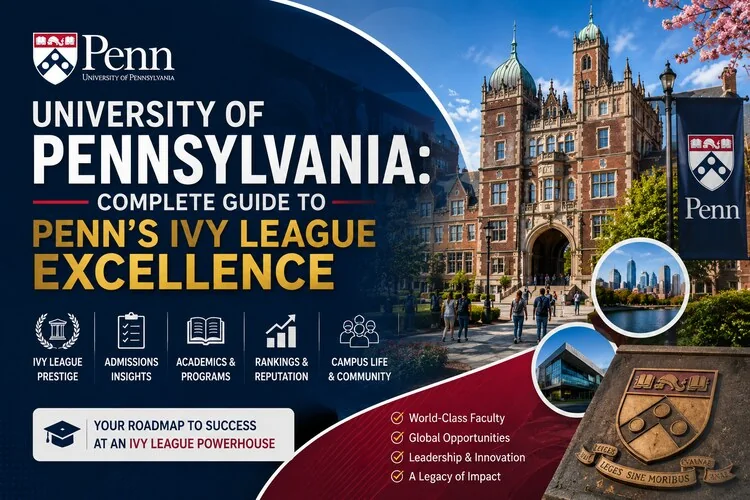
University of Pennsylvania: Complete Guide to Penn's Ivy League Excellence
Discover everything about the University of Pennsylvania – Ivy League rankings, Wharton & engineering programs, tuition fees, admissions requirements.
Read the guide →Frequently Asked Questions About Ivy Alternatives
What makes a school an Ivy League alternative?
An Ivy League alternative (often referred to as an "Ivy Plus," "Hidden Ivy," or "Public Ivy") is a university that matches or exceeds the Ivy League in academic rigor, endowment size, faculty quality, and graduate outcomes, but simply does not belong to the historic athletic conference that defines the Ivy League.
Are Public Ivies cheaper than actual Ivy League schools?
If you are an in-state resident, yes, Public Ivies (like UC Berkeley, UVA, or Michigan) are significantly cheaper. However, if you are an out-of-state or international applicant, the tuition at these public institutions can be nearly as high as private Ivy League schools, and they often offer less need-based financial aid for non-residents.
Do Ivy League alternatives have higher acceptance rates?
Not necessarily. Schools like Stanford, MIT, and Caltech have acceptance rates that are often lower than several Ivy League schools (like Cornell or Dartmouth). However, some excellent alternatives (like large state flagships) may have slightly higher overall acceptance rates due to larger class sizes.

Why I Chose Princeton University: My Journey to an Ivy League Dream
Choosing a university is one of the most defining decisions a student can make. For me, that decision didn't come after months of scrolling through brochures…
Read the guide →Frequently Asked Questions About Ivy Alternatives
What makes a school an Ivy League alternative?
An Ivy League alternative (often referred to as an "Ivy Plus," "Hidden Ivy," or "Public Ivy") is a university that matches or exceeds the Ivy League in academic rigor, endowment size, faculty quality, and graduate outcomes, but simply does not belong to the historic athletic conference that defines the Ivy League.
Are Public Ivies cheaper than actual Ivy League schools?
If you are an in-state resident, yes, Public Ivies (like UC Berkeley, UVA, or Michigan) are significantly cheaper. However, if you are an out-of-state or international applicant, the tuition at these public institutions can be nearly as high as private Ivy League schools, and they often offer less need-based financial aid for non-residents.
Do Ivy League alternatives have higher acceptance rates?
Not necessarily. Schools like Stanford, MIT, and Caltech have acceptance rates that are often lower than several Ivy League schools (like Cornell or Dartmouth). However, some excellent alternatives (like large state flagships) may have slightly higher overall acceptance rates due to larger class sizes.

How to Compare Universities Beyond Rankings: A 2026 Framework
Compare course fit, cost, outcomes, support and learning experience with official data instead of relying on one league-table position.
Read the guide →Frequently Asked Questions About Ivy Alternatives
What makes a school an Ivy League alternative?
An Ivy League alternative (often referred to as an "Ivy Plus," "Hidden Ivy," or "Public Ivy") is a university that matches or exceeds the Ivy League in academic rigor, endowment size, faculty quality, and graduate outcomes, but simply does not belong to the historic athletic conference that defines the Ivy League.
Are Public Ivies cheaper than actual Ivy League schools?
If you are an in-state resident, yes, Public Ivies (like UC Berkeley, UVA, or Michigan) are significantly cheaper. However, if you are an out-of-state or international applicant, the tuition at these public institutions can be nearly as high as private Ivy League schools, and they often offer less need-based financial aid for non-residents.
Do Ivy League alternatives have higher acceptance rates?
Not necessarily. Schools like Stanford, MIT, and Caltech have acceptance rates that are often lower than several Ivy League schools (like Cornell or Dartmouth). However, some excellent alternatives (like large state flagships) may have slightly higher overall acceptance rates due to larger class sizes.
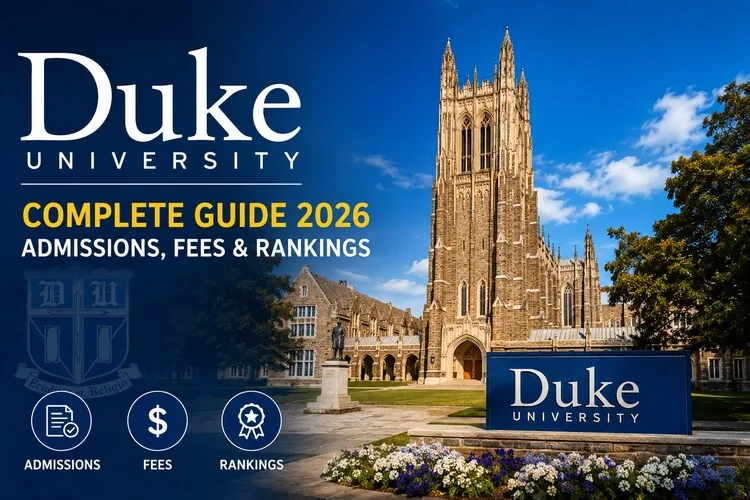
Duke University: Complete Guide 2026 – Admissions, Fees & Rankings
Discover everything about Duke University in 2026. Learn about admissions requirements, tuition fees ($70,265), rankings (#6 US News), acceptance rate (4.8%).
Read the guide →Frequently Asked Questions About Ivy Alternatives
What makes a school an Ivy League alternative?
An Ivy League alternative (often referred to as an "Ivy Plus," "Hidden Ivy," or "Public Ivy") is a university that matches or exceeds the Ivy League in academic rigor, endowment size, faculty quality, and graduate outcomes, but simply does not belong to the historic athletic conference that defines the Ivy League.
Are Public Ivies cheaper than actual Ivy League schools?
If you are an in-state resident, yes, Public Ivies (like UC Berkeley, UVA, or Michigan) are significantly cheaper. However, if you are an out-of-state or international applicant, the tuition at these public institutions can be nearly as high as private Ivy League schools, and they often offer less need-based financial aid for non-residents.
Do Ivy League alternatives have higher acceptance rates?
Not necessarily. Schools like Stanford, MIT, and Caltech have acceptance rates that are often lower than several Ivy League schools (like Cornell or Dartmouth). However, some excellent alternatives (like large state flagships) may have slightly higher overall acceptance rates due to larger class sizes.
Frequently Asked Questions About Ivy Alternatives
What makes a school an Ivy League alternative?
An Ivy League alternative (often referred to as an "Ivy Plus," "Hidden Ivy," or "Public Ivy") is a university that matches or exceeds the Ivy League in academic rigor, endowment size, faculty quality, and graduate outcomes, but simply does not belong to the historic athletic conference that defines the Ivy League.
Are Public Ivies cheaper than actual Ivy League schools?
If you are an in-state resident, yes, Public Ivies (like UC Berkeley, UVA, or Michigan) are significantly cheaper. However, if you are an out-of-state or international applicant, the tuition at these public institutions can be nearly as high as private Ivy League schools, and they often offer less need-based financial aid for non-residents.
Do Ivy League alternatives have higher acceptance rates?
Not necessarily. Schools like Stanford, MIT, and Caltech have acceptance rates that are often lower than several Ivy League schools (like Cornell or Dartmouth). However, some excellent alternatives (like large state flagships) may have slightly higher overall acceptance rates due to larger class sizes.