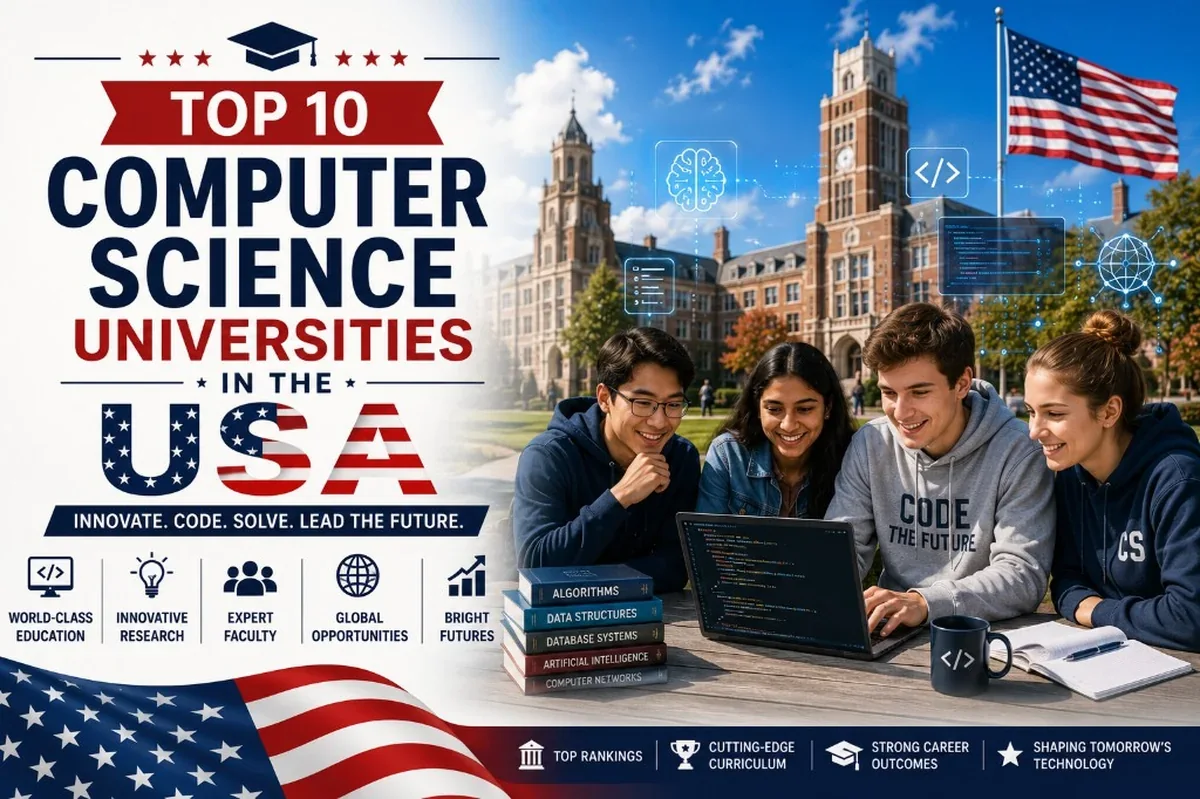
Overview: For the 2026 U.S. News & World Report undergraduate rankings, MIT holds the #1 spot for computer science, with Carnegie Mellon, Stanford, and UC Berkeley tied close behind and Princeton and Georgia Tech rounding out the top five. This guide expands that list into a full top 10 computer science universities in the USA, explains exactly how U.S. News scores CS programs (it is not the same method as its main college rankings), and adds practical context on admissions, specialties, and international student outcomes like OPT.
Search “best computer science universities in USA” and you will find dozens of conflicting lists. The most widely cited, methodologically transparent source is U.S. News & World Report’s Best Undergraduate Computer Science Programs ranking, published alongside its main Best Colleges release every September. Unlike the flagship National Universities ranking — which blends graduation rates, faculty resources, and financial data — the CS ranking is built entirely from a peer assessment survey of computer science department chairs and senior faculty nationwide.
That distinction matters. A school can rank outside the national top 20 overall (Georgia Tech, for example) yet sit inside the top 5 for computer science specifically, because CS faculty vote on CS reputation alone. Below, we walk through the verified 2025–2026 top five, then extend the list to ten schools using commonly cited peer-assessment tiers, specialty rankings, and reporting from each university’s own newsroom.

How U.S. News ranks computer science programs (methodology)
Before reading the table, understand the rules families often misunderstand:
- Peer assessment only: Department chairs, associate chairs, and senior faculty rate every program on a 1.0–5.0 scale. There is no data on outcomes, class size, or selectivity in this specific list.
- Ties are common: Because the scale has limited decimal precision, several schools frequently share the same score and therefore the same rank.
- Ten sub-specialties exist: U.S. News also separately ranks artificial intelligence, cybersecurity, data analytics/science, programming languages, software engineering, computer systems, theory, mobile/web applications, game/simulation development, and biocomputing.
- Published every year: The undergraduate CS list is refreshed with each September Best Colleges release, alongside undergraduate engineering and business rankings.
Source: U.S. News Best Undergraduate Computer Science Programs.
Top 10 computer science universities in USA (2025–2026)
The first five places below are directly confirmed by MIT News and Georgia Tech’s College of Computing. Places 6–10 reflect schools that consistently sit in the next peer-assessment tier and are commonly grouped with the top 10 by admissions counselors — verify the exact current-year score on the U.S. News site before citing a precise rank.
| # | University | 2026 CS standing | Known for |
|---|---|---|---|
| 1 | Massachusetts Institute of Technology (MIT) | #1 overall; #1 in 4 of 10 CS specialties | AI, theory, computer systems, biocomputing |
| 2 (tie) | Carnegie Mellon University | Tied #2 | AI (shared #1 with MIT), robotics, software engineering |
| 2 (tie) | Stanford University | Tied #2 | AI research, entrepreneurship pipeline, Silicon Valley ties |
| 2 (tie) | UC Berkeley | Tied #2 | Systems, theory, large and influential CS department (EECS) |
| 5 (tie) | Princeton University | Top 5 | Theory, small cohort, strong math-CS overlap |
| 5 (tie) | Georgia Institute of Technology | Up from #7 to #5 | Cybersecurity #2, mobile/web #1, large co-op pipeline |
| 7 (commonly cited) | University of Illinois Urbana–Champaign (UIUC) | Next peer-assessment tier | Systems, one of the oldest university CS departments in the US |
| 7 (commonly cited) | Cornell University | Next peer-assessment tier | CS + information science, NYC tech campus (Cornell Tech) |
| 9 (commonly cited) | California Institute of Technology (Caltech) | Small, elite CS cohort | Extremely low student-faculty ratio, theory-heavy curriculum |
| 10 (commonly cited) | University of Washington | Next peer-assessment tier | Amazon/Microsoft pipeline, Allen School reputation |
Also frequently mentioned just outside a strict top 10: University of Texas at Austin and UCLA — both maintain large, well-funded CS departments and strong employer recruiting pipelines, and regularly appear in extended top-12 to top-15 lists depending on the year and specialty.
Specialty rankings: where each school actually leads
A single overall number hides useful detail. Here is where the top schools are individually strongest, based on the ten U.S. News CS sub-rankings:
| Specialty | Leading school(s) |
|---|---|
| Artificial intelligence | MIT & Carnegie Mellon (tied #1) |
| Cybersecurity | Georgia Tech (#2) |
| Mobile/web applications | Georgia Tech, Carnegie Mellon, Stanford (tied #1) |
| Software engineering | Carnegie Mellon, Georgia Tech (top 3) |
| Computer systems | MIT |
| Theory | MIT |
| Biocomputing/bioinformatics | MIT |
| Data analytics/science | Georgia Tech (top 5) |
| Programming languages | Carnegie Mellon (#1) |
If you care about a specific track — say, cybersecurity over general CS — the specialty table often matters more than the overall number.

How competitive is CS admission at these schools?
Computer science has become one of the most oversubscribed majors in the USA, and several schools now admit directly into the CS major rather than allowing an internal transfer after enrollment.
- Direct-admit CS: Many public flagships (UT Austin, UCLA, UIUC, University of Washington) require you to apply to the CS major itself, which is far more selective than the university’s general admit rate.
- Small private cohorts: MIT, Caltech, Princeton, and Stanford do not have a separate CS application, but overall undergraduate admission is extremely selective (commonly single-digit percentages).
- Capacity caps: Berkeley and UIUC have both publicly discussed CS enrollment caps because faculty growth has not kept pace with applicant demand.
- Portfolio and math strength: Competitive CS applicants typically show advanced math coursework, programming projects (GitHub, competitions like USACO), and sometimes research experience.
International students: CS degrees and OPT/STEM extension
Computer science remains one of the most popular majors among international students in the USA because it is a STEM-designated field under U.S. immigration rules.
| Benefit | Detail |
|---|---|
| Optional Practical Training (OPT) | 12 months of work authorization after graduation for F-1 visa holders |
| STEM OPT extension | Additional 24 months (36 months total) for STEM-designated majors, including most CS degrees |
| Employer sponsorship pipeline | Big Tech and finance firms recruit heavily from MIT, CMU, Stanford, Berkeley, Georgia Tech, and UIUC campuses |
| H-1B cap-exempt options | Some university-affiliated research roles are exempt from the annual H-1B lottery cap |
Always confirm current visa and OPT rules directly with a school’s international student office and U.S. ICE SEVP guidance, since immigration policy changes independently of university rankings.
Public vs. private CS programs: what actually differs
| Factor | Private (MIT, Stanford, CMU, Princeton, Caltech) | Public (Berkeley, Georgia Tech, UIUC, UW, UT Austin, UCLA) |
|---|---|---|
| Class size | Often smaller intro sections; more faculty access | Larger lectures; strong TA/discussion-section support |
| Cost for international students | High sticker price; some need-based aid to internationals | Full non-resident tuition; limited aid for internationals |
| Admission path | Holistic, no separate CS application | Frequently direct-admit to CS major (more competitive than general admission) |
| Employer recruiting | Extremely strong, especially in the Northeast and Bay Area | Extremely strong, especially near tech hubs (Seattle, Austin, Atlanta, LA) |
What CS graduates earn (approximate starting salary context)
Because computer science draws so much applicant interest, families reasonably ask whether the investment pays off. Exact per-school figures fluctuate with the tech hiring market, but reported early-career outcomes for CS graduates from top programs are consistently among the highest of any undergraduate major.
| Outcome metric | Typical range for top-10 CS program graduates |
|---|---|
| Median starting salary (software engineering roles) | Roughly $95,000–$135,000, depending on employer and region |
| Common first employers | Large technology firms, quantitative finance firms, and well-funded startups recruit directly from campus career fairs |
| Graduate school pipeline | A meaningful share of graduates from MIT, CMU, Stanford, and Berkeley pursue MS or PhD study in CS or AI within a few years |
Figures vary by year, role, and cost of living in the hiring city — treat these as directional context, not a guarantee, and check each school’s official career-outcomes or common data set report for verified numbers.
Co-op, internship, and research pathways by school type
How a school structures work experience matters as much as its overall ranking:
- Co-op models: Georgia Tech and similar programs allow students to alternate semesters of study with paid, full-time industry work terms, often extending the degree timeline but adding a full year or more of resume-building experience.
- Traditional summer internships: MIT, Stanford, CMU, Princeton, Berkeley, and most others rely on the standard model of one or two paid summer internships between academic years.
- Undergraduate research (UROP-style): MIT’s Undergraduate Research Opportunities Program is a well-known model that other schools have adapted in some form, pairing undergraduates directly with faculty labs.
- Industry-sponsored capstones: Several large public CS programs (UIUC, University of Washington, UT Austin) run senior capstone courses sponsored directly by technology employers.
Women and underrepresented students in top CS programs
Gender and demographic diversity in computer science varies significantly by school and has been a long-running focus of departmental initiatives. Programs frequently cited for active recruitment and retention efforts for women and underrepresented students in CS include Carnegie Mellon (through outreach initiatives tracing back to its long-running gender-in-CS research), Harvey Mudd’s broader introductory CS redesign (widely cited outside this specific top-10 list as a case study), and Georgia Tech’s threads-based curriculum, which lets students combine CS with a second focus area. If representation matters to your decision, ask each department directly for current enrollment demographics rather than relying on outdated statistics.
How to choose among the top 10 computer science universities in USA
- Check direct-admit rules at public universities — applying “undeclared” may make it harder to transfer into CS later.
- Match your interest to a specialty — AI, cybersecurity, systems, and theory are ranked separately.
- Compare total cost for your citizenship status, not just the sticker price.
- Look at co-op and internship pipelines — Georgia Tech and Waterloo-style co-ops build work experience before graduation.
- Confirm STEM OPT eligibility for the exact degree program (most, but not all, CS-adjacent majors qualify).
For broader USA university context, see our Top 50 Universities in USA guide and browse more profiles in our USA Universities category.
Frequently asked questions: top computer science universities in USA
What is the #1 computer science university in the USA for 2026?
MIT holds the #1 spot in the U.S. News 2026 Best Undergraduate Computer Science Programs ranking, placing first in four of ten CS specialties, including artificial intelligence (shared with Carnegie Mellon).
Is Carnegie Mellon better than MIT for computer science?
For 2026, Carnegie Mellon is tied for #2 with Stanford and UC Berkeley, just behind MIT’s #1 overall CS score. CMU leads outright in specialties like programming languages and shares the #1 AI spot with MIT — so “better” depends on the specialty you care about.
Why is Georgia Tech ranked so high for computer science but lower overall?
Georgia Tech ranked #32 nationally for undergraduate education overall in 2026, but #5 specifically for computer science. The CS ranking is a separate peer-assessment survey of CS faculty, so a school can excel in this list without an equally high overall university rank.
Do I need to apply directly to the CS major?
At many public universities on this list (UT Austin, UCLA, UIUC, University of Washington), yes — CS is a direct-admit major that is more selective than general admission. Private schools on this list generally use holistic review without a separate CS application.
Can international students get OPT after a CS degree in the USA?
Yes. Most computer science degrees are STEM-designated, qualifying F-1 international graduates for 12 months of standard OPT plus a 24-month STEM extension (36 months total), subject to current U.S. immigration rules.
Are UCLA and UT Austin really top 10 for computer science?
They are frequently cited in extended top-10 to top-15 lists by counselors and rank highly in several individual specialties, but they were not in the confirmed top 5 reported by MIT News and Georgia Tech for 2026. Always check the current U.S. News table for exact placement.
Is UC Berkeley’s CS program hard to get into?
Yes. Berkeley’s EECS and L&S Computer Science programs are among the most selective majors on campus, with admission rates well below the university’s overall acceptance rate.
How often does the U.S. News CS ranking change?
It is republished every September alongside the main Best Colleges rankings. Because it is based on a peer-assessment survey, movement between years is usually gradual rather than dramatic — though schools like Georgia Tech have shown multi-place jumps over a few years.
What do CS graduates from these top 10 schools typically earn?
Reported median starting salaries for software engineering roles from top CS programs commonly range from roughly $95,000 to $135,000, though figures vary by employer, role, and region. Always check a school’s official career outcomes report for verified, current data rather than relying on informal estimates.
Does a co-op program like Georgia Tech’s make a real difference for job prospects?
Co-op programs add substantial, paid, resume-building industry experience before graduation, which many employers value highly. The tradeoff is a typically longer total time to degree. Whether it is a better path than a traditional internship-based schedule depends on your career goals and timeline preferences.
Final overview
The top computer science universities in the USA for 2026 are led by MIT, with Carnegie Mellon, Stanford, and Berkeley in a tight second tier, and Princeton and Georgia Tech close behind. Beyond the top five, UIUC, Cornell, Caltech, University of Washington, UT Austin, and UCLA round out a realistic top 10–12 depending on the specialty and year. Use the specialty tables, not just the headline number, to match a program to your actual interests — especially if you plan to study AI, cybersecurity, or systems specifically.
Disclaimer: Rankings, admissions policies, and immigration rules (OPT/STEM extension) change and are simplified here for planning purposes. Verify current data on U.S. News and each university’s official admissions and international student pages before applying.

Saahil
Saahil is an education researcher and content creator specializing in university rankings, admissions strategies, and student guides. He is dedicated to helping students make informed academic decisions.
Continue your research

How to Compare Universities Beyond Rankings: A 2026 Framework
Compare course fit, cost, outcomes, support and learning experience with official data instead of relying on one league-table position.
Read the guide →
School of Science and Engineering Magnet: Full Overview
The School of Science and Engineering (SEM) at Yvonne A. Ewell Townview Center is a selective STEM magnet high school in Dallas ISD, widely regarded as one of…
Read the guide →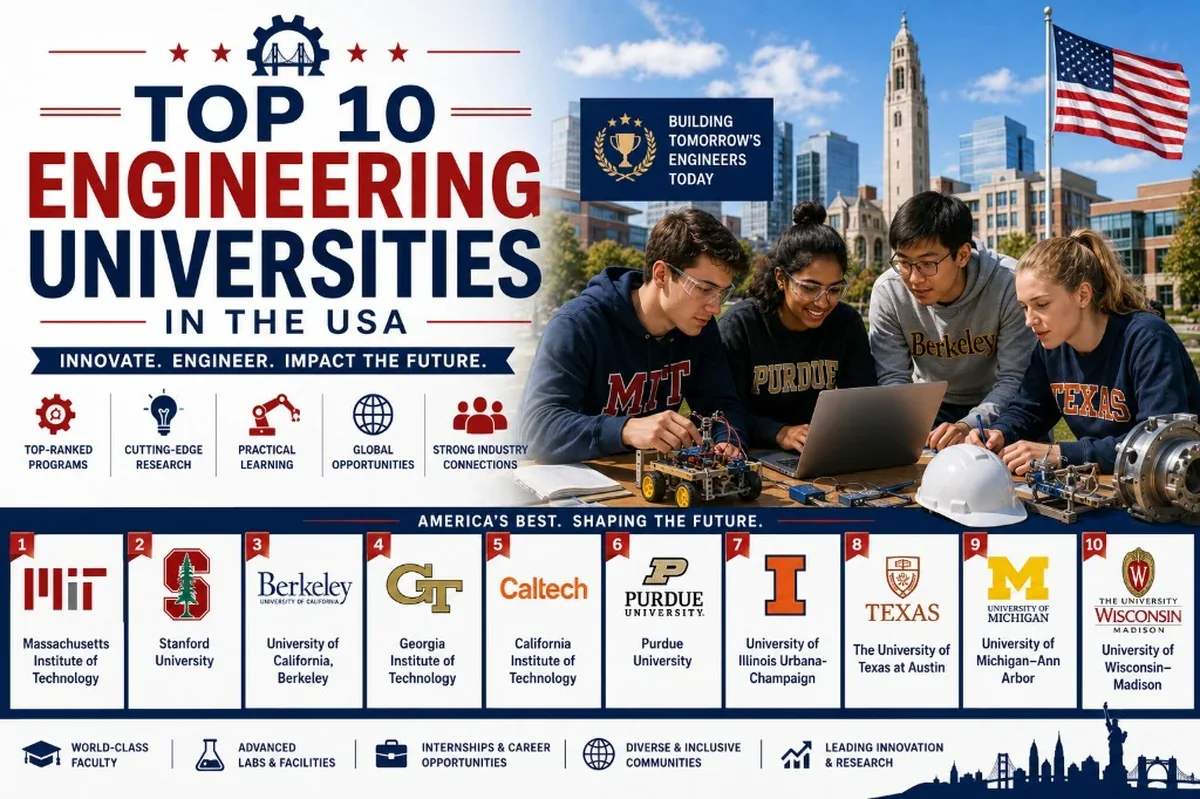
Top 10 Engineering Universities in the USA (2026 U.S. News Guide)
Top 10 engineering universities in the USA for 2026: verified U.S. News undergraduate rankings, specialty strengths, costs, and how international students should choose.
Read the guide →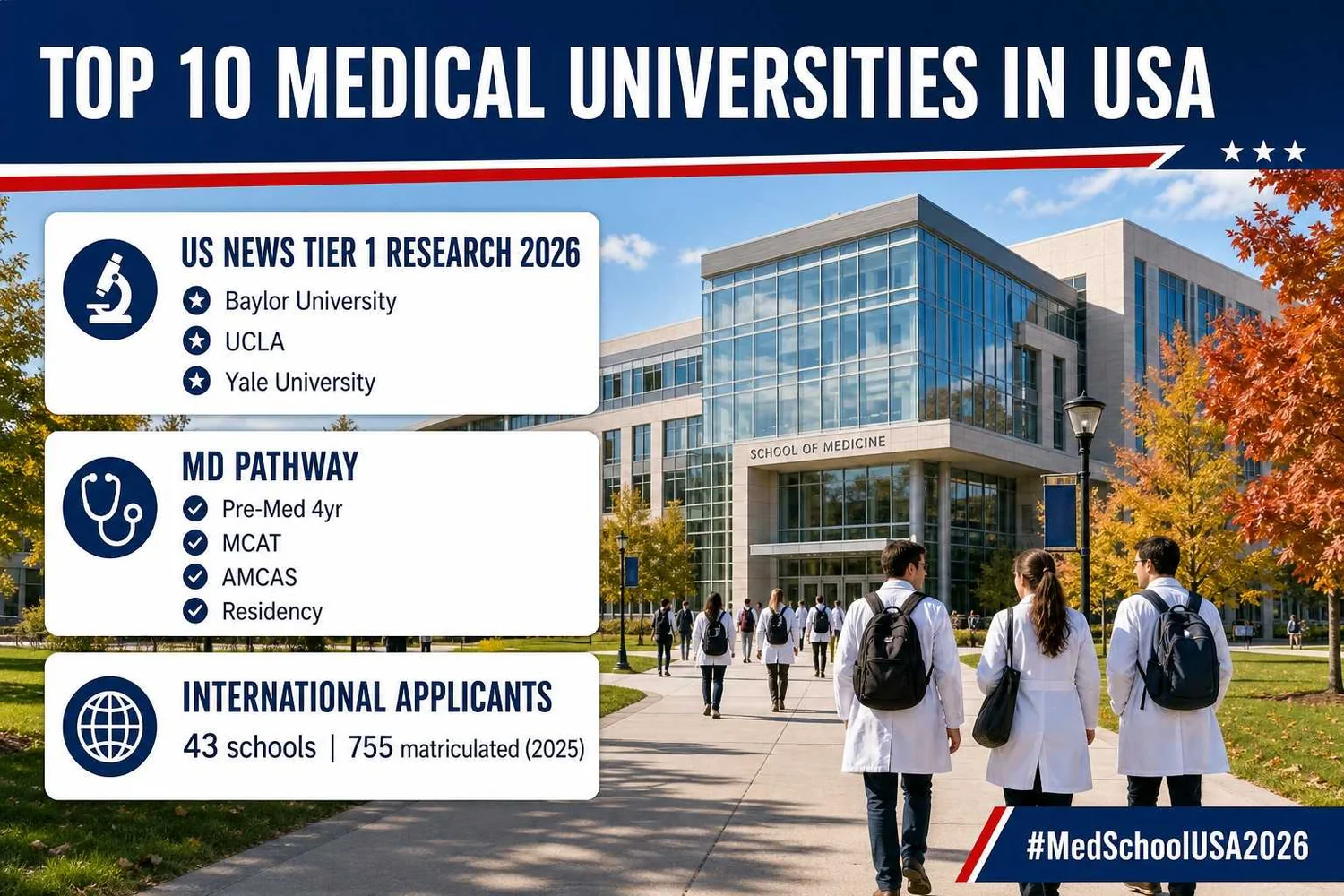
Top 10 Medical Universities in USA (2026 Guide for Pre-Med & MD Pathways)
Top 10 medical universities in USA for 2026: U.S. News Tier 1 research schools, MD pathway, costs, international rules, and FAQs.
Read the guide →